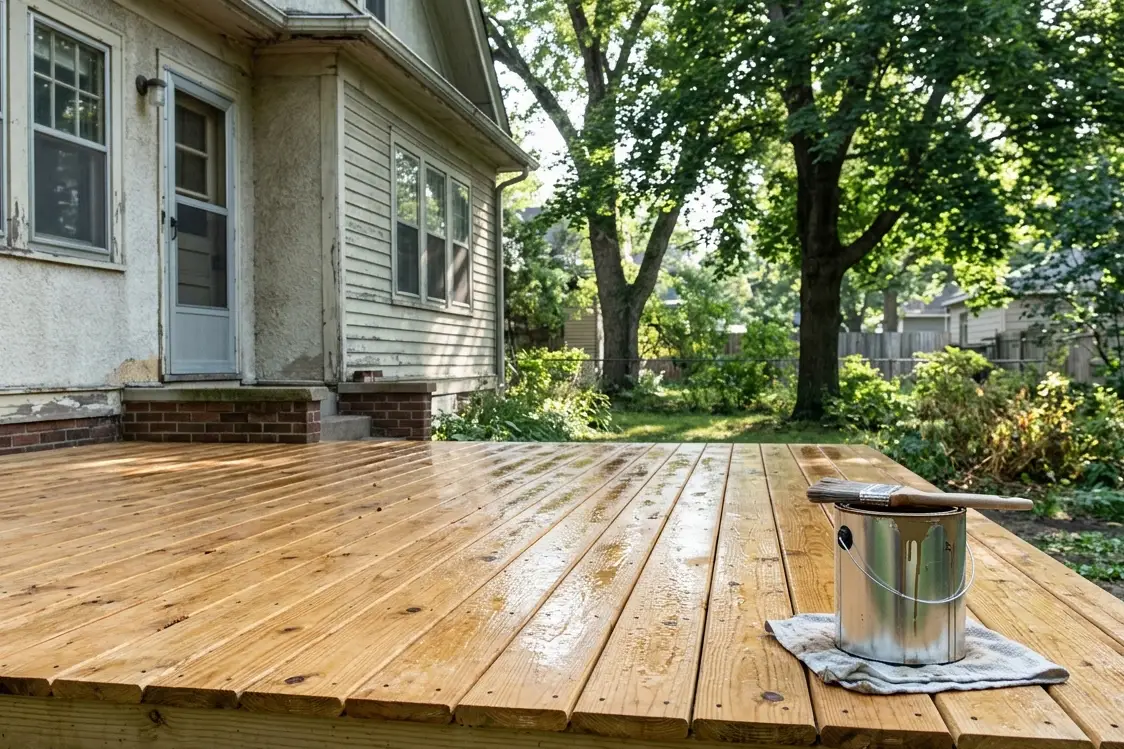
Why fresh pressure-treated boards usually need to wait
Pressure-treated lumber leaves the treatment plant soaked with a water-based preservative, and much of it still feels damp when it reaches your yard. Stain brushed over wet wood cannot soak in. It sits on the surface, dries blotchy, and starts peeling within a season or two. On most new pressure-treated decks we build around Minneapolis, the boards need several weeks to a few months of open air first. A deck finished in June is often ready by late summer, while one finished in October usually waits until spring.
Lumber that was kiln-dried after treatment, often stamped KDAT, is the exception. It comes off the truck much drier and can often take a finish within a few weeks, so ask what was used on your deck before you plan. Sun exposure matters too. A south-facing deck with full afternoon sun dries far faster than a shaded one tucked under mature maples on a Longfellow or Southwest lot. Test each area separately, because the shady end can lag the sunny end by weeks.
Cedar dries faster, but it still needs a few things first
Western red cedar arrives much drier than treated pine, so many cedar decks can be finished within a few weeks of installation. The catch is mill glaze, a smooth, slightly shiny surface left by the planer that resists stain. Left alone, it weathers off over a month or two of sun and rain. If you'd rather not wait, a light wash with a wood cleaner or brightener opens the grain so the stain can bite into the wood instead of sitting on top.
Cedar is also soft, and its natural oils and tannins can bleed through a careless first coat as brown streaks. Rinse well after any cleaner and let the boards dry for at least two dry days before staining. Don't pressure wash cedar with a narrow tip, because it raises fuzz and carves lines into the face of each board. Our carpenters use low pressure and a wide fan, or skip the washer entirely and scrub the boards by hand.
The water bead test tells you when the wood is ready
You don't need a moisture meter to know when a deck is ready. Sprinkle a small cup of water across a few boards in different spots, including one in shade and one in full sun. Watch for about ten minutes. If the water beads up and sits on the surface, the wood is still too wet or still sealed by mill glaze, so wait and run the test again in a week or two.
If the water darkens the wood and soaks in within those few minutes, the boards are thirsty enough to take stain. Test the end grain and the stair treads too, since those spots often behave differently from the main field of the deck. A deck that passes in one area but not another can be finished in sections, as long as each section gets its own clean, dry start. Mark the dates you test on a calendar, so you can see how fast each part of the deck is drying.
- Sprinkle water on sunny, shady and stair boards separately
- Beading means wait one to two weeks, then test again
- Fast soak-in and darkening means the wood is ready
- Recheck after any rain, since damp boards will fail the test
Picking a Twin Cities weather window for stain
Most deck stains want air and surface temperatures of about 50 degrees or warmer while they cure, and many cans ask for a dry stretch of 24 to 48 hours afterward. Always follow the label on the product you buy, since the numbers vary by maker. In Minnesota that usually points to late May through mid-September. Early spring afternoons can feel warm, but the boards stay cold and damp from overnight dew well into the day.
Avoid staining in direct midday sun on a hot July afternoon, when the stain flashes dry before it can soak in and leaves lap marks. Morning or late-afternoon shade is easier on the finish. Fall works well into September, but by October, overnight frost and short days slow drying. If your deck is finished late in the season, it is usually smarter to wait for spring than to rush a coat onto cold boards.
Transparent, semi-transparent or solid: what each stain does
Transparent and toner stains show nearly all of the grain and add a light tint with some sun protection. They look great on new cedar, but they wear quickly on horizontal boards. Semi-transparent stains carry more pigment, so they block more sunlight and hide small color differences between boards while still showing grain. For most new decks in the Twin Cities, semi-transparent is the practical middle ground we suggest first.
Solid stains behave more like thin paint. They hide the grain completely, cover mismatched or older boards well, and last longest on railings and skirting. On walking surfaces, though, solid stain can peel under foot traffic and snow shoveling, and it is hard to strip later. Oil-based and water-based versions exist in each category from makers such as Cabot, Sherwin-Williams, Behr and Ready Seal, and each can lists its own prep and dry times.
- Transparent: most grain, least protection, shortest life on floors
- Semi-transparent: a good balance of grain, color and sun blocking
- Solid: full color and long life on rails, but can peel on boards
How often a Minnesota deck needs a fresh coat
Snow, ice, salt and strong summer sun wear a finish faster on horizontal boards than on railings. As a rough guide, transparent stains on decking need another coat every year or two, semi-transparents every two to three years, and solids every three to five. Rails and fascia usually outlast the floor. The water bead test works here too: once water stops beading on a stained deck, it's time to plan the next coat.
Recoating is much easier than stripping. A light clean and one fresh coat of the same product keeps the color even, while waiting too long often means sanding gray fibers away first. Our deck staining and sealing work typically runs $2.85 to $5.40 per square foot, depending on deck size, railing count, prep and the product you choose. The real number comes after we look at your deck. Call (612) 979-0602 when you're ready.
Common questions
Can I stain a new pressure-treated deck the same summer it was built?
Often, yes, if the deck was finished in late spring or early summer and the boards pass the water bead test by August or early September. Decks finished in fall usually do better waiting until the following May or June, since cold, damp boards and short drying days lead to blotchy color and early peeling.
Does a new cedar deck need to be stained at all?
Cedar resists rot better than untreated pine, but sun still turns it gray and opens small checks in the surface within a year or two. A transparent or semi-transparent stain holds the color and slows that weathering. If you like the silver look, you can skip stain, but plan on cleaning the boards and watching for splits.
What happens if I stain a deck before the wood is dry?
Stain that cannot soak into wet wood stays on the surface. It may look fine for a few weeks, then turn sticky, blotchy or start peeling in sheets, especially on the sunny side. Fixing it usually means stripping or sanding the failed coat, waiting for the wood to dry, and starting over on a clean surface.