Care & Inspection · Minneapolis, MN
Deck restoration and refinishing in Minneapolis
Peeling stain, dark blotches, splintered boards and wobbly rails make a sound deck look ready for the dumpster, even when the framing underneath still has years left.
We strip the failed finish, swap out boards past saving, tighten the railings, sand everything smooth and refinish the whole deck.
- Phones answered 24/7
- Written scope before work starts
$4.70 to $11.80 per square foot, based on 2026 Twin Cities jobs.
Restoration brings a tired but structurally sound deck back into service: stripping old coatings, replacing rotted or split boards, resetting popped fasteners, sanding the floor and rails, then applying a fresh penetrating finish. In Minneapolis it typically costs $4.70 to $11.80 per square foot, with the spread driven by how much finish has to come off and how many boards need replacing. We check the frame first.
When a worn deck is worth saving instead of replacing
Most decks that look rough are only rough on top. The floorboards and railings take the sun, snow and foot traffic, while the joists, beams and posts underneath stay drier and age slower. If the frame is solid, the footings are sound and the ledger is properly attached and flashed, restoring the surface usually makes more sense than tearing the deck out. You keep the layout, the permit history and the structure, and your money goes into the parts that actually wore out.
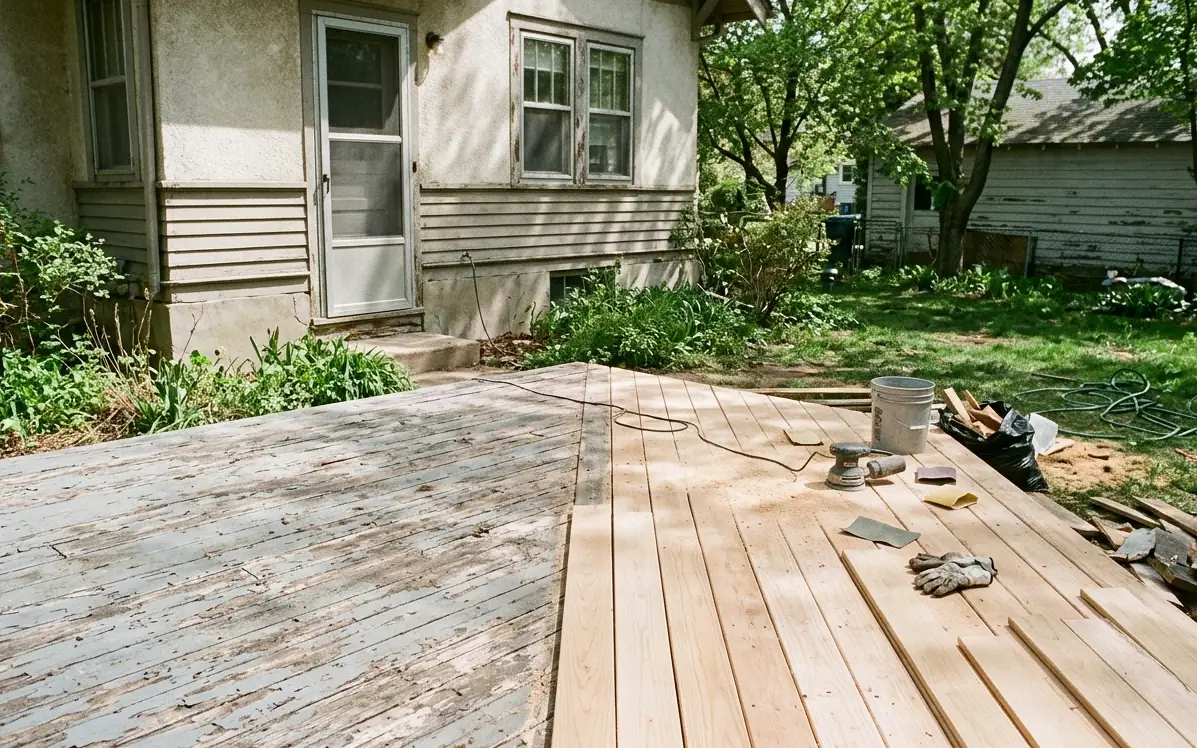
Restoration is more than a heavy wash and a coat of stain. Decks that were painted or covered in solid stain often peel in sheets, and a new coat can't bond over that. We strip the old film chemically, rinse, neutralize and sand until bare wood shows. Boards that are cupped, split through or soft at the ends get replaced, and we match species and width as closely as the lumberyard allows. Popped nails come out and coated deck screws go in their place.
The first thing we do on any restoration job is look underneath. A deck that's pretty on top and rotting at the ledger is a hazard, not a candidate for refinishing. We probe the joist ends, check post bases and hangers for corrosion, and look for flashing where the deck meets the house. If we find structural trouble, we tell you plainly and price the repair separately, so you can decide with the full picture in front of you.
Signs your deck needs restoration rather than a simple recoat
Finish peeling in sheets
When old paint or solid stain lifts in flakes and curls, a fresh coat on top will fail the same way. The failed film has to be stripped before anything new can soak in.
Several boards cupped or split
Boards that have cupped upward, split along their length or broken at the ends collect water and catch toes. A few of them mixed into a sound floor can be swapped out one by one.
Nails backing out everywhere
Freeze-thaw cycles push smooth nails up a little each winter until the heads stand above the surface. Resetting them rarely holds, so we pull them and drive coated deck screws instead.
Dark stains and mildew patches
Gray and black blotches that a wash won't touch usually mean tannin bleed, mildew or iron staining from old fasteners. Stripping and a wood brightener bring most of that back to clean wood.
Loose or wobbly railing posts
Rail posts that move when you lean on them are a safety issue on any deck. Restoration includes retightening or rebolting posts and replacing balusters that have cracked at the screws.
Rough, splintery surface throughout
Once splinters show up across the whole floor, not just a few treads, the top layer of wood has broken down. Sanding to fresh fiber is the only way to get a smooth, barefoot-friendly deck back.
How a restoration job moves from frame check to final coat
- 01Call
Call and frame check
You phone us, we visit and look under the deck before talking about finishes. Ledger, joists, posts and hangers get checked, and the written price covers what we actually found.
- 02Visit
Prep the site
Furniture comes off, plants get covered and wetted down, and siding, windows and the area below are protected from stripper and rinse water before work starts.
- 03Scope
Strip the old finish
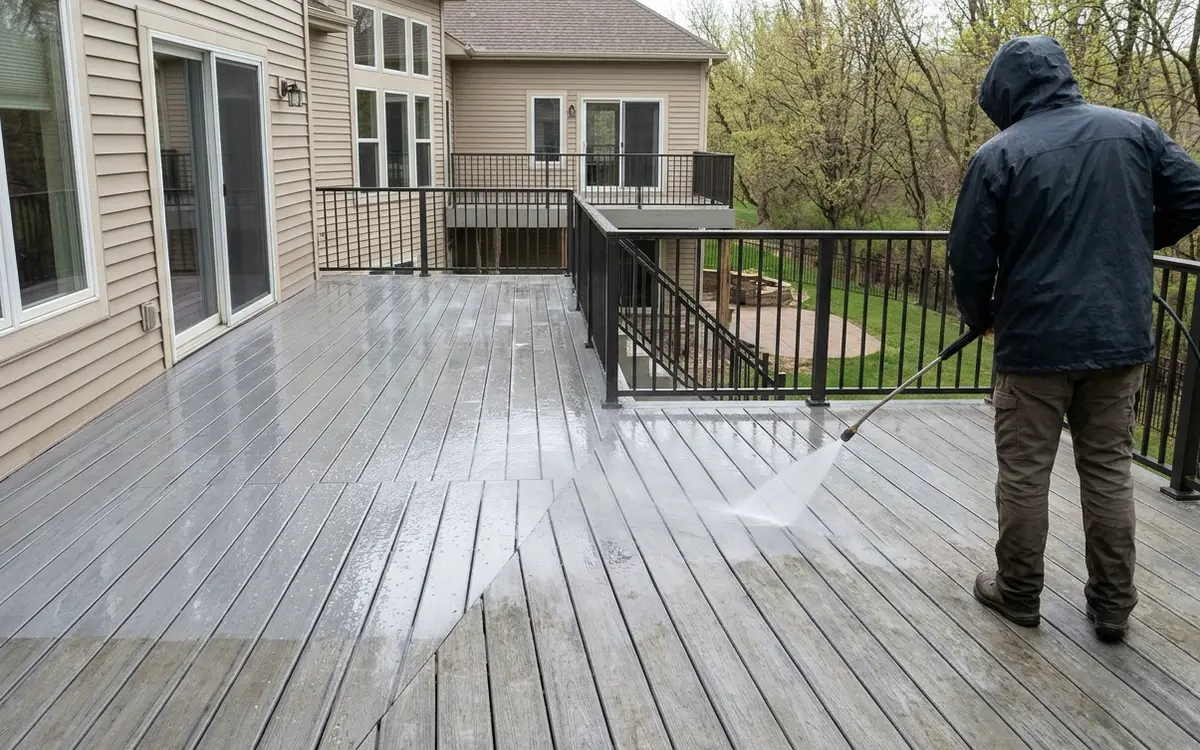
A stripper suited to the coating goes on, dwells, and comes off with brushes and a controlled rinse. A brightener then neutralizes the stripper and restores the wood's natural tone.
- 04Prep
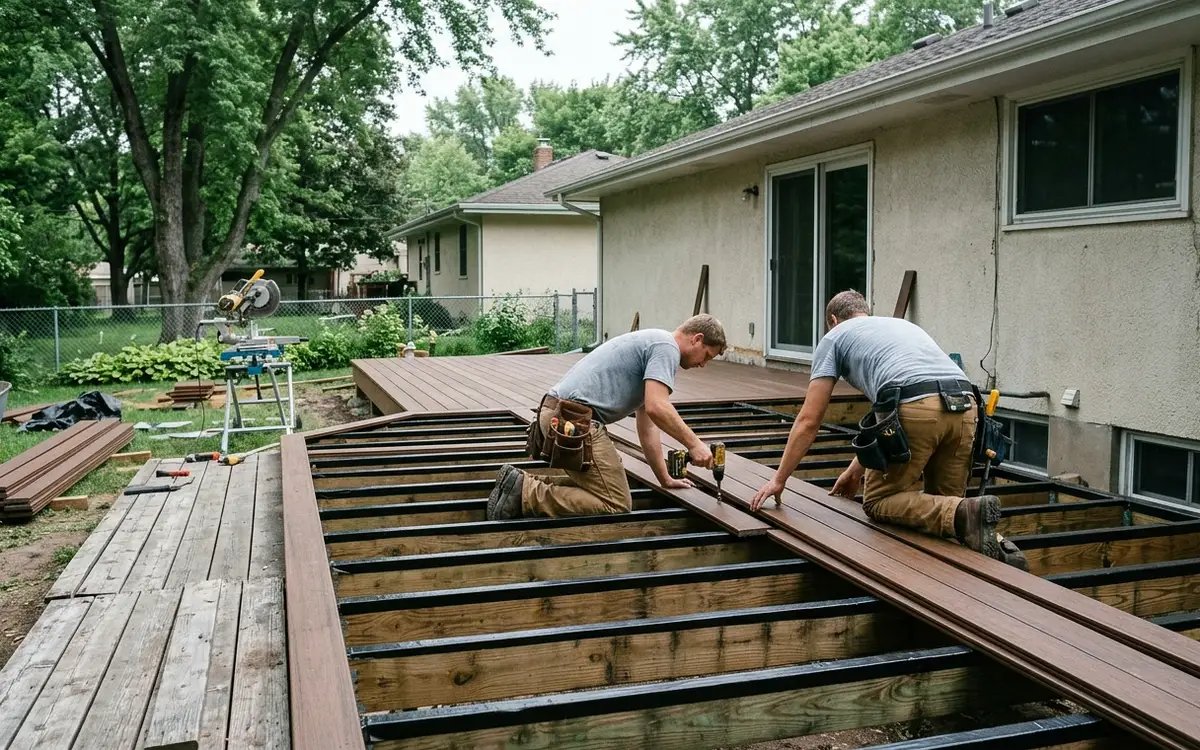
Replace and refasten boards
Damaged boards come out and new lumber goes in. Popped nails are pulled and replaced with coated screws, and loose rail posts are rebolted or replaced outright.
- 05Build
Sand to clean wood
After the deck dries, the floor, stair treads and handrails are sanded to remove raised fibers and leftover film, then everything gets vacuumed and wiped down.
- 06Check
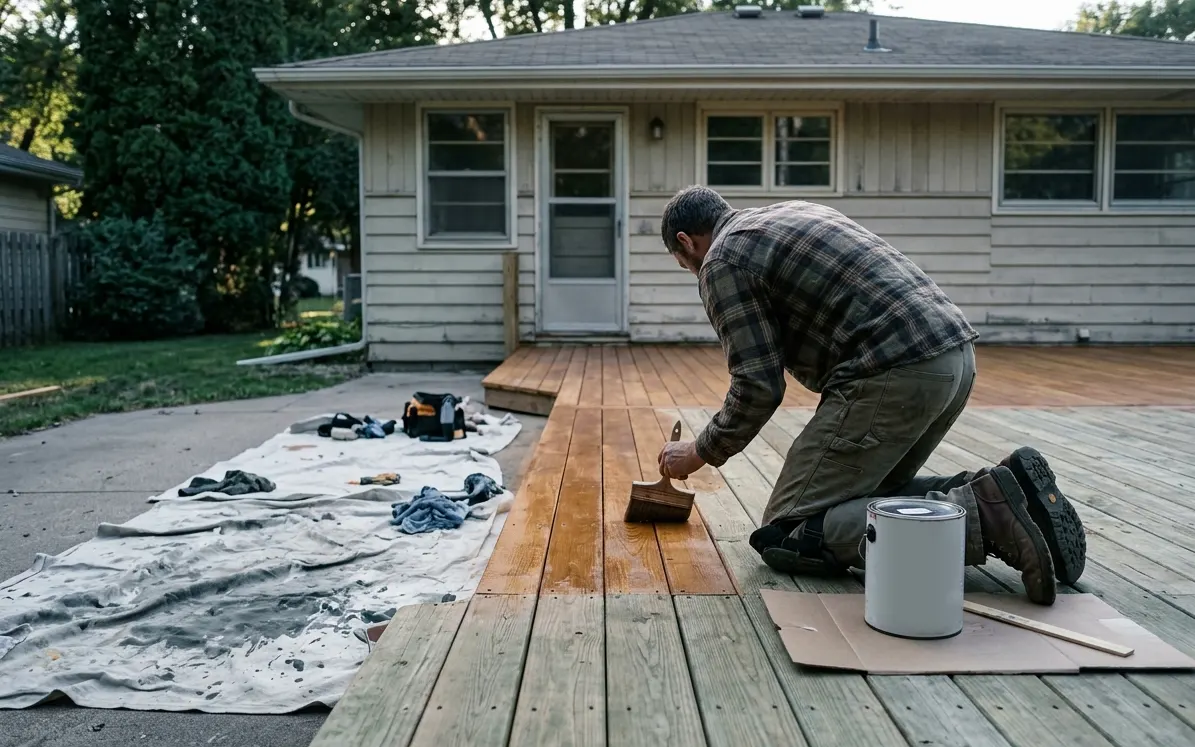
Apply the new finish
We apply penetrating stain in thin, even coats by brush or back-roller, let it cure, then walk the deck with you and talk through upkeep for the next few years.
Ways to bring an older deck back, from light work to heavy
Strip and refinish only
For decks with solid boards and failed coatings, we strip the old finish, sand the floor and rails, and apply a new penetrating stain. It's the lightest form of restoration and keeps every original board in place.
Board replacement plus refinish
Where a handful of boards are cupped, split or soft, we pull them, check the joists below, and install new lumber before sanding. New boards get stained with the rest so the floor reads as one surface.
Railing rebuild with restored floor
Some decks have a sound floor but tired, out-of-date railings. We can restore the floor and replace the railing with new wood, aluminum or composite systems from makers like Westbury, Fortress or Key-Link.
Resurfacing instead of restoring
When most boards are failing but the frame is strong, restoration stops making sense. At that point, new wood or composite decking over the existing frame is usually the better use of your money, and we'll tell you so.
What deck restoration typically costs in Minneapolis
Deck restoration in Minneapolis typically runs $4.70 to $11.80 per square foot. A deck that only needs stripping and refinishing sits near the bottom of that range, while one with many replaced boards, a rebuilt railing and tall stairs sits near the top. Your actual price depends on what we find on and under the deck, and we put it in writing after the visit.
What changes the price
- How many layers of old paint or solid stain need stripping
- Number of floorboards and stair treads that have to be replaced
- Railing condition, from simple tightening to a full railing replacement
- Wood species, since cedar and redwood cost more to match than pine
- Height of the deck and the staging that tall walkout stairs require
- Any structural repair found under the deck, priced as its own line
Why Twin Cities decks wear out on top first
A Minneapolis deck spends months under snow, then swings through freeze-thaw cycles in March, April and November that pull moisture in and out of the boards. Floor surfaces take most of that punishment. Water sits in checks, freezes and widens them, while nails creep upward a little more each season. Railings and frames, which shed water better, often stay sound. That pattern is why so many decks added to ramblers in Crystal, Robbinsdale and Columbia Heights look worn out while their frames are still worth keeping.
Older decks also carry hidden problems that restoration has to account for. Many built in the 1980s and 1990s used nailed ledgers with no flashing, which can rot both the ledger and the rim joist of the house. Older hangers can corrode against treated lumber, too. We check both before refinishing anything. Stripping and staining fit best from late spring through early fall, since they need dry weather and temperatures above roughly 50 degrees, but board and railing repairs can start earlier in the year.
Where we do deck restoration around Minneapolis
Deck Restoration jobs take our carpenters to these cities and neighborhoods most weeks, and to the rest of the metro too.
- Minneapolis 55414
- Saint Paul 55102
- Bloomington 55420
- Brooklyn Park 55443
- Plymouth 55447
- Woodbury 55125
- Maple Grove 55369
- Lakeville 55044
- Blaine 55434
- Eagan 55122
- Burnsville 55337
- Eden Prairie 55344
- Coon Rapids 55433
- Apple Valley 55124
- Edina 55424
- Minnetonka 55305
- St. Louis Park 55416
- Shakopee 55379
- Maplewood 55109
- Cottage Grove 55016
- Richfield 55423
- Roseville 55113
- Inver Grove Heights 55076
- Andover 55304
- Savage 55378
- Fridley 55432
- Chanhassen 55317
- Prior Lake 55372
Questions about deck restoration
How do you decide between deck restoration and full replacement?
It comes down to the frame. If the joists, beams, posts, footings and ledger are sound and properly attached, restoration usually pays off. If the ledger is rotted, the footings are shallow or the joists are soft, new finish on top just hides a problem. We show you what we found underneath and give you prices for both paths when the call is close.
Will replaced boards match the rest of my restored deck?
New lumber is lighter and smoother than weathered boards at first, so it never matches perfectly on day one. Stripping and brightening the old boards narrows the difference a lot, and staining the whole floor together evens it further. After a season of sun, most replaced boards blend in. With cedar, we match grade and width as closely as the lumberyard allows.
Can a painted deck be restored back to natural wood?
Usually, yes, though it takes work. Paint and solid stains have to be stripped chemically and then sanded, and some pigment can stay behind in deep grain and old nail holes. Many owners pick a semi-solid stain after stripping, which hides those leftovers. If you want a clear, natural look, we test a small area first so you can see what the boards will look like.
Is deck restoration worth it on a deck built in the 1990s?
Often it is. Plenty of decks from that era were framed with heavier lumber than their worn floorboards suggest, and the frames hold up well. The catch is the ledger, since many were nailed on with no flashing. If yours was, we fix that connection before any refinishing. With a sound frame and a corrected ledger, restoration can give a 1990s deck many more good seasons.
Does deck restoration include fixing a loose railing?
Railing work is part of most restoration jobs. We tighten or rebolt loose posts, replace cracked balusters and resand handrails so they're smooth under your hand. If the railing is too short or the baluster gaps are wider than current code allows, we talk through replacement options and price them separately so you can choose what makes sense.
Talk to us about deck restoration
Call any hour about deck restoration, tell us what you are seeing, and we will set a time to look and write up a scope.