Design & Patios · Minneapolis, MN
Outdoor kitchens and fire pits in Minneapolis
You want to cook and gather by a fire outside, but a heavy island or a hot bowl in the wrong spot can scorch boards or sag a deck.
We set fire pits on paver patios, place gas fire tables on decks with clearance, and build kitchen islands on bases that stay level through frost.
- Phones answered 24/7
- Written scope before work starts
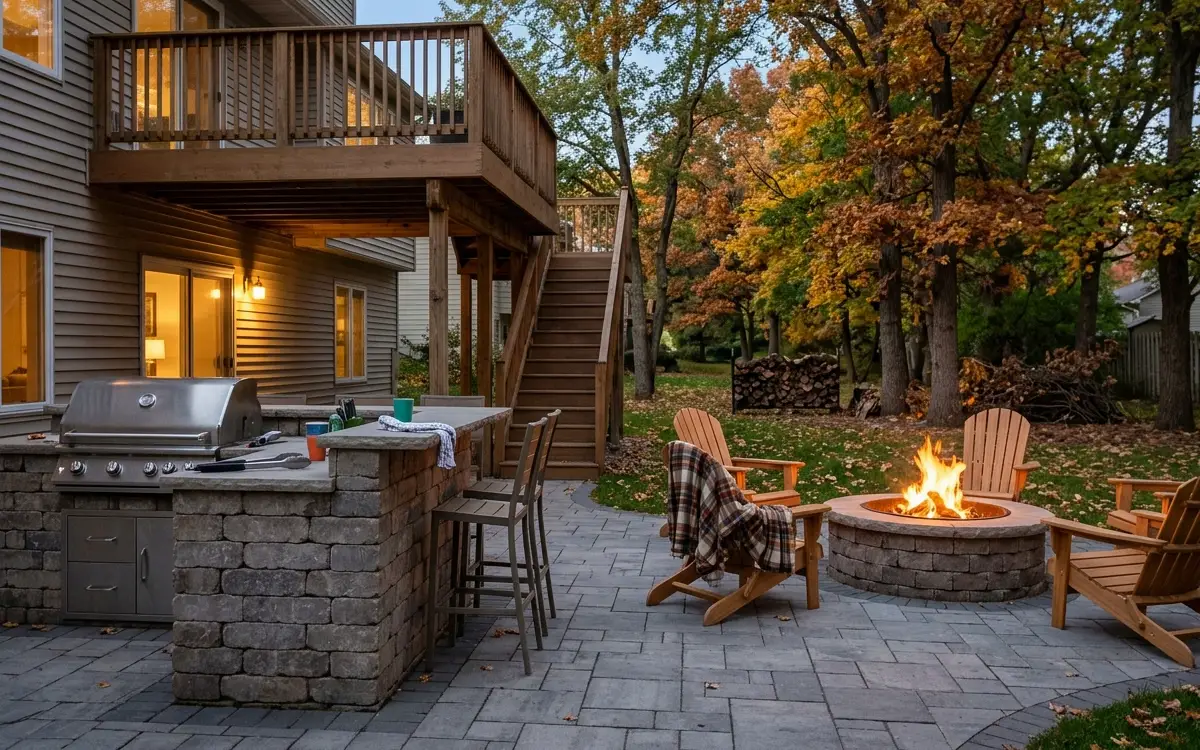
$2,380 to $46,900 per project, fire pit to full kitchen, based on 2026 Twin Cities jobs.
This service covers built-in wood or gas fire pits on paver patios, gas fire tables on composite decks, and outdoor kitchen islands with a grill surround, counter, storage and bar seating. In Minneapolis it typically runs $2,380 to $46,900 per project, fire pit to full kitchen, depending on size, materials and the gas and electrical work involved. Your actual price comes after we walk the yard and deck.
Where a fire and a grill can safely live in your yard
Most outdoor kitchen and fire projects start with a simple question: where can heat and weight sit without hurting anything? A wood-burning fire pit throws sparks and embers, so we build it on a paver patio or a gravel pad set away from the house, the trees and the deck. Gas fire tables run cleaner and calmer, which is why they're the only kind of flame we place on a composite or wood deck. A full kitchen island can outweigh a crowd of guests, so its location shapes the whole plan.
On a patio, we dig out the soil, lay crushed gravel in lifts and compact each one, then set pavers or a block island base on that firm, draining layer. Water runs down through the gravel instead of pooling and freezing under the structure, which keeps the island and pit from heaving out of level each spring. On a deck, the island needs framing sized for it: doubled or added joists, solid blocking, and often a new beam carried on its own footings dug below the 42-inch frost line.
Fire and cooking projects also bring in other trades, and we plan around them from the first sketch. Gas lines for a grill, side burner or fire table are run by a qualified gas fitter, and outlets, lighting and any refrigerator circuit are wired by an electrician. We schedule both, leave sleeves and chases in the framing or block walls so their lines have a clean path, and keep the masonry and carpentry moving around their inspections. You get one schedule instead of three separate calendars to juggle.
Wood pit, gas fire table or kitchen island: picking your setup
Built-in wood-burning fire pit
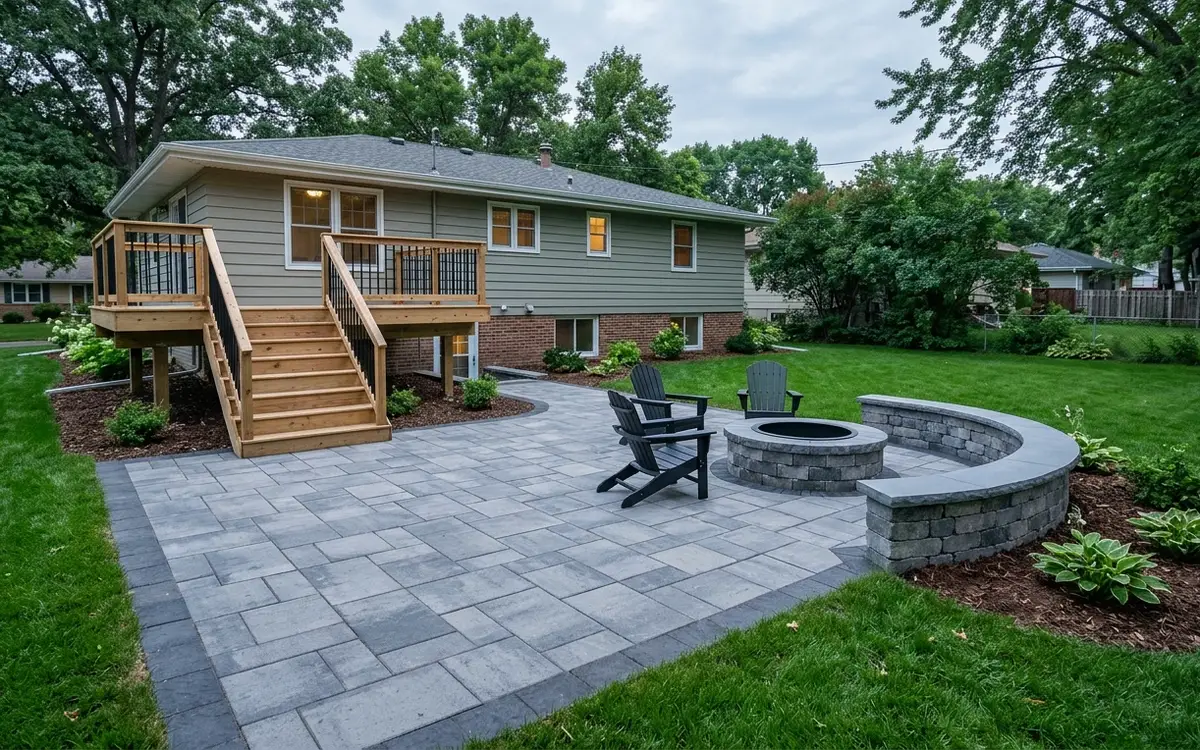
A ring of Belgard or Unilock wall block with a steel liner, set on compacted gravel inside a paver patio. It gives real crackle and woodsmoke, needs a spot clear of the house and trees, and never goes on a deck.
Gas fire pit on pavers
A burner pan topped with lava rock or fire glass inside a block surround, fed by a buried line the gas fitter runs. You get flame from a key valve or switch, no ash to haul and far fewer sparks.
Fire table on a composite deck
A natural gas or propane fire table placed with the side and overhead clearances its maker lists, sitting on a heat-shield pad. We also read the decking maker's guidance, since Trex, TimberTech and Fiberon each publish their own advice on heat.
Outdoor kitchen island
A framed or block island with a grill surround, counter, access doors and storage, plus an overhang for bar seating. It sits on a gravel base on a patio, or on deck framing we reinforce to carry the extra load.
How we plan and build your fire pit or kitchen island
- 01Call
Call and yard visit
You phone, we walk the yard and deck with you, watch where smoke and wind will drift, and note the gas meter location, existing outlets and the path from your back door.
- 02Visit
Check fire rules and permits
We check with the city fire department on recreational fire rules for your address, and confirm which permits the patio, deck reinforcement, gas line and wiring will each need.
- 03Scope
Lay out the plan
You get a drawing showing the pit or island, seating, clearances and the gas and electrical routes, along with a written price and the order each trade will work in.
- 04Prep
Build the base
On a patio we excavate, compact gravel in layers and set the pavers. On a deck we add joists, blocking, a beam and frost-depth footings right where the island will sit.
- 05Build
Coordinate gas and electrical
The gas fitter and electrician run their lines through sleeves we leave in place. We set our schedule around their inspections so walls and counters don't close up too early.
- 06Check
Finish and winter walkthrough
We set counters, doors and caps, go over the controls with you once the gas fitter has the burners running, then show you how to drain the water line and cover everything.
What drives the price of an outdoor kitchen or fire pit
A simple built-in fire pit sits near the low end of the typical $2,380 to $46,900 range, while a full kitchen island with a grill, sink, storage and seating on reinforced deck framing climbs toward the top. Gas and electrical work, base preparation and finish materials move the number most. We give you a real figure only after we see the yard, the deck framing and where the utilities run.
What changes the price
- Wood-burning pit versus a gas pit or fire table, and the burner size chosen
- Size of the kitchen island and how many appliances, doors and drawers it holds
- Countertop material, plus stone veneer or block finish on the island and pit surround
- Length of the gas line run and the electrical circuits the island will need
- Deck reinforcement work: added joists, blocking, a new beam and frost-depth footings
- Patio base work, including excavation, gravel depth and any new paver area around it
Signs your backyard is ready for a fire pit or outdoor kitchen
You grill most summer nights
If the grill already runs four or five nights a week, a counter beside it, storage for tools and a spot for plates stop the constant trips back through the kitchen door.
A portable fire bowl scorched something
Steel bowls set on decks or lawns leave burn marks, dead grass and melted spots. A built-in pit on pavers, or a gas table on a heat-shield pad, puts the flame where it belongs.
Guests crowd the kitchen at parties
When everyone ends up inside around the stove, the yard isn't working as a gathering space. An island with bar seating pulls people outdoors and keeps the cook part of the conversation.
Your patio empties after sunset
A patio that clears out once the sun drops usually lacks warmth and a focal point. A fire pit ringed with seating gives people a reason to stay out on cool September evenings.
The rolling grill cart is rusting
Carts with sagging shelves and corroded legs take a beating from snow and spring rain. A block or framed island with a proper grill cutout and closed storage holds up far better outdoors.
A new patio is already planned
Building the pit or island along with a new paver patio is the simplest, least costly time to bury gas sleeves, conduit and drainage, before the surface goes down and closes off access.
Building fire and cooking spaces that survive a Twin Cities winter
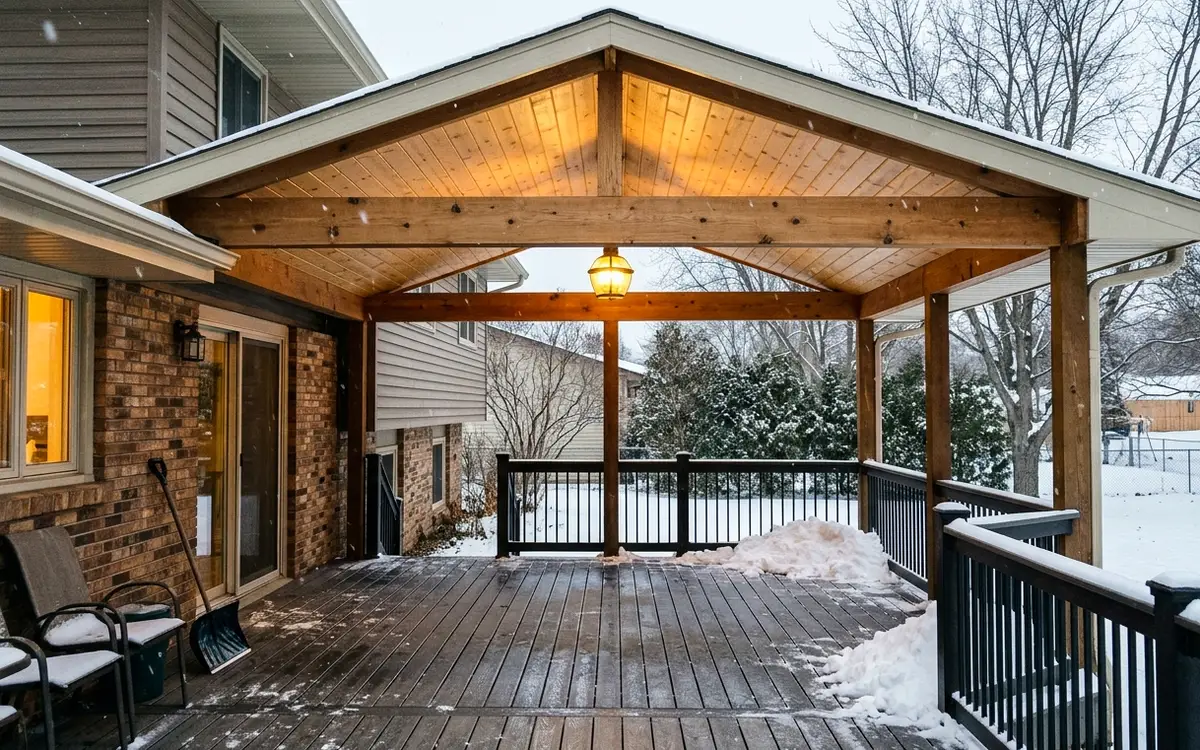
Minnesota winters are the real test for anything built outside. Water left in a sink line or ice maker splits pipes and valves after the first hard freeze, so every island we build with water gets a reachable shutoff and a drain point. Each fall, before the November cold settles in, that line gets drained and blown clear. Snow piled on counters and grill lids for months also pushes moisture into joints and cabinets, which is why we size fitted covers, often Sunbrella fabric, and leave room around the island to pull them on.
Ground movement matters just as much. Each spring and late fall, repeated freezing and thawing lifts poorly prepared soil, and a fire pit or island sitting on loose dirt will tilt and crack. Compacted gravel bases drain and stay put, and anything bolted to a deck rides on footings at the 42-inch frost depth. Burning rules differ between Minneapolis, Saint Paul and the suburbs, covering things like distance from buildings, allowed fuel and whether a permit is needed, so we confirm them with the local fire department before choosing a site.
Where we do outdoor kitchens & fire pits around Minneapolis
Outdoor Kitchens & Fire Pits jobs take our carpenters to these cities and neighborhoods most weeks, and to the rest of the metro too.
- Minneapolis 55414
- Saint Paul 55102
- Bloomington 55420
- Brooklyn Park 55443
- Plymouth 55447
- Woodbury 55125
- Maple Grove 55369
- Lakeville 55044
- Blaine 55434
- Eagan 55122
- Burnsville 55337
- Eden Prairie 55344
- Coon Rapids 55433
- Apple Valley 55124
- Edina 55424
- Minnetonka 55305
- St. Louis Park 55416
- Shakopee 55379
- Maplewood 55109
- Cottage Grove 55016
- Richfield 55423
- Roseville 55113
- Inver Grove Heights 55076
- Andover 55304
- Savage 55378
- Fridley 55432
- Chanhassen 55317
- Prior Lake 55372
Questions about outdoor kitchens & fire pits
Can you put a wood-burning fire pit on my composite deck?
No. We never build a wood-burning pit directly on a wood or composite deck, because embers and radiant heat can scorch or warp boards and reach the framing below. If you want flame on the deck, a gas fire table with its listed clearances and a heat-shield pad is the safer choice. For real wood fires, we build the pit on a paver patio or gravel pad set well away from the deck and house.
How much weight can my deck hold for an outdoor kitchen island?
It depends on how the deck was framed, so we check joist size, spacing, the ledger and the footings before planning anything heavy. Stone veneer, block and a solid countertop add up quickly. In most cases we add joists and blocking under the island and carry it on a beam whose new footings reach the 42-inch frost depth, letting the load travels straight down to firm ground.
Who runs the gas line for an outdoor kitchen or gas fire pit?
A qualified gas fitter runs and connects the line, and an electrician handles outlets, lights and appliance circuits. We plan the routes, schedule both trades, leave sleeves and access panels in the island or patio so their work goes in cleanly, and time our finish work around their inspections. You phone one number for the whole project, and we keep everyone on the same calendar.
How do I winterize an outdoor kitchen in Minneapolis?
Shut off the water at the inside valve, open the outdoor faucet and drain the line before the first hard freeze, usually in late October or early November. Empty and unplug any outdoor refrigerator, close the grill's gas valve, and scrape grease off the burners. Then pull fitted covers over the grill and counters. We show you each step at the final walkthrough so the routine is easy to repeat.
Is a backyard fire pit allowed in Minneapolis and the suburbs?
Usually yes, but each city sets its own recreational fire rules, covering things like distance from buildings and property lines, allowed fuels, pit size and restrictions during dry spells. Some also want a permit. Rules change, so we check with the city fire department for your address before we lay out the pit, and we'll tell you what applies before you commit to a spot.
Talk to us about outdoor kitchens & fire pits
Call any hour about outdoor kitchens & fire pits, tell us what you are seeing, and we will set a time to look and write up a scope.