New Decks · Minneapolis, MN
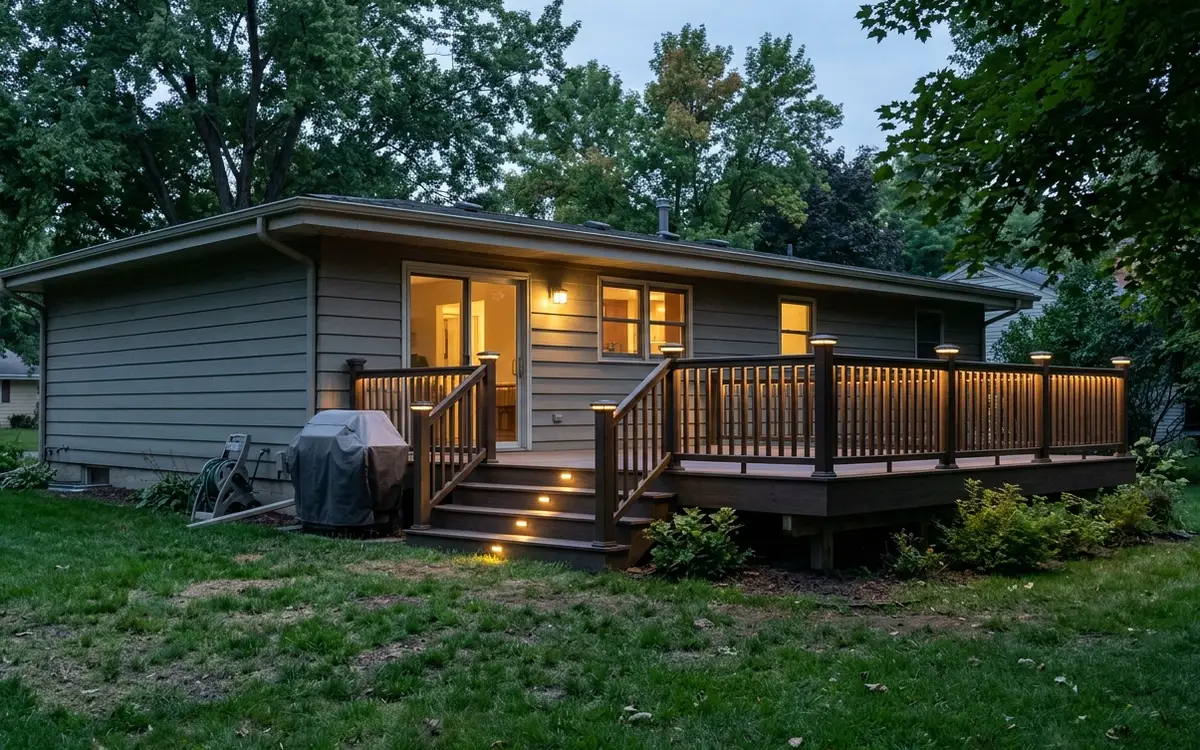
Composite deck installation in Minneapolis
You're done sanding, staining and pulling splinters every summer, and you want a deck surface that still looks good after a Minnesota winter.
We install capped composite boards on a properly spaced, joist-taped frame with the fasteners and gaps the board maker calls for.
- Phones answered 24/7
- Written scope before work starts
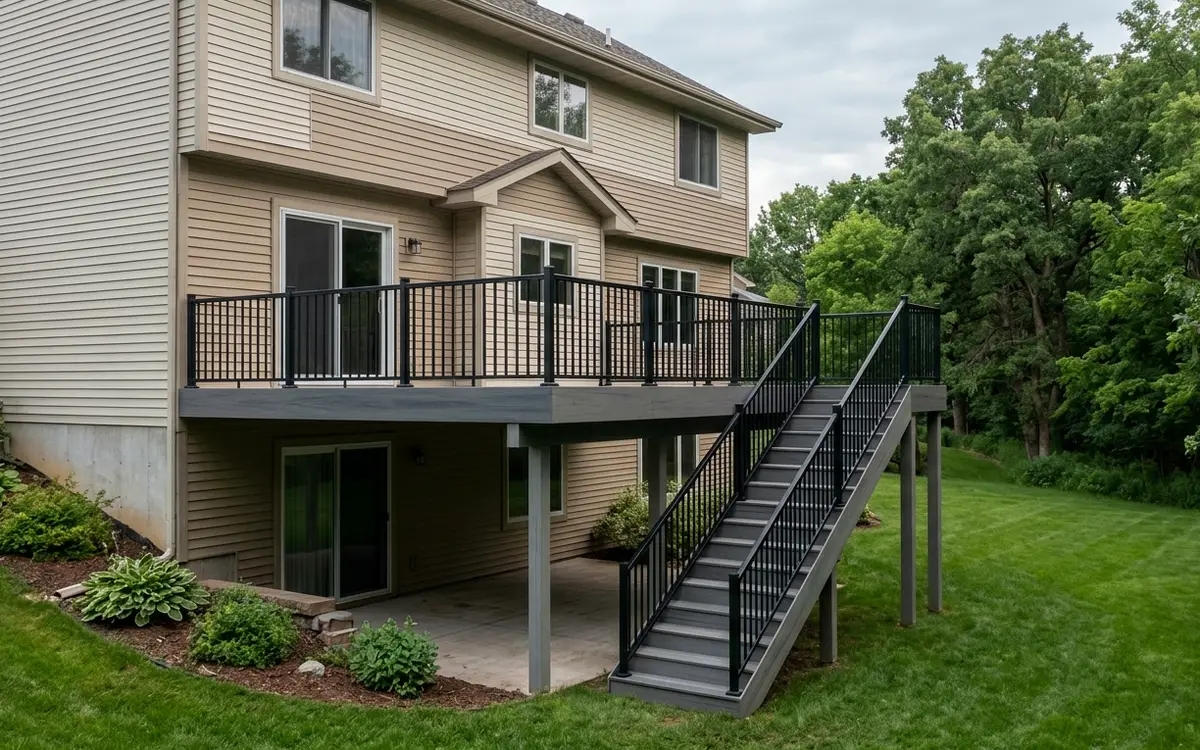
$58 to $97 per square foot installed, based on 2026 Twin Cities jobs.
Composite deck installation means building or reusing a sound wood frame, adding joist tape, then laying capped composite boards with hidden clips or edge screws and the gaps the maker specifies. In Minneapolis it typically runs $58 to $97 per square foot installed. Board line, color, railing, deck height and picture-frame borders set where your project lands, and a new frame costs more than reusing a sound one.
Why capped composite boards hold up on a Minnesota deck
Composite decking is a blend of wood fiber and plastic, and most current boards carry a hard polymer cap wrapped around the core. That cap is what resists staining, fading and moisture. You never sand or stain it. A spring wash with soap and a soft brush, plus quick cleanup of grease near the grill, covers most of the upkeep. The boards won't split or splinter the way wood can after years of freeze-thaw, which matters on stairs and near a pool where bare feet are common.
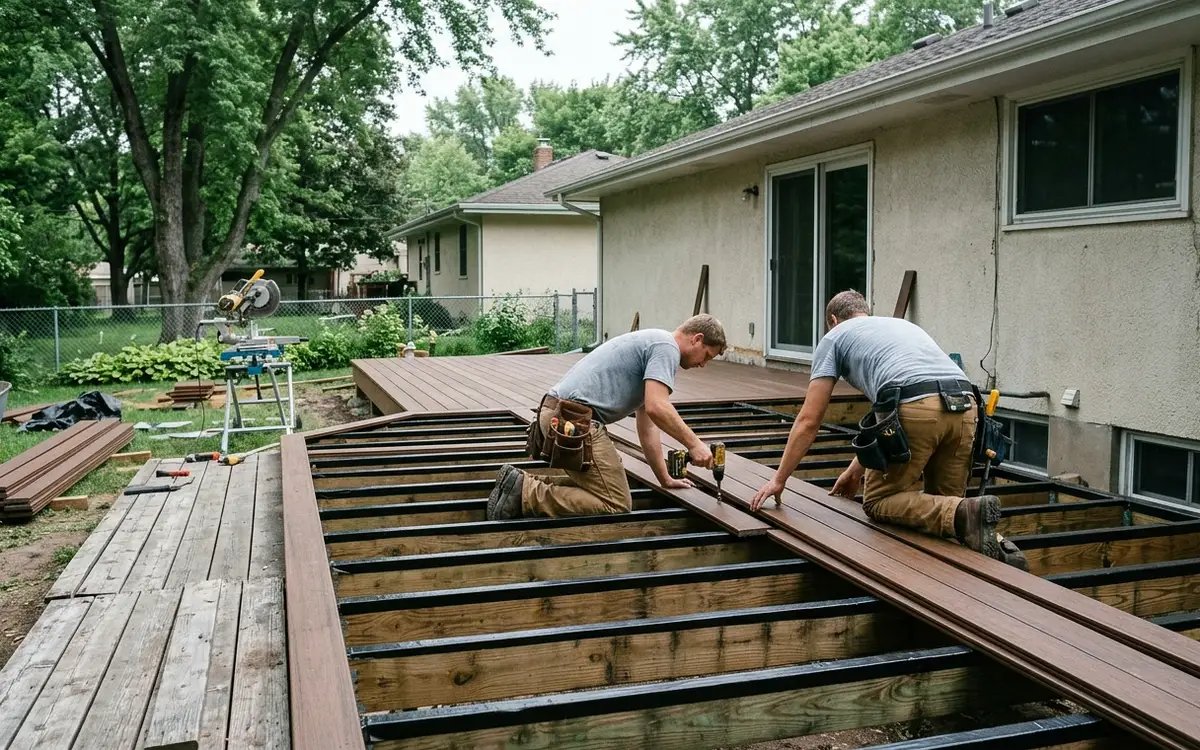
What sits under the boards still matters. Unless you choose a steel frame, a composite deck rides on pressure-treated joists, and those joists last longer with butyl joist tape over the top edges where water would sit. Composite is also more flexible than wood, so joist spacing is tighter than many old decks used. Many makers call for 16 inches on center on straight runs and closer spacing, often 12 inches, on diagonals. Laying composite over wider spacing leads to bounce and sagging between joists.
Brand and line choice is the other big decision. Trex, TimberTech, Fiberon and Deckorators each sell several tiers, from simple solid colors to multi-tone boards with deeper grain. Higher tiers usually have thicker caps and better fade resistance. Composite makers back their boards with long limited warranties, and we'll tell you which one applies to the line you pick and which installation steps keep it valid. Revo Deck Systems keeps sample boards on hand, so you can see colors in daylight against your own siding.
Composite lines, colors and fastening methods to choose from
Entry capped boards
Basic capped lines from Trex, TimberTech and Fiberon come in a few solid colors with a simple grain. They suit straightforward decks and keep the price nearer the low end of the range.
Premium multi-tone lines
Higher tiers have streaked color, deeper embossing and thicker caps that resist fading in full sun. They look closer to real hardwood and cost more per board, which adds up on large decks.
Hidden clips or edge screws
Grooved boards lock down with hidden clips between them, while square-edge boards can take CAMO edge screws driven at an angle through the side. Both methods leave a clean surface with no visible screw heads.
Light or dark colors
Dark composite boards can get hot underfoot on a July afternoon in full sun. Lighter grays and tans stay noticeably cooler, so we often suggest them for decks facing south or west.
How we install composite decking, step by step
- 01Call
Frame check or new frame
We probe joists, beams and the ledger. Sound frames get extra joists where spacing is too wide; worn ones are replaced with new framing on 42-inch footings.
- 02Visit
Joist tape and blocking
Butyl tape goes on top of every joist and beam. Picture-frame borders and stair treads get extra blocking so every board end lands on solid wood.
- 03Scope
Layout and gapping
Boards are laid out to hide or avoid butt joints, with end and side gaps set from the maker's chart for the temperature on install day.
- 04Prep
Fastening the boards
Hidden clips or edge screws hold each board at every joist. Starter clips and fascia screws follow the brand's instructions, since the wrong fasteners can void board coverage.
- 05Build
Fascia, stairs and railings
Matching fascia covers the rim joists, stair treads go on over closer stringer spacing, and railing posts are bolted through blocking rather than screwed to the rim.
- 06Check
Cleanup and care talk
Scraps get hauled off and sawdust rinsed away. Then we go over the care sheet for your board: which cleaner to use and how to shovel without scratching the cap.
Composite deck pricing in Minneapolis, explained
A composite deck typically costs $58 to $97 per square foot installed around Minneapolis. The low end covers entry boards on a simple frame near grade; the high end covers premium lines, borders, tall framing and upgraded railing. Reusing a sound frame lowers the total, while a new frame raises it. Treat these numbers as a guide only. Your actual price comes after we measure the deck and check the structure underneath.
What changes the price
- Board line and tier, from entry capped boards to premium multi-tone collections
- Whether the existing frame can stay or needs new joists, beams and footings
- Picture-frame borders, inlays and diagonal patterns, which use more board and blocking
- Deck height and stair count, including landings and long walkout stair runs
- Railing choice, such as composite, aluminum, cable or glass, and its total length
- Fascia, skirting and lighting added to finish the edges and the area underneath
Signs a composite deck is the right next step for you
Staining has become a chore
If you're re-staining every couple of summers and the finish still peels by August, composite ends that cycle. You wash it instead of stripping, sanding and recoating.
Boards split and splinter
Old wood boards with checks, raised grain and popped nails are rough on bare feet. Capped composite stays smooth and holds its fasteners through many winters.
The frame is still solid
When joists, beams and footings check out, new composite boards and railings can go on the existing structure, provided joist spacing meets the board maker's rules.
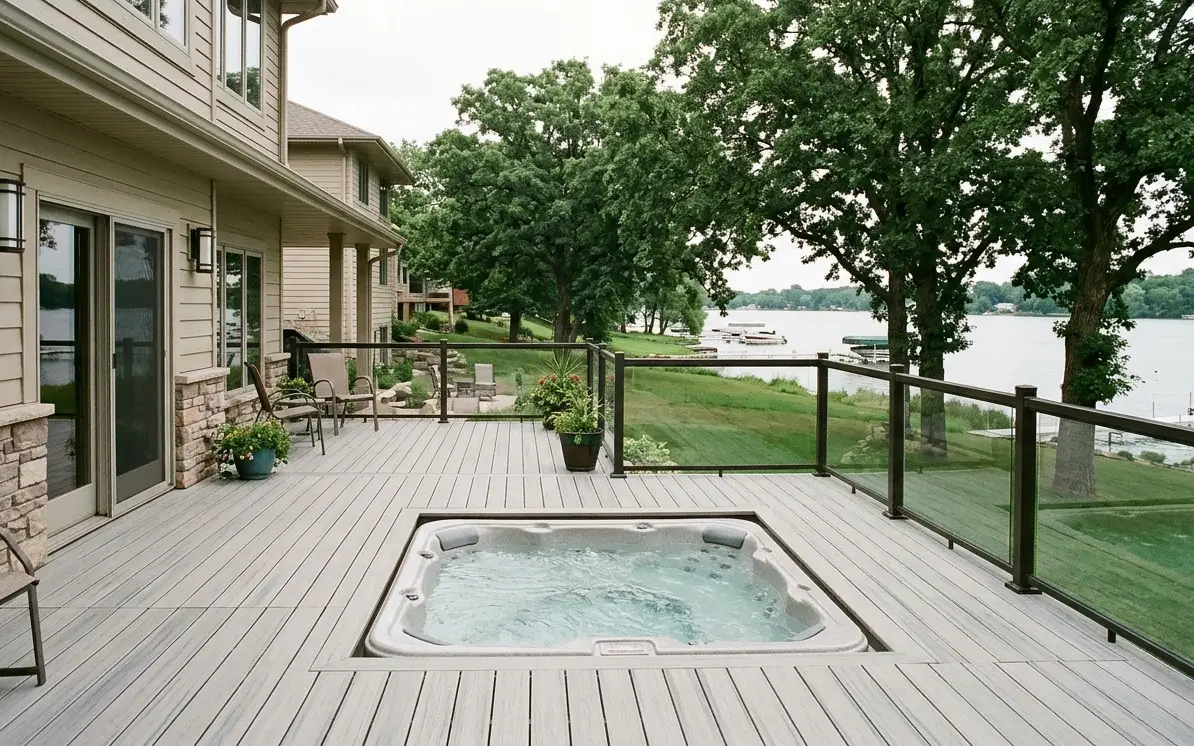
You host around a hot tub
Splashing water and wet feet wear down wood quickly. Composite tolerates constant moisture far better, and textured caps help with grip when the surface is wet.
You plan to stay put
Composite costs more upfront than wood but saves years of finishing work. Homeowners planning to stay a long while usually feel the higher price pays back in weekends saved.
Shade keeps the deck damp
Decks under big trees stay wet, and wood there grows mildew and soft spots. Composite still needs washing in shade, but its capped surface won't rot.
How composite handles Twin Cities snow, salt and summer sun
Composite expands and contracts with temperature more than wood does, and Minnesota swings from humid 90-degree afternoons to nights well below zero. That's why gapping matters so much here. We follow each maker's chart for the install-day temperature, so butt joints don't open into wide slots in January or push tight against each other in July. On long runs, a picture-frame border or a center divider board breaks up the length, which keeps movement small and gives the deck a cleaner finished edge.
Winter care is simple but worth knowing. A plastic shovel is kinder to the cap than a metal blade, and rock salt can pit or mark some boards. Calcium magnesium acetate is gentler on most surfaces, but always check your board maker's care sheet before using any melter. Under the boards, the frame is sized for heavy snow loads. On walkout homes in Plymouth or Woodbury, where drifts pile against the back wall, we pay close attention to joist size, beam spans and stair stringers.
Where we do composite decks around Minneapolis
Composite Decks jobs take our carpenters to these cities and neighborhoods most weeks, and to the rest of the metro too.
- Minneapolis 55414
- Saint Paul 55102
- Bloomington 55420
- Brooklyn Park 55443
- Plymouth 55447
- Woodbury 55125
- Maple Grove 55369
- Lakeville 55044
- Blaine 55434
- Eagan 55122
- Burnsville 55337
- Eden Prairie 55344
- Coon Rapids 55433
- Apple Valley 55124
- Edina 55424
- Minnetonka 55305
- St. Louis Park 55416
- Shakopee 55379
- Maplewood 55109
- Cottage Grove 55016
- Richfield 55423
- Roseville 55113
- Inver Grove Heights 55076
- Andover 55304
- Savage 55378
- Fridley 55432
- Chanhassen 55317
- Prior Lake 55372
Questions about composite decks
Can composite decking go on my existing wood deck frame?
Often, yes, if the frame is sound and spaced correctly. We check for rot at the ledger and joist ends, footing depth and joist spacing. Some older decks were framed at 24 inches on center, which is too wide for composite, so we add joists between them. If the ledger lacks flashing or the footings are shallow, we fix those first instead of hiding problems under new boards.
How do I clean a composite deck after a Minnesota winter?
Sweep off leaves and grit first, then wash with warm soapy water and a soft brush, rinsing well. That handles most winter grime and melter residue. For mildew spots in shady corners, use a cleaner your board maker approves. Skip pressure washers unless the care sheet allows them, and if it does, keep the tip moving so you don't scar the cap.
Does composite decking get slippery with snow and ice?
Any deck gets slick once ice forms, composite included. Textured caps grip better than smooth ones, and clearing snow before it packs down helps most. Use a plastic shovel and check your board maker's care sheet before reaching for rock salt. On stairs, we can add step lighting so you can spot ice at night before you put your weight on it.
Is composite decking worth the higher price compared to treated wood?
It depends on how long you'll stay and how much you dislike finishing work. Composite costs more per square foot up front. In exchange, you skip sanding and staining, and the boards won't split or splinter. If you plan to move in a couple of years, wood may make more sense. If you're staying, many homeowners decide the weekends saved are worth it.
Which composite deck colors work best for a sunny south-facing yard?
Lighter grays, tans and weathered blends usually stay cooler in full afternoon sun than dark browns and charcoal. They also show less dust and pollen. We bring sample boards so you can set them out in your own yard and touch them at midday. Darker colors can still work where trees or a pergola shade the deck for part of the afternoon.
Talk to us about composite decks
Call any hour about composite decks, tell us what you are seeing, and we will set a time to look and write up a scope.