New Decks · Minneapolis, MN
Pressure-treated wood decks in Minneapolis
You need a solid, good-looking deck without paying composite prices, and you don't mind a weekend of staining every so often.
We build pressure-treated decks with the right treatment ratings, galvanized or stainless hardware, and framing that stays straight through Minnesota winters.
- Phones answered 24/7
- Written scope before work starts
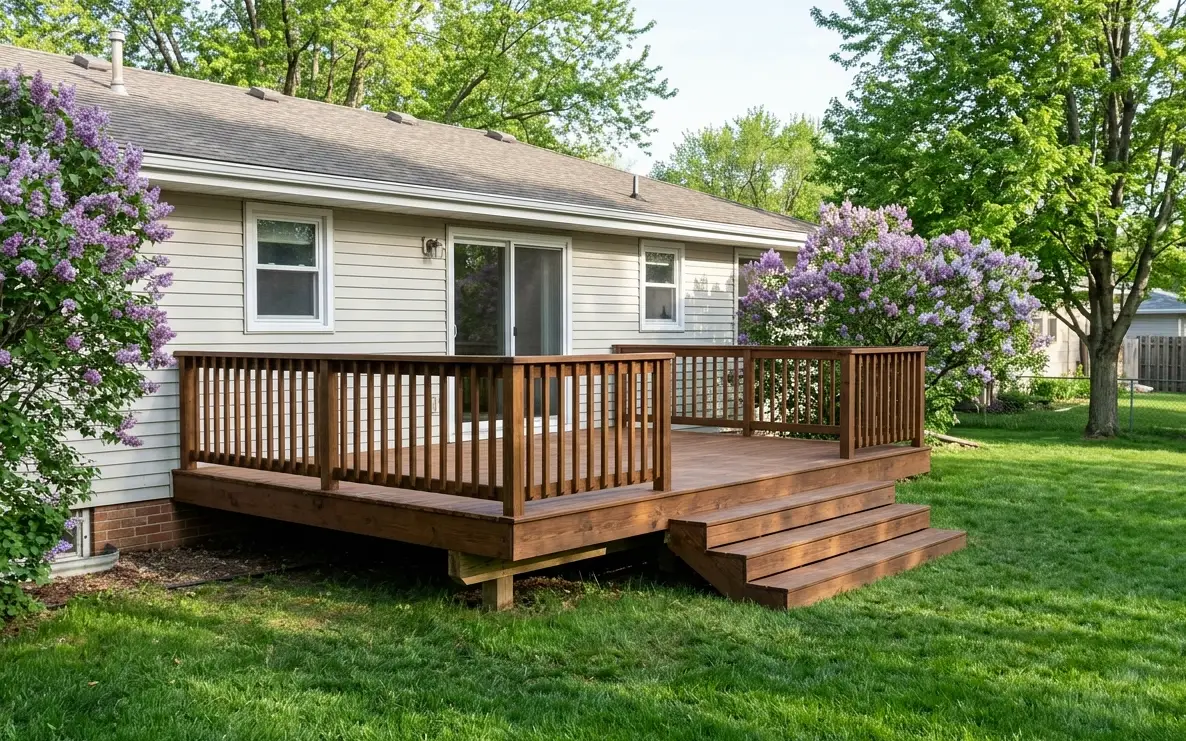
$36 to $61 per square foot installed, based on 2026 Twin Cities jobs.
A pressure-treated deck uses lumber infused with copper-based preservatives for the posts, framing and usually the boards and railings too. It's the lowest-cost way to get a sturdy wood deck. Around Minneapolis, pressure-treated decks typically cost $36 to $61 per square foot installed, depending on height, size, stairs, railing and board choice. Plan on a stain or sealer once the wood has dried enough to take it.
What you are actually getting with a pressure-treated deck
Most pressure-treated deck lumber in the Twin Cities is southern yellow pine treated with copper-based preservatives such as ACQ or copper azole. The treatment protects the wood from rot and insects, and it's why most deck frames, including those under composite and cedar boards, are built from treated lumber. When the boards, stairs and railings are treated too, you get a strong, straightforward deck at the lowest material cost. Fresh treated wood has a green or brown tint that fades and takes stain once dry.
Not all treated lumber carries the same rating. Lumber rated for above-ground use works for deck boards and railings, while posts, low joists and anything near soil or hard to replace should carry a ground-contact rating. We use ground-contact framing on low decks and anywhere leaves and water collect. Some lumber is kiln-dried after treatment, which costs more but arrives drier, shrinks less on the deck and can take stain sooner. We'll explain where each one makes sense on your build.
Treated lumber is wet with preservative when it arrives, so it shrinks and can check, twist or cup as it dries. Good building habits keep that under control: choosing straight stock, fastening boards with two screws at each joist, and installing joists crown-up so the frame stays flat. The copper in the treatment also corrodes plain steel, which is why Revo Deck Systems uses hot-dip galvanized or stainless hangers, screws and bolts rated for treated lumber. Old decks built with the wrong hardware often fail at the hangers first.
Choosing lumber grades, treatment ratings and finishes
Standard five-quarter decking
Standard 5/4 by 6 radius-edge boards are a very common deck surface around the metro. They cost the least and look fine stained, though they shrink and check more than thicker stock does.
Two-by-six boards
Thicker 2 by 6 treated boards flex less underfoot and resist cupping better. They cost a little more per board and suit busy family decks, wide stair treads and decks that see heavy furniture.
Kiln-dried after treatment
Lumber dried again after treatment arrives straighter and lighter, shrinks less once installed, and can usually take stain much sooner. It costs more but saves months of waiting before you can finish it.
Stain color and opacity
Transparent stains show the grain, semi-transparent stains add color and UV protection, and solid stains cover like paint. Cabot, Behr, Olympic and Sherwin-Williams all make deck stains suited to treated pine.
How we build a pressure-treated deck that stays flat
- 01Call
Measure and plan
We measure the house and yard, check grade and downspouts, and draw a layout with joist spacing and beam sizes matched to the span and snow load.
- 02Visit
Footings below frost
Holes go to 42 inches for concrete footings, or we use helical piers. Posts sit on standoff bases so the end grain stays off the concrete and dries out.
- 03Scope
Sorting straight lumber
We sort the delivery, set aside twisted or badly checked pieces, and install joists crown-up so the deck surface ends up flat rather than wavy.
- 04Prep
Ledger and hardware
The ledger gets flashed and bolted to the house rim, and every hanger, screw and bolt is hot-dip galvanized or stainless and rated for treated wood.
- 05Build
Boards and railings
Boards go down with two screws per joist and proper gaps, since treated pine shrinks as it dries. Railing posts get bolted through solid blocking.
- 06Check
Finish timing
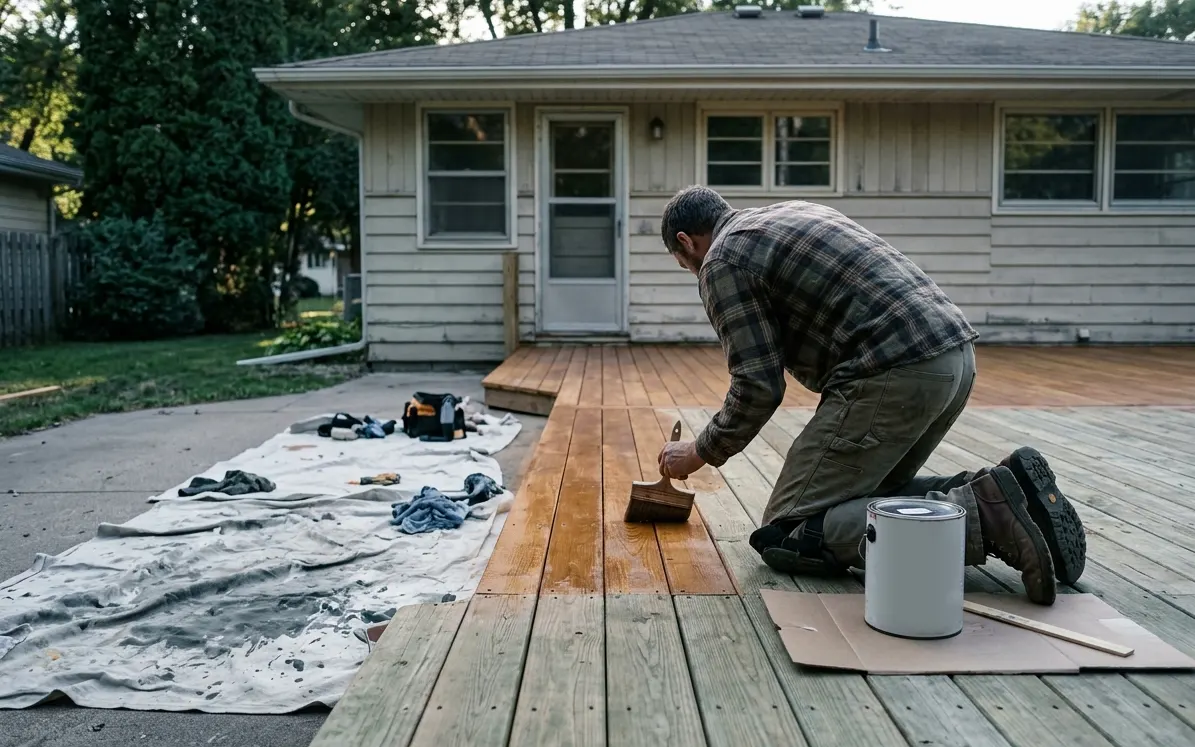
A water bead test tells you when to stain. If drops still bead up on the boards, the wood needs more drying before any finish goes on.
Pressure-treated deck cost ranges in Minneapolis
Pressure-treated decks typically cost $36 to $61 per square foot installed in the Minneapolis area. A low, simple rectangle with treated railings sits near the low end. Tall decks, multiple stair runs, thicker boards, kiln-dried lumber and upgraded railings move toward the top. A 12 by 16 foot deck is 192 square feet, which helps you ballpark. The real number comes after we see your yard and the back wall of the house.
What changes the price
- Deck height, which drives post size, bracing, beam depth and stair length
- Board choice between standard five-quarter decking and thicker two-by-six stock
- Kiln-dried after treatment lumber, which costs more but can be stained much sooner
- Railing style, from treated balusters to aluminum or composite railing kits
- Removing an old deck and hauling it away before the new build starts
- Site access for digging, such as tight side yards, fences or alley-only access
Signs a pressure-treated deck is the smart choice for your project
Budget comes first
If you need the most square footage for the money, treated pine gives you a sturdy deck now and leaves room to upgrade railings or lighting later.
You plan to stain it
Treated wood takes semi-transparent and solid stains well once it dries, so you can pick a color that matches your trim, siding or a nearby fence.
The deck sits low to grade
Ground-contact rated lumber is made for damp spots close to soil, which makes it a sound pick for low decks off ramblers and split levels.
You may switch to composite later
A treated deck framed at the joist spacing composite needs can take composite boards later, since the frame is the same lumber we would use under composite anyway.
It's a rental or duplex
Owners of duplexes and triplexes with rear porches often want a durable surface that is easy to repair. Damaged treated boards are simple and inexpensive to swap out.
You like a classic wood look
Stained treated decking with square balusters looks right on post-war ramblers and Cape Cods, and it's easy to match when you add on later.
How treated lumber behaves in a Twin Cities climate
Minneapolis swings from humid summers to dry, bitter winters, and treated pine reacts to both. Boards installed wet in spring shrink over the first season, so gaps that looked tight in May open up by fall. We plan for that shrinkage when spacing boards. Snow left on a deck for weeks keeps the surface damp into April, which is when checking and mildew start on unfinished wood. A good stain applied once the boards dry, then renewed as it wears, makes a big difference in how long the deck looks good.
Older decks across Richfield, Crystal, Robbinsdale and Columbia Heights show what tends to go wrong. Many from the 1980s and 1990s used nailed ledgers with no flashing, and both older treated lumber and newer ACQ and copper azole lumber corrode hangers that aren't rated for them. When we replace those decks, the new frame gets a flashed ledger, rated hardware and footings that reach 42 inches. Rock salt can pit wood boards, so we suggest a plastic shovel and calcium magnesium acetate instead.
Where we do pressure-treated decks around Minneapolis
Pressure-Treated Decks jobs take our carpenters to these cities and neighborhoods most weeks, and to the rest of the metro too.
- Minneapolis 55414
- Saint Paul 55102
- Bloomington 55420
- Brooklyn Park 55443
- Plymouth 55447
- Woodbury 55125
- Maple Grove 55369
- Lakeville 55044
- Blaine 55434
- Eagan 55122
- Burnsville 55337
- Eden Prairie 55344
- Coon Rapids 55433
- Apple Valley 55124
- Edina 55424
- Minnetonka 55305
- St. Louis Park 55416
- Shakopee 55379
- Maplewood 55109
- Cottage Grove 55016
- Richfield 55423
- Roseville 55113
- Inver Grove Heights 55076
- Andover 55304
- Savage 55378
- Fridley 55432
- Chanhassen 55317
- Prior Lake 55372
Questions about pressure-treated decks
How long should I wait before staining a new pressure-treated deck?
Wait until the wood is dry enough to absorb finish. Sprinkle water on a few boards: if it beads, the wood is still too wet, and if it soaks in within a few minutes, it's ready. Standard treated lumber can take a few months to dry, depending on sun and weather. Kiln-dried after treatment lumber can often be stained within weeks of installation.
Is pressure-treated deck lumber safe around kids, pets and gardens?
Current residential treated lumber uses copper-based preservatives such as ACQ and copper azole, which replaced the older arsenic-based CCA treatment for residential use in the early 2000s. Wash your hands after handling it, never burn the scraps, and wear a mask when cutting. For raised garden beds built against the deck, many homeowners line the inside with plastic or use cedar.
Why do pressure-treated deck boards crack and warp?
Treated lumber leaves the plant saturated with preservative and water, and it shrinks as it dries. Uneven drying causes checks on the surface, cupping across the width, or twisting along the length. Choosing straight stock, fastening with two screws at each joist, and staining once the wood is dry all reduce the movement. Small surface checks are normal and don't weaken the deck.
Can a pressure-treated deck be built to take composite boards later?
Yes, and it's worth planning for. Composite usually needs joists at 16 inches on center or tighter, so we frame to that spacing from the start. Joist tape on top of the frame protects it now and later. When the treated boards wear out, we pull them and lay composite over the same sound frame instead of rebuilding the structure.
How long does a pressure-treated deck last in Minnesota?
That depends more on finish care, drainage and hardware than on the wood itself. Ground-contact framing, a flashed ledger and rated hangers keep the structure sound for many years. Boards on a well-kept deck last far longer than boards left bare. We'd rather show you what to check each spring than name a number, since shade, snow and upkeep vary so much from yard to yard.
Talk to us about pressure-treated decks
Call any hour about pressure-treated decks, tell us what you are seeing, and we will set a time to look and write up a scope.