Repair & Replacement · Minneapolis, MN
Deck repair for Minneapolis homes
A soft board, a railing that moves when you lean on it, or stairs that shift underfoot are warning signs, and they rarely fix themselves over a Minnesota winter.
We find what is failing underneath, repair it with matched lumber and rated hardware, and tell you honestly whether the deck has years left.
- Phones answered 24/7
- Written scope before work starts
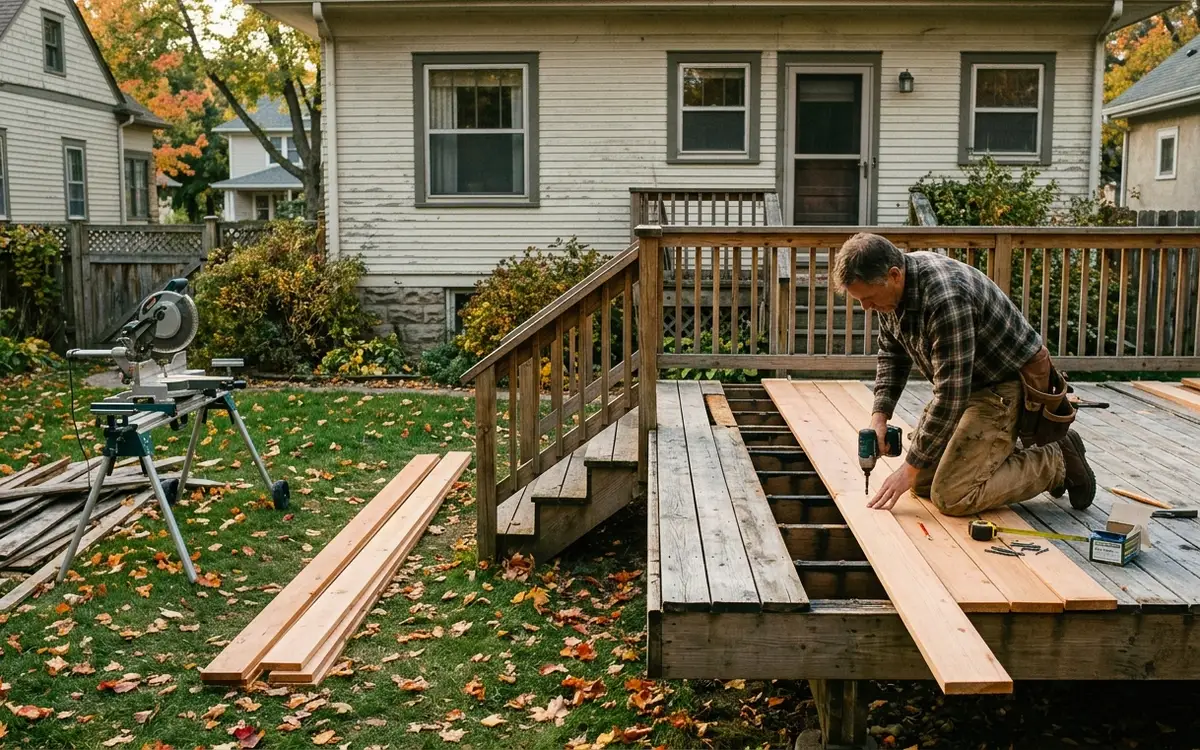
$385 to $4,850 per repair visit and scope, based on 2026 Twin Cities jobs.
Deck repair covers the fixes that keep an existing deck safe and usable: replacing rotted boards, refastening or rebuilding railings, resetting stairs, swapping corroded hangers and sistering weak joists. In Minneapolis, a typical repair runs $385 to $4,850 per repair visit and scope, depending on how much is damaged and how hard it is to reach. We look at the frame first so the price matches the real problem.
Signs your deck needs repair before next season
Boards that feel soft or spongy
Press a screwdriver into the board near a fastener. If it sinks in easily, rot has started, and the joist below often has the same moisture problem hiding under it.
Railing posts that move by hand
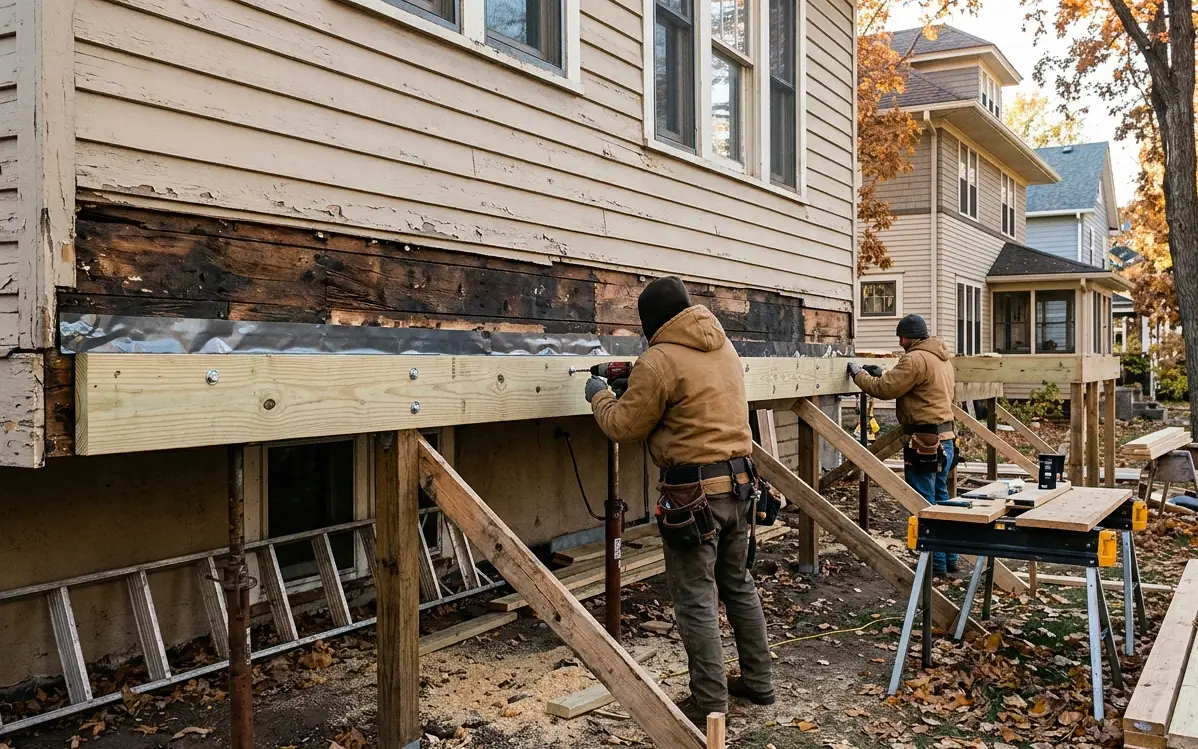
A guard post should not flex when you push on the top rail. Movement usually means the bolts have loosened or the rim joist behind the post has rotted.
Stairs that rock or tilt
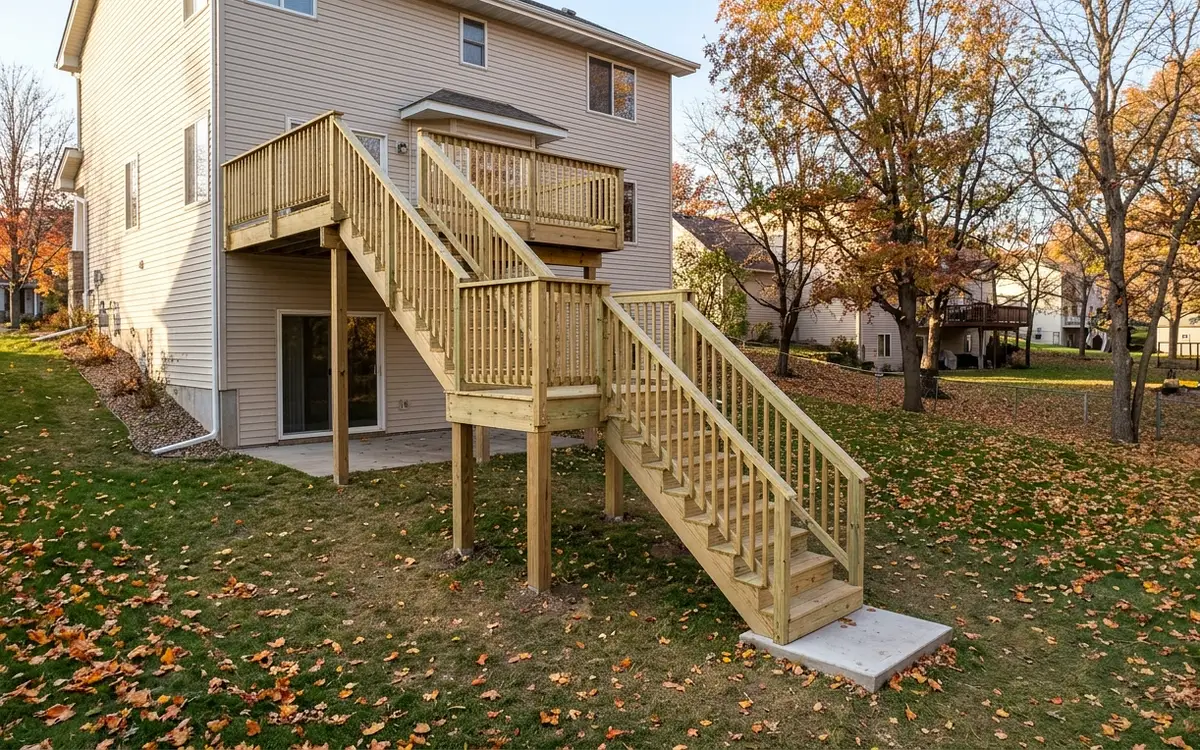
Stringers often rest on a loose paver or bare soil. When the bottom shifts, treads crack and the whole run can pull away from the deck frame above.
Rust streaks below hangers
Orange stains running down the joists mean the hangers or nails are corroding. Treated lumber eats the wrong hardware, and a rusted hanger can let a joist drop.
Popped nails and lifted boards
Nails that back out every spring are a trip hazard and a sign the boards are cupping. We switch to screws or hidden fasteners rated for the lumber you have.
Damage after a storm
A fallen limb, hail or a strong wind can crack boards and knock railings loose. It is worth a look underneath even when the surface damage seems minor from the yard.
Why small deck problems get bigger after one winter
Most decks we look at in Minneapolis did not fail all at once. A board split in August, water got into the end grain, and by spring the joist below it had a soft spot you could push a screwdriver into. Freeze-thaw cycles open every crack a little wider, and snow sitting on the surface for months keeps the wood wet. That is why we treat a single bad board as a reason to check the framing around it, not just a board to swap.
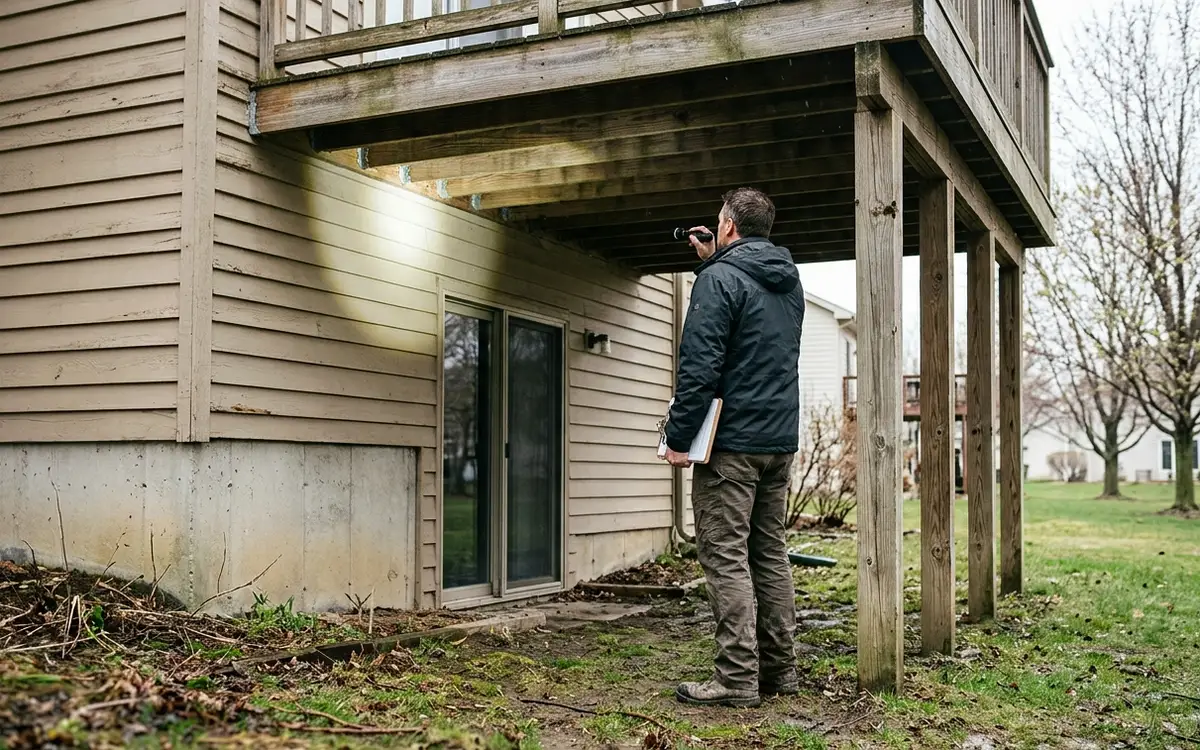
A Revo repair visit starts with a walk underneath the deck. We probe joists, beams and the ledger, check every hanger and lag, and rock each post to feel for movement. Railings get a push test at the top rail, since a loose guard is the injury we worry about most. Then you get a plain list: what is unsafe now, what can wait a season, and what each item costs to fix properly.
Some decks are worth repairing for many more seasons of use, and some are not. If the ledger is rotted through or most of the joists are soft, patching just spends money on a frame that is already done. We'll say so and walk you through replacement as the other path. If a deck is sagging, bouncing or pulling away from the house, keep everyone off it and call us; our phones are answered day and night.
How a deck repair visit runs from call to cleanup
- 01Call
Call and describe it
Phone us and tell us what you're seeing. If anything sounds unsafe, like a sagging section or a loose railing, we'll tell you to keep people off it until we arrive.
- 02Visit
Inspect above and below
Our carpenter walks the surface, then goes underneath to probe the joists, beam, posts and ledger. Photos of each problem area go into your repair list.
- 03Scope
Prioritized repair list
You get every item ranked as urgent, soon or watch, with a price for each one. You decide what gets done now and what can wait until spring.
- 04Prep
Permit check if needed
Most small repairs need no permit at all. Structural work on an attached deck sometimes does, and if so we handle the drawings, the paperwork and the inspection.
- 05Build
Repair work on site
Many repairs take a day or two. We protect the yard and siding, pull the damaged material, and install new lumber and hardware sized for the load it carries.
- 06Check
Walkthrough and haul away
Before we leave, we show you what was fixed, test the railings and stairs with you, and take the old boards and fasteners off the property.
What deck repair typically costs in Minneapolis
Most repairs we do fall in a typical range of $385 to $4,850, priced per repair visit and scope. A few replaced boards and a tightened railing sit near the low end. Sistered joists, a rebuilt stair run or several new posts move it up. The real number comes after we see the deck, because what hides under the boards often matters more than what shows on top.
What changes the price
- Number of boards, joists or posts that need replacing outright
- Access underneath, especially on low decks with little crawl space
- Matching existing material such as aged cedar or discontinued composite colors
- Railing and stair work, which adds posts, blocking and new treads
- Hardware swaps where corroded hangers run the full length of the deck
- Height of the deck and whether scaffolding or extra shoring is needed
Repair methods we match to the damage we find
Spot board replacement
We cut out failed boards back to the nearest joist and set new ones that match the width and thickness. On older cedar or treated decks, new wood looks brighter for a season before it weathers in.
Sistering weak joists
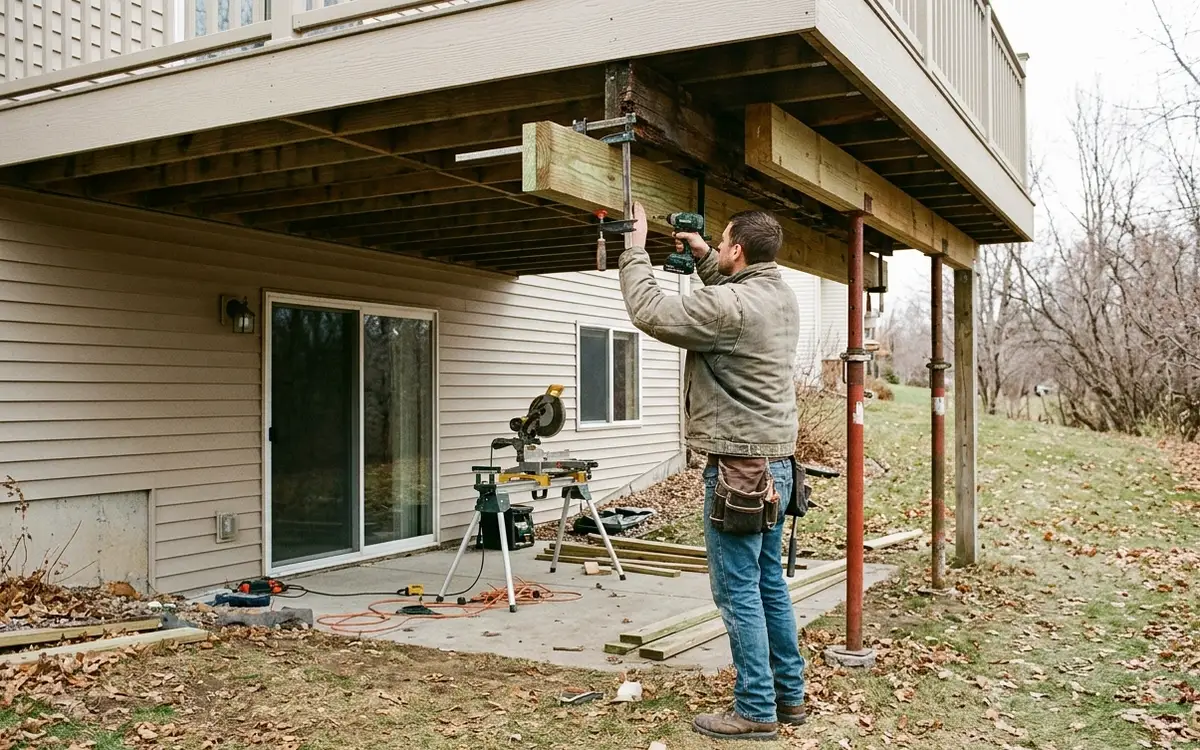
A joist with localized rot or a crack can often be saved by bolting a new full-length joist alongside it. It costs less than reframing and keeps the existing decking in place where it's still sound.
Railing rebuild to current rules
Loose or short railings get new posts through-bolted to the frame, with solid blocking behind them. We build to current height and baluster spacing so a small child cannot slip through the gaps.
Hardware and fastener upgrade
Corroded hangers, lags and nails come out and hot-dip galvanized or stainless pieces rated for treated lumber go in, often from Simpson Strong-Tie. It is one of the quieter fixes and one of the most important.
What Minneapolis winters do to an older deck
Snow can sit on a deck from November into March, and every warm afternoon melts some of it into the joints between boards. When the temperature drops again, that water freezes and pushes fasteners, boards and stair treads apart. The many freeze-thaw swings of March, April and November repeat the cycle over and over. Rock salt speeds up the damage on many surfaces, so we usually suggest a plastic shovel and calcium magnesium acetate instead, after checking the board maker's care sheet. Heavy snow also loads the frame, and a deck with one weak joist or a tired post feels it first.
A lot of our repair calls come from the city's older housing. Bungalows and foursquares in Longfellow, Southwest and Northeast often have small rear decks added in the 1980s or 1990s, many with nailed ledgers and no flashing. Duplexes and triplexes carry stacked rear porches that see daily traffic from several households. Out in the walkout suburbs, tall second-story decks mean a loose railing is a serious fall risk. In each case we fix the immediate problem and then check the attachment points that older builds tend to get wrong.
Where we do deck repair around Minneapolis
Deck Repair jobs take our carpenters to these cities and neighborhoods most weeks, and to the rest of the metro too.
- Minneapolis 55414
- Saint Paul 55102
- Bloomington 55420
- Brooklyn Park 55443
- Plymouth 55447
- Woodbury 55125
- Maple Grove 55369
- Lakeville 55044
- Blaine 55434
- Eagan 55122
- Burnsville 55337
- Eden Prairie 55344
- Coon Rapids 55433
- Apple Valley 55124
- Edina 55424
- Minnetonka 55305
- St. Louis Park 55416
- Shakopee 55379
- Maplewood 55109
- Cottage Grove 55016
- Richfield 55423
- Roseville 55113
- Inver Grove Heights 55076
- Andover 55304
- Savage 55378
- Fridley 55432
- Chanhassen 55317
- Prior Lake 55372
Questions about deck repair
Is deck repair worth it, or should I replace the whole deck?
It comes down to the frame. If the ledger, beam and most joists are sound, deck repair is usually the better value even when many boards are worn. Once rot reaches the ledger or a large share of the joists, repairs stack up fast and replacement makes more sense. We'll show you what we found and price both paths so you can compare them side by side.
Can you do deck repair in the winter in Minneapolis?
Yes, for most items. Railings, stairs, hangers and board swaps can be done on a dry winter day once we clear the snow. Footing work below frost depth takes frost blankets or helical piers, which adds time and cost. If something is unsafe in January, we'd rather fix it then than wait for spring and risk someone falling.
Do I need a permit for deck repair on my house?
Board and railing replacement in kind usually does not need one. Structural repairs such as a new ledger, beam or footing on an attached deck often do in Minneapolis and the suburbs. We check with the city before work starts, draw what's needed, pull the permit and meet the inspector, so you don't have to sort that part out yourself.
Will new boards from a deck repair match my old ones?
Close, but rarely perfect on day one. New treated or cedar boards look brighter and weather toward the old color over a season or two. Composite colors change between product lines, so we bring samples and look for the closest match. Some homeowners stain the whole surface after repairs so the deck reads as one even color.
What should I do if my deck feels unsafe and needs repair tonight?
Keep everyone off it, including pets, and block the stairs if you can. Don't try to jack up a sagging section yourself. Then call us, because our phones are answered day and night. We'll talk through what you're seeing, tell you whether it can safely wait until morning, and get a carpenter out to shore it up.
Talk to us about deck repair
Call any hour about deck repair, tell us what you are seeing, and we will set a time to look and write up a scope.