Porches & Covers · Minneapolis, MN
Custom gazebo building in Minneapolis
The back of your yard has a great view of the garden or the lake, but there is nowhere out there to sit in the shade.
We build wood gazebos on solid footings with real roofs framed for snow, so you get a covered retreat away from the house.
- Phones answered 24/7
- Written scope before work starts
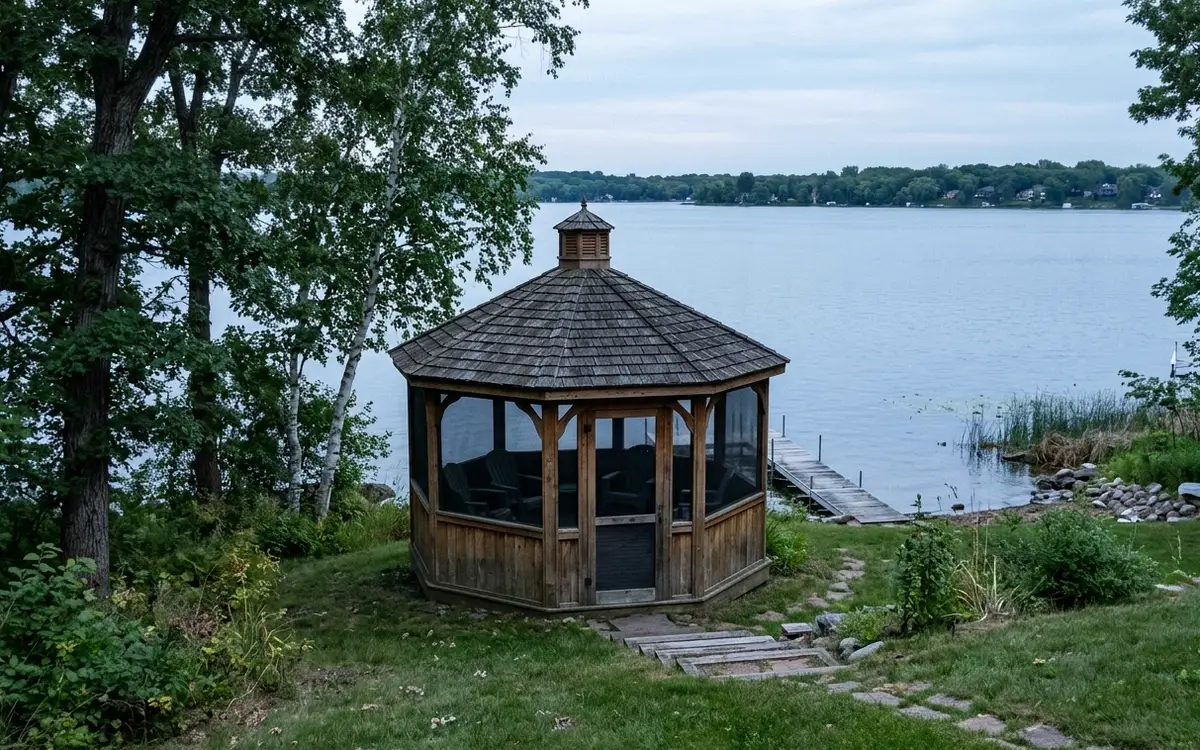
$8,950 to $34,600 per gazebo, based on 2026 Twin Cities jobs.
A gazebo is a freestanding, roofed structure, usually six or eight sided, set in the yard, on a patio or on a deck. We pour footings below frost depth, frame the floor, posts and roof for Minnesota snow, and add railings, screens or a cupola if you want them. A typical Minneapolis gazebo costs $8,950 to $34,600 per gazebo, depending on size, shape and finish.
What a gazebo adds to your yard that a deck does not
A gazebo gives you a covered spot away from the house, out where the garden, a pond or the lake view is. It becomes a destination in the yard, a place to read in the morning or set up a card table on a warm evening. Because it stands alone, it never has to tie into your house roof or line up with a back door. It can sit at the far corner of a lot, beside a patio or on a low deck built just for it.
Most gazebos we build are octagonal or hexagonal with a hip roof that rises to a center point. Those shapes look right in older yards and shed snow and rain evenly. Square and rectangular gazebos are simpler to frame and fit a dining table better. Open sides with railings keep it airy, while screen panels make it a bug-proof retreat, which many Minnesota owners near lakes and creeks end up wanting by the middle of June.
A gazebo roof is a small roof, but it still has to carry winter snow. We frame the rafters to a center hub or king post, sheathe and shingle the roof, and add a cupola or vent if the design calls for one. Below, each post sits on a footing below 42 inches, or the floor frame rests on a grid of footings, so the gazebo stays level through freeze-thaw cycles and the roof joints stay tight for years.
Gazebo shapes, materials and sides to choose from
Octagon or hexagon with hip roof
The classic gazebo shape suits older homes and garden settings. The roof sheds snow evenly from every side, and a cupola on top adds venting and a finished look. It does take more cutting and framing time.
Square or rectangular gazebo
Straight walls fit a dining table and chairs better and frame more simply, so the cost per foot is lower. A gable or hip roof both work, and the shape pairs well with a modern house.
Cedar or treated pine frame
Cedar resists rot, smells good and takes a semi-transparent stain beautifully. Treated pine costs less and holds up well when stained or painted. We often mix them, using treated framing below the floor and cedar above.
Open, railed or screened sides
Open sides with railings keep the gazebo airy and the view clear. Screen panels keep bugs out, and a low built-in bench along one side adds seating without crowding the floor.
How we build a gazebo in your yard
- 01Call
Choosing the spot
Together we walk the yard to pick a site with good drainage, a view you like, clearance from lot lines and easy access for materials.
- 02Visit
Design and permit
We draw the shape, size and roof framing. Larger gazebos and those with electrical service usually need a permit, and we handle that application for you.
- 03Scope
Footings and floor frame
Footings go below 42 inches for each post or floor beam, then a level floor frame is built and decked in wood or composite.
- 04Prep
Posts, roof and shingles
Corner posts go up plumb, rafters meet at a center hub sized for snow, and the roof is sheathed and shingled to suit your house or garage.
- 05Build
Railings, screens and benches
Railings or screen panels go between the posts, plus built-in benches, a cupola or trim details, and then the wood is finished with stain or paint.
- 06Check
Wiring and final check
If you want lights, a fan or an outlet, an electrician we coordinate runs the circuit. We then inspect everything, clean up and walk you through care.
Gazebo cost in the Twin Cities
A gazebo in the Twin Cities typically costs $8,950 to $34,600 per gazebo. Shape and size matter most, since an octagon takes more framing than a square of the same floor area. Cedar, screen panels, a cupola, built-in benches and wiring add to the cost, as does a steep or hard-to-reach site. The real number comes after we walk your yard and see where it will sit.
What changes the price
- Gazebo size and shape, with octagons taking more framing than squares
- Lumber choice: treated pine framing, cedar finish work or composite flooring
- Site access, slope and how many footings the floor needs
- Roof details like a cupola, decorative trim or metal roofing
- Screen panels, railings and built-in benches between the posts
- Electrical service for lights, fans or outlets out in the yard
When a gazebo is the right addition
The best view is across the yard
If the best spot in the yard is down by the garden, the shoreline or a stand of trees, a gazebo puts shade and seating right where you want to sit.
The deck is crowded at gatherings
A gazebo gives guests a second covered spot in the yard, which spreads people out and gives kids or a quieter group a space of their own.
Your yard has no shade trees
Newer suburban lots often have young trees that will not cast real shade for years. A gazebo gives you cover right away while the trees grow in.
An old gazebo is leaning or leaking
Older kit gazebos on shallow blocks or posts set in dirt tend to lean, rot at the base and leak at the roof peak. We rebuild them on proper footings.
Mosquitoes rule the waterfront
Yards near lakes, ponds or creeks draw mosquitoes all summer. A screened gazebo lets you enjoy the water at dusk without getting bitten every few minutes.
A hot tub needs cover and privacy
A gazebo over a hot tub shades it, keeps leaves and snow out and blocks sight lines from neighbors, as long as the floor is framed for the weight.
Gazebos made for Minnesota yards and lake lots
Lake lots are where gazebos make the most sense in the Twin Cities. A walkout home on Lake Minnetonka, or a yard that slopes down toward a pond or creek, often has its best view well away from the house. A gazebo down there puts a roof over the spot you would want to sit anyway. We plan how materials get down steep grades and step the footings into the slope, so the floor sits level even where the ground falls away below it.
Snow and frost decide whether a gazebo lasts. Kit gazebos sold for warmer climates often come with light rafters that sag under a Minnesota winter, and their posts sit on blocks that heave every spring. We frame the roof for real snow loads and set every footing below 42 inches. In older Minneapolis neighborhoods with smaller lots, like Longfellow or Northeast, we size the gazebo to fit setbacks and garden space, often as a compact screened octagon tucked near the back fence.
Where we do gazebos around Minneapolis
Gazebos jobs take our carpenters to these cities and neighborhoods most weeks, and to the rest of the metro too.
- Minneapolis 55414
- Saint Paul 55102
- Bloomington 55420
- Brooklyn Park 55443
- Plymouth 55447
- Woodbury 55125
- Maple Grove 55369
- Lakeville 55044
- Blaine 55434
- Eagan 55122
- Burnsville 55337
- Eden Prairie 55344
- Coon Rapids 55433
- Apple Valley 55124
- Edina 55424
- Minnetonka 55305
- St. Louis Park 55416
- Shakopee 55379
- Maplewood 55109
- Cottage Grove 55016
- Richfield 55423
- Roseville 55113
- Inver Grove Heights 55076
- Andover 55304
- Savage 55378
- Fridley 55432
- Chanhassen 55317
- Prior Lake 55372
Questions about gazebos
Do you build gazebos from kits or from scratch?
We build gazebos from scratch, framed and cut on site to fit your yard and the snow loads here. Many kits are designed for milder climates, with lighter rafters and shallow anchors. If you already own a kit, we can look at it and tell you honestly whether it can be reinforced and set on proper footings, or whether it's better to start fresh.
Can a gazebo go on top of my deck?
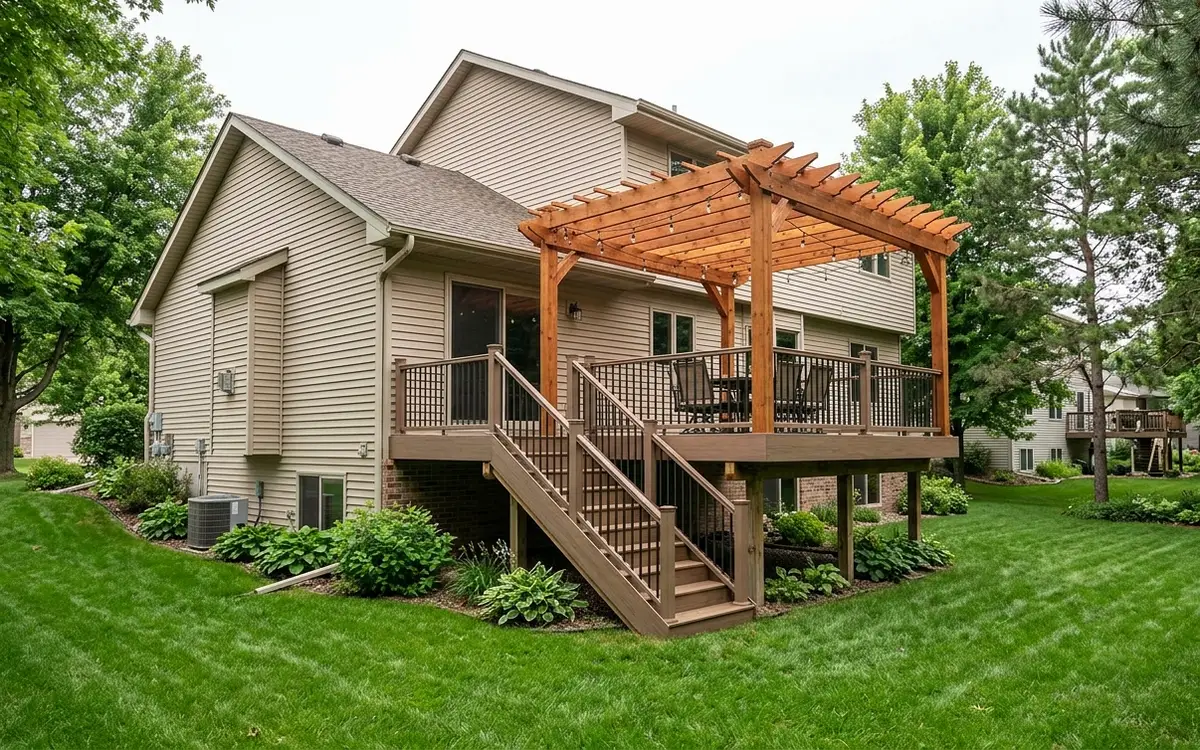
Yes, if the deck frame is built for it. A gazebo adds roof weight and snow load at each post, so we add blocking and new footings below the post locations, or frame the gazebo section of the deck as its own separate structure. We check the existing deck first and tell you exactly what it needs before any work starts.
Can I put a hot tub inside a gazebo?
You can, and a gazebo is a good way to shade a tub and keep snow off it. The floor has to be framed or slabbed for the full weight of the tub with water and people in it, and the roof should be vented so moisture does not rot the rafters. Electrical work for the tub is done by an electrician we coordinate.
How far from my property line does a gazebo have to be?
Setback rules vary by city. Minneapolis and each suburb set their own distances for accessory structures from lot lines, the house and the garage. We check your city's current rules and your lot survey before choosing a spot, so the gazebo passes permit review and never has to be moved later.
Will a screened gazebo keep out mosquitoes near the lake?
A well-built screened gazebo keeps out nearly all of them. The keys are tight screen at every post, a floor with no gaps at the edges and a screen door on a closer. Fine-mesh screen helps near water, where smaller insects can slip through standard mesh. You still get the breeze and the lake view without the bites.
Talk to us about gazebos
Call any hour about gazebos, tell us what you are seeing, and we will set a time to look and write up a scope.