Repair & Replacement · Minneapolis, MN
Deck joist and frame repair in Minneapolis
A deck that bounces, sags in the middle or dips toward one corner has a framing problem, and the boards on top are only telling you about it.
We shore it up, find the failed joists, beams or hangers, and repair the frame so it carries snow and people again.
- Phones answered 24/7
- Written scope before work starts
$1,180 to $7,650 per frame repair, based on 2026 Twin Cities jobs.
Joist and frame repair fixes the structure under the boards: sistering or replacing rotted joists, adding or replacing a beam, swapping corroded hangers and adding blocking to stop bounce. In Minneapolis, frame repair typically runs $1,180 to $7,650 per frame repair, depending on how many members are damaged and whether boards must come up. If your deck is sagging, keep people off it and call us.
When your deck framing needs attention now
A dip in the middle
A visible low spot between the house and the outer beam usually means a cracked or rotted joist, or a beam that has bent under years of snow load.
Bounce when you walk
Some flex is normal, but a deck that moves like a trampoline has undersized joists, missing blocking, or joists that have lost strength to rot.
Joists pulling from hangers
Look underneath where the joists meet the ledger and beam. A gap between the joist end and the hanger seat means that connection is starting to fail.
Beam sliding off a post
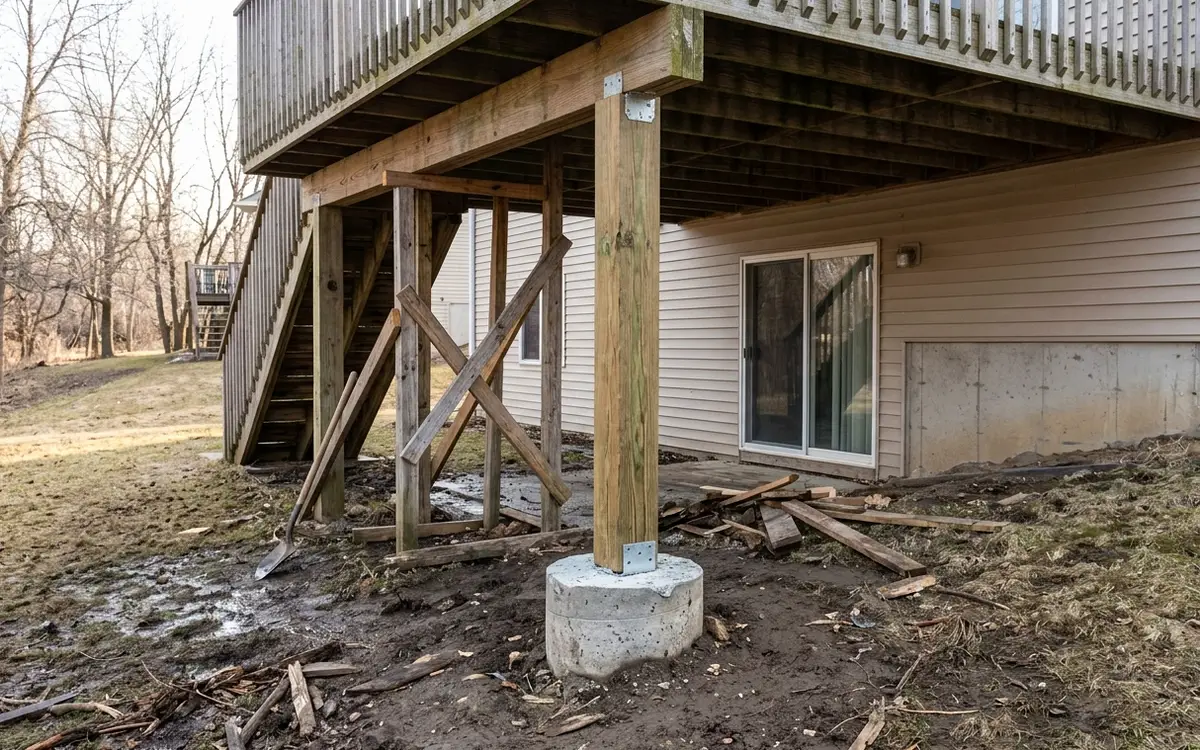
On older decks, beams often sit on posts with only toenails holding them. Frost movement can walk a beam toward the edge until it drops off.
Dark, wet wood under boards
Joist tops that stay dark long after a dry spell are holding water. That is where rot starts, often right under the screws holding the decking down.
Corroded nails and hangers
Orange or white crust on hardware means the protective coating is gone. ACQ and CA treated lumber eats plain steel, and the joist it holds can let go.
What a sagging or bouncy deck is telling you
Bounce and sag are the frame talking. A joist with rot along its top edge loses stiffness first, so the boards above it flex when you walk. A beam that has split or slipped off its post lets a whole section drop. Hangers that have rusted through can let a single joist pull loose with no warning at all. These are not cosmetic problems, and they get worse quickly under the weight of a Minnesota winter's snow.
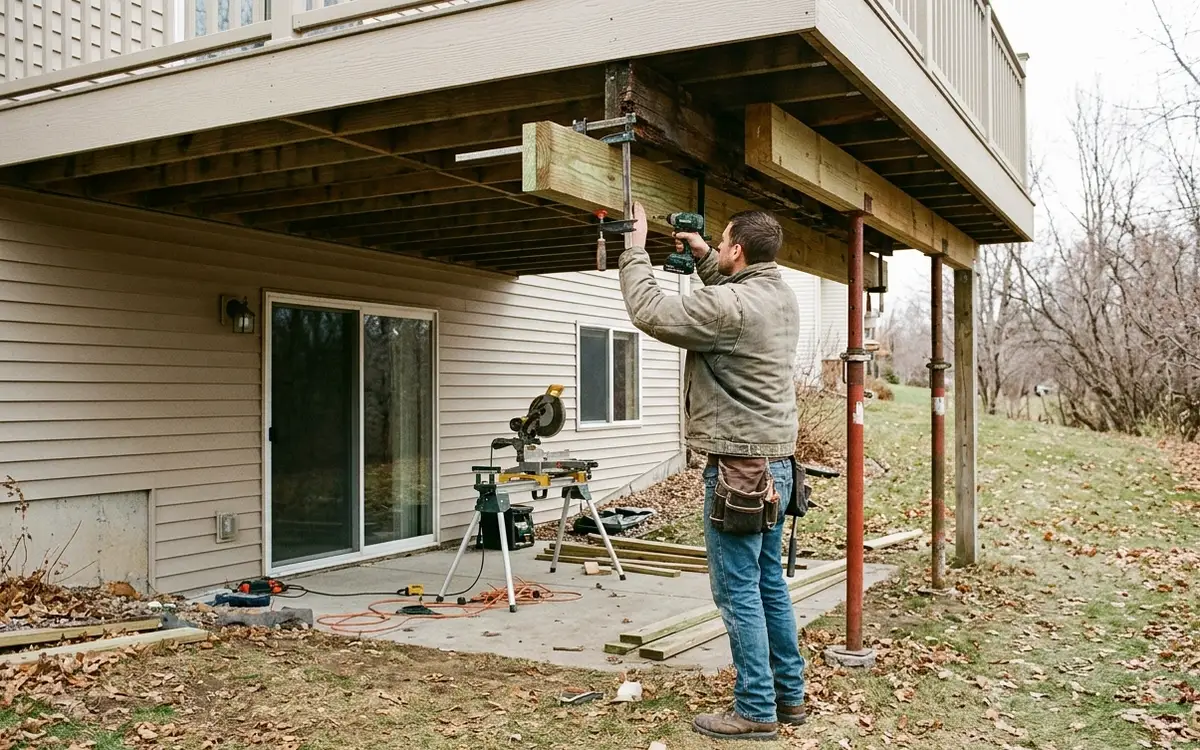
We start by taking weight off the problem. If a section has dropped, we set temporary posts and shoring before anyone stands on it. Then we open what we need to see: a few boards near the sag, the joist ends at the ledger and beam, and every hanger in the run. Water usually tells the story. Rot follows the path of runoff from the house, from gaps between boards and from corners where leaves piled up and stayed wet.
Most frame damage can be repaired without tearing out the whole deck. Sistering, new beams and fresh hardware bring a tired frame back into service as long as the ledger and footings are sound. When the damage runs through the ledger or most of the joists, we'll tell you plainly that repair stops making sense. Either way, if your deck has started to sag or move, keep everyone off it and call us. Our phones are answered day and night, every day of the week.
How we repair a deck frame safely
- 01Call
Call and keep off
Phone us day or night. If the deck is sagging or moving, keep everyone off it and close off the stairs until a carpenter can get there and shore it.
- 02Visit
Temporary shoring
We set adjustable posts under a dropped section to take weight off the failing members before any repair starts. That keeps the rest of the work safe for everyone.
- 03Scope
Open and inspect the frame
A few boards come up near the problem. Every joist, beam end and hanger in the run gets probed and photographed so you can see what we found.
- 04Prep
Repair plan and pricing
You get a list of what failed, how each member will be fixed and the price. If a permit is needed for the structural work, we pull it.
- 05Build
Frame repair work
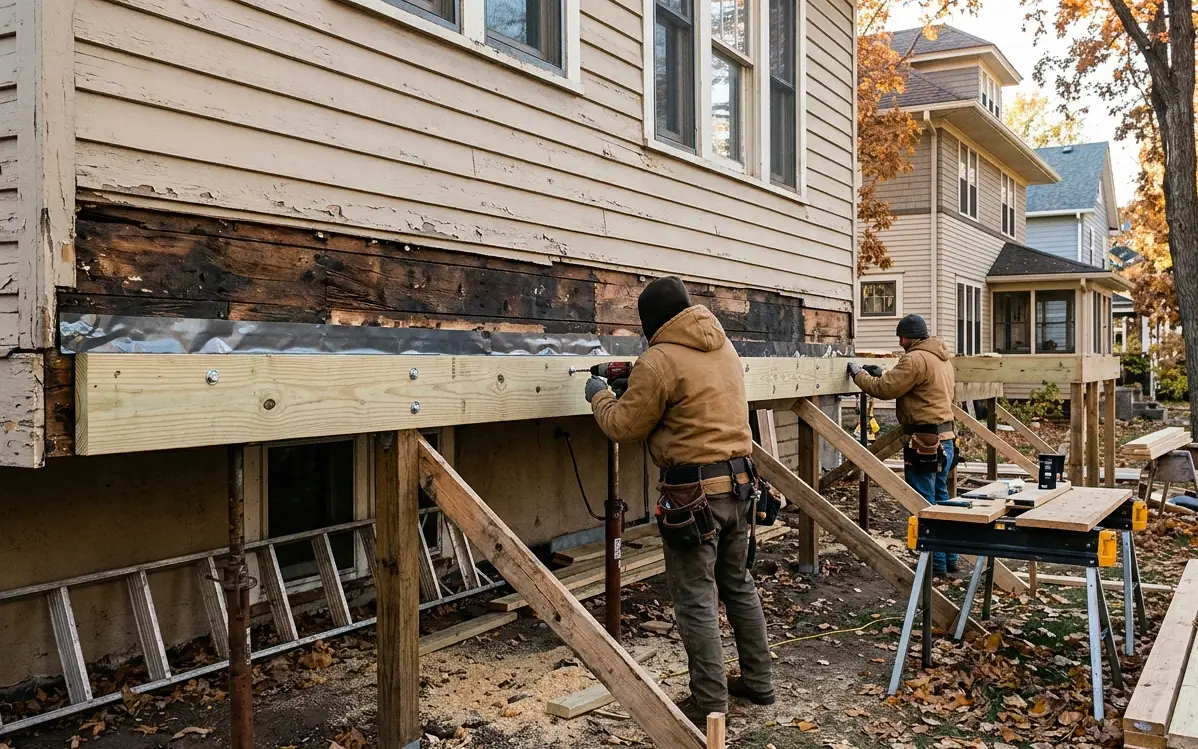
Our carpenters sister or replace joists, install new beams and post caps, add blocking and swap hardware, all sized for the snow and live loads.
- 06Check
Close up and recheck
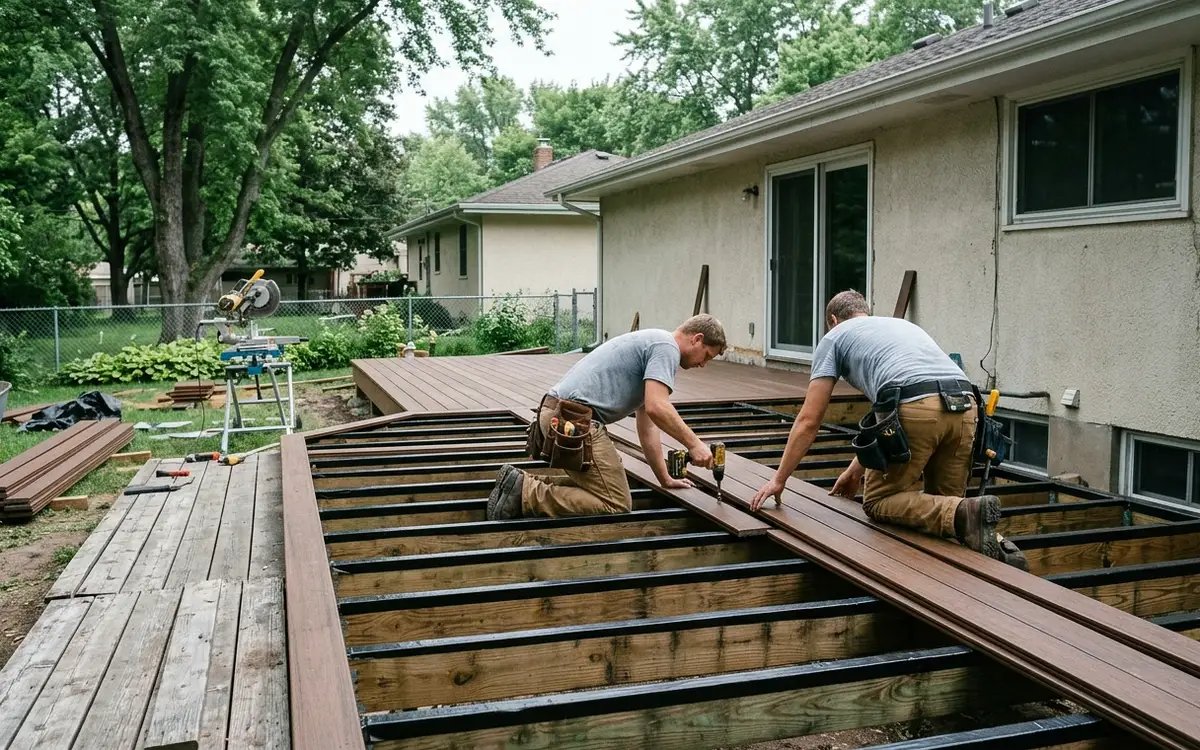
Boards go back down, the shoring comes out, and we walk the deck with you to confirm the bounce and sag are gone before we pack up.
What deck frame repair typically costs
Frame repair in Minneapolis typically runs $1,180 to $7,650 per frame repair. Sistering a few joists on a low deck sits near the low end. Replacing a beam, swapping a full run of corroded hangers or repairing framing on a tall walkout deck moves toward the top. The real number comes after we open the boards and see how far the damage actually goes into the frame.
What changes the price
- How many joists need sistering versus full replacement
- Beam replacement, including new posts and post caps if needed
- Height of the deck and the shoring needed to work safely
- Decking that must come up and go back down over the repair
- Hanger and fastener replacement across the whole frame, not one spot
- Permit and inspection work when the repair is structural
Frame repair methods, from one joist to a new beam
Sistering damaged joists
We bolt or screw a new full-length treated joist tight against the damaged one, bearing on the same ledger and beam. It restores stiffness without pulling up every board above it.
Full joist replacement
When a joist is rotted through at the ends or split along its length, sistering is not enough. We lift the boards over it, remove it, and set a new joist in fresh hangers.
New beam and post caps
A sagging or split beam gets replaced with a correctly sized built-up beam on post caps from Simpson Strong-Tie, so the beam cannot slide off its post when the ground heaves.
Blocking and hardware upgrade
Rows of solid blocking stiffen a bouncy deck, and hot-dip galvanized or stainless hangers, lags and ties replace corroded ones. This work is often paired with joist tape to slow future rot.
Why Twin Cities snow loads find weak deck framing
A Minneapolis deck can carry a heavy blanket of snow for weeks, then take on meltwater during a March thaw and freeze solid again overnight. That combination finds every weak joist and every rusted hanger. Older decks built in the 1980s and 1990s were often framed with joists spaced wide and hung with plain steel nails, which newer ACQ and CA treated lumber corrodes. When we repair those frames, we use hot-dip galvanized or stainless hardware rated for treated lumber and size each member for the snow it has to carry.
Height raises the stakes. Tall second-story decks on walkout homes in Woodbury, Lakeville and Maple Grove put a lot of weight on a few beams and posts, and a failure up there is serious. In the city, stacked rear porches on duplexes and triplexes in Northeast and Longfellow see foot traffic from more than one household, plus snow shoveled down from the level above. On these structures we trace the full load path, from the boards down to the footings, not just the joist that looks worst.
Where we do joist & frame repair around Minneapolis
Joist & Frame Repair jobs take our carpenters to these cities and neighborhoods most weeks, and to the rest of the metro too.
- Minneapolis 55414
- Saint Paul 55102
- Bloomington 55420
- Brooklyn Park 55443
- Plymouth 55447
- Woodbury 55125
- Maple Grove 55369
- Lakeville 55044
- Blaine 55434
- Eagan 55122
- Burnsville 55337
- Eden Prairie 55344
- Coon Rapids 55433
- Apple Valley 55124
- Edina 55424
- Minnetonka 55305
- St. Louis Park 55416
- Shakopee 55379
- Maplewood 55109
- Cottage Grove 55016
- Richfield 55423
- Roseville 55113
- Inver Grove Heights 55076
- Andover 55304
- Savage 55378
- Fridley 55432
- Chanhassen 55317
- Prior Lake 55372
Questions about joist & frame repair
Can a sagging deck joist be repaired without replacing the deck?
In most cases, yes. A sagging joist can be sistered with a new full-length member or replaced outright, and the boards above go back down. The deck only needs replacing when rot runs through the ledger or most of the frame. We open a few boards, check the joists on either side and tell you which situation you're in.
Will joist and frame repair stop my deck from bouncing?
If the bounce comes from rot, failed hangers or missing blocking, a proper repair takes it out. Some decks were simply built with joists too small for their span, and the fix there is added joists, blocking or a mid-span beam. Bounce that has gotten worse over time is a safety issue, so we find the cause before choosing the repair.
What should I do tonight if my deck frame has dropped?
Get everyone off, including pets, and keep them off. Don't stack anything on it or try to prop it with a car jack. Then call us; our phones are answered 24/7, and we'll walk you through what to watch for and send a carpenter to set temporary shoring as soon as we can get there.
Why do joist hangers rust out, and does frame repair replace them?
Modern treated lumber uses copper-based chemicals that corrode plain steel. Older hangers and nails were often not rated for it, so they rust from inside the joint where you can't see. During frame repair we replace corroded hangers with hot-dip galvanized or stainless pieces rated for treated lumber, with matching fasteners so the coatings don't react.
Can you add joist tape during deck frame repair?
Yes, and we usually recommend it on any joists that stay in service. Joist tape is a butyl or membrane strip applied along the top of each joist, under the boards. It sheds water away from screw holes and slows rot in treated lumber. It is easiest to add while boards are already up, so frame repair is a good time.
Talk to us about joist & frame repair
Call any hour about joist & frame repair, tell us what you are seeing, and we will set a time to look and write up a scope.