New Decks · Minneapolis, MN
Cedar deck building in Minneapolis
You want a deck that looks and smells like real wood, but treated pine looks too green and composite feels too much like plastic.
We build cedar decks on rated framing, fasten the boards with stainless screws, and finish them so the warm color lasts longer.
- Phones answered 24/7
- Written scope before work starts
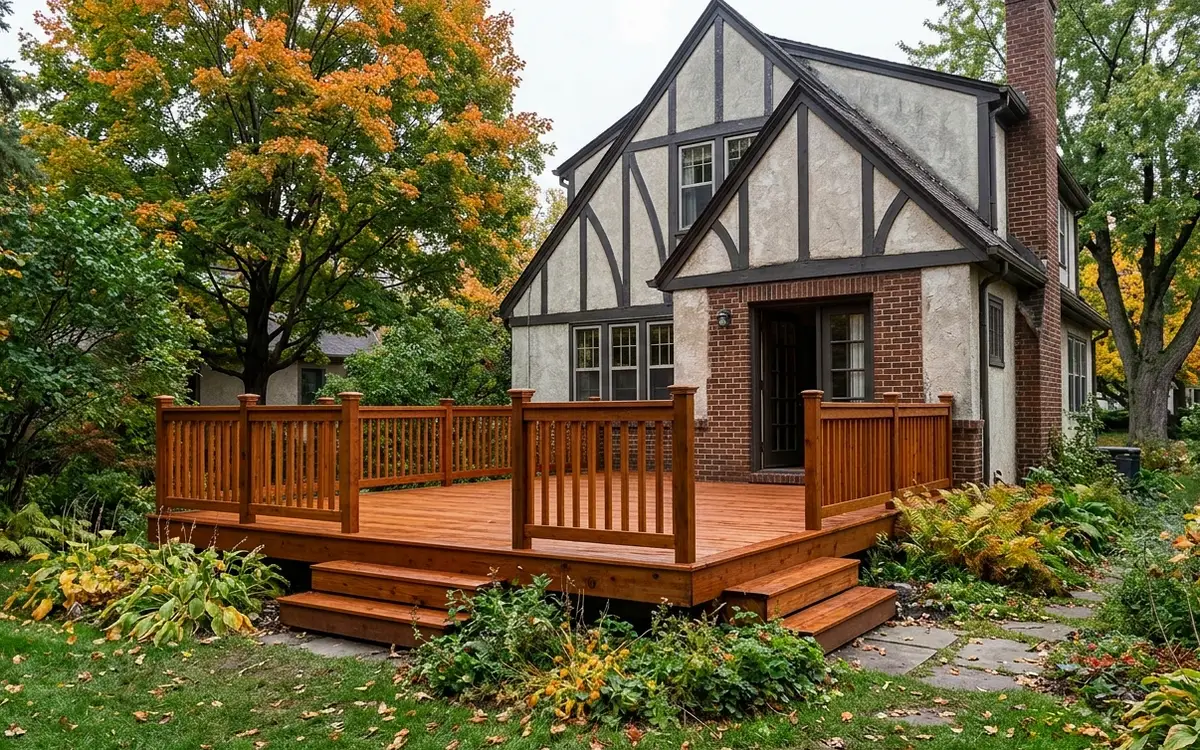
$46 to $78 per square foot installed, based on 2026 Twin Cities jobs.
A cedar deck uses naturally rot-resistant western red cedar for the boards, railings and trim, set on a pressure-treated frame and footings dug below frost. We fasten with stainless screws, seal cut ends, and apply a first finish once the wood is ready. Around Minneapolis, cedar decks typically cost $46 to $78 per square foot installed, depending on grade, size, height and railing.
What makes cedar a good deck wood, and where it needs help
Cedar is light, stable and naturally resistant to rot and insects, thanks to oils in its heartwood. It lies flat, cups less than pine and cuts cleanly, which makes it a favorite for railings, benches and pergolas as well as deck boards. It also stays cooler underfoot than many synthetic boards in full sun. The trade is that cedar is soft. Chair legs, dog claws and dropped grill tools leave dents, and the boards need a finish to hold their warm color.
Grade affects both price and look. Clear cedar has few or no knots and a fine, even grain, but it costs the most. Knotty grades, often sold as select tight knot, show more character at a lower price, which suits cabins and many bungalow backyards. We bring samples of each so you can compare them in person. Board thickness matters as well, because thicker boards span joists better and resist cupping on decks that sit in strong sun most of the day.
Even on a cedar deck, the structure underneath is usually pressure-treated lumber. Cedar resists decay, but it isn't rated for ground contact the way treated posts and joists are, and treated framing costs less while carrying the same load. Fasteners need care too. Plain steel screws react with cedar's tannins and leave black streaks around each head, so we use stainless screws or hidden fasteners made for cedar. Revo Deck Systems builds cedar decks for homeowners who want real wood without the green tint of treated pine.
Cedar grades, finishes and fastening options
Clear cedar boards
Clear grades have few knots and a fine, even grain. They suit formal decks and stained finishes that show off the wood, and they cost the most per board, especially in longer lengths.
Select tight knot
Knotty grades carry small, sound knots that add character to the surface. They cost less than clear boards, look right on cottage and craftsman homes, and take a penetrating stain well.
Transparent or semi-transparent stain
A penetrating oil stain from Cabot, Ready Seal, Superior or Sherwin-Williams keeps the grain visible. Semi-transparent tints block more sun and usually hold their color longer than clear coats do.
Letting it weather gray
Untreated cedar fades to a silver gray, a look some lake cabin owners like. It still needs cleaning and a clear water repellent so the surface doesn't check and grow mildew.
How a cedar deck build moves from footings to first finish
- 01Call
Design and grade selection
We plan the layout and help you choose a cedar grade and board thickness, then confirm the lumber is in stock before setting a build date.
- 02Visit
Footings and treated frame
Footings go below the 42-inch frost line, and the frame goes up in pressure-treated lumber with a flashed ledger and hangers rated for treated wood.
- 03Scope
Acclimating the boards
Cedar sits on site, stacked with spacers and covered, for a short spell so it adjusts to local humidity before we cut and fasten it.
- 04Prep
Sealing cut ends
Every cut end gets an end-grain sealer before installation, since raw end grain soaks up water first and is where splitting and graying start.
- 05Build
Stainless fastening
Boards go down with stainless screws or cedar-rated hidden fasteners, gapped for drainage and airflow so the deck dries quickly after rain.
- 06Check
First finish coat
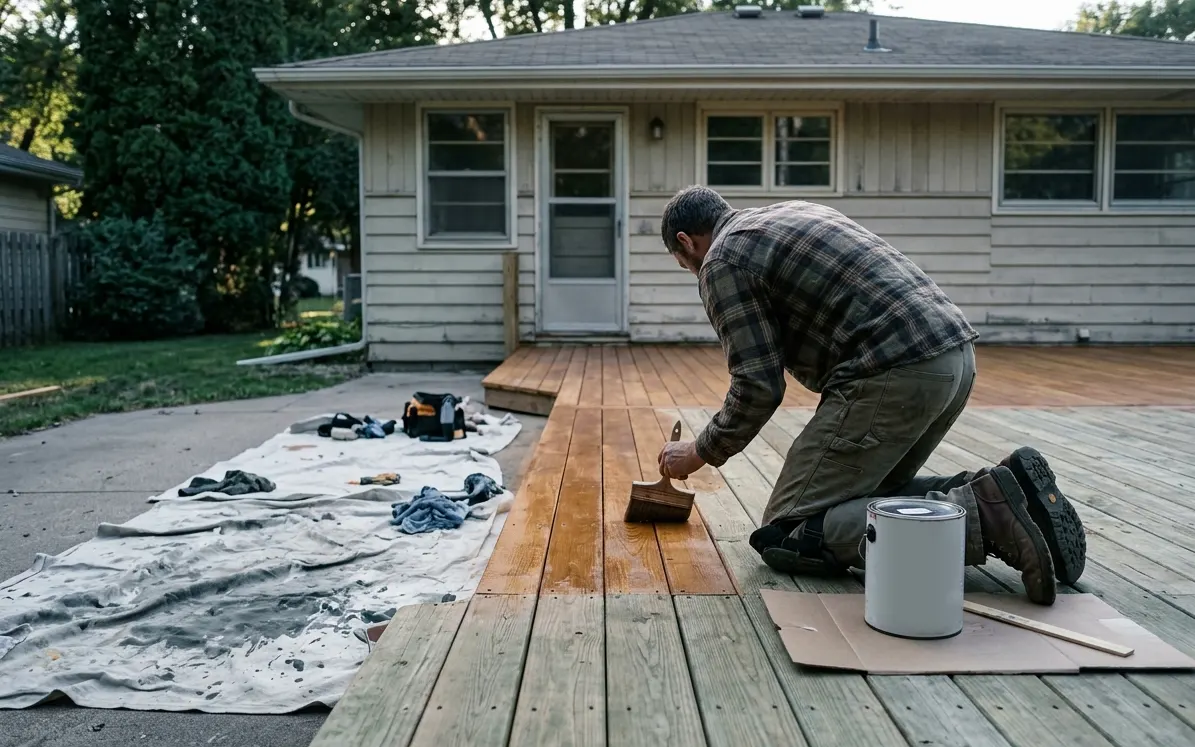
Once the wood is dry enough to absorb it, we apply your chosen stain or water repellent, or schedule a return visit if the boards need more time.
What a cedar deck costs around the Twin Cities
Cedar decks typically run $46 to $78 per square foot installed in the Minneapolis area. Knotty grades on a simple low frame sit toward the bottom; clear grades, thicker boards, tall framing and cedar railings push toward the top. Cedar prices also shift with lumber supply through the year. We price your project after a site visit, once we know the size, height, grade and finish you want.
What changes the price
- Cedar grade, with clear boards costing noticeably more than select tight knot
- Board thickness and length, since thicker, longer stock spans better and costs more
- Cedar or treated railings, balusters and trim around the deck edges
- Height of the deck and the number of posts, beams and stair runs
- Stainless screws or hidden fasteners, which cost more than coated steel
- First stain or water repellent coat, and whether you want it applied right away
Signs cedar fits your house and how you use the deck
You want natural wood grain
If the look of real wood matters to you, cedar's tight grain and reddish tones read warmer than treated pine and age gracefully as long as the finish is kept up.
Your house has period details
Bungalows, Tudors and craftsman homes in Southwest and Longfellow often pair better with cedar railings and trim than with boards that look like plastic.
The deck sits in shade
Cedar's natural oils resist decay in damp spots under trees, though shaded decks still need regular cleaning and a finish to keep mildew from taking hold.
Bare feet matter to you
Cedar stays cooler than many dark synthetic boards in July sun, which counts on a west-facing deck or anywhere kids run barefoot from the sprinkler.
You don't mind some upkeep
Plan on cleaning and refinishing every couple of years. If that rhythm suits you, cedar rewards it with a deck that still looks and feels like wood.
You prefer lighter boards
Cedar weighs less than treated pine, which makes long boards easier to handle and trims a little load off balconies and stacked rear porches.
Keeping a cedar deck looking right through Minnesota seasons
Cedar handles Minnesota weather well when it's finished and allowed to dry. Humid summers and spring snowmelt keep boards wet, so spacing, airflow and a stain that soaks in matter more here than in drier climates. We leave open gaps between boards and keep low decks high enough off the soil for air to move underneath. When snow sits on a deck for weeks, the boards dry slowly in spring, and that is when mildew shows up on unfinished or neglected cedar.
Cold, dry winter air pulls moisture out of wood, and cedar shrinks and swells less than pine as that happens, so it cups and checks less. Freeze-thaw swings in March and November still wear on the finish, so plan to clean and recoat about every couple of years. Shovel with a plastic blade, since cedar dents easily. Bungalows and Tudor revival homes near Lake Harriet and Minnehaha Creek look especially at home with a stained cedar deck and simple square balusters.
Where we do cedar decks around Minneapolis
Cedar Decks jobs take our carpenters to these cities and neighborhoods most weeks, and to the rest of the metro too.
- Minneapolis 55414
- Saint Paul 55102
- Bloomington 55420
- Brooklyn Park 55443
- Plymouth 55447
- Woodbury 55125
- Maple Grove 55369
- Lakeville 55044
- Blaine 55434
- Eagan 55122
- Burnsville 55337
- Eden Prairie 55344
- Coon Rapids 55433
- Apple Valley 55124
- Edina 55424
- Minnetonka 55305
- St. Louis Park 55416
- Shakopee 55379
- Maplewood 55109
- Cottage Grove 55016
- Richfield 55423
- Roseville 55113
- Inver Grove Heights 55076
- Andover 55304
- Savage 55378
- Fridley 55432
- Chanhassen 55317
- Prior Lake 55372
Questions about cedar decks
How often does a cedar deck need to be stained in Minneapolis?
Plan on cleaning and recoating a cedar deck every couple of years, sooner on decks in full sun. A simple test helps: sprinkle water on the boards, and if it soaks in instead of beading, the finish is worn. Semi-transparent stains usually last longer than clear finishes because the pigment blocks more sun. We can show you what worn finish looks like before the wood starts graying.
Why are there black stains around the screws on my cedar deck?
Those streaks come from a reaction between iron in plain or poorly coated steel fasteners and the tannins in cedar. Water carries the stain into the grain around each screw. Stainless screws prevent it, which is why we use them on every cedar deck we build. On an older deck, swapping the fasteners and using an oxalic acid deck brightener can lighten the marks.
Can cedar be used for deck posts or boards that touch the ground?
We don't put cedar in ground contact or use it for structural posts below grade. Cedar heartwood resists decay, but treated lumber rated for ground contact holds up better where soil and constant moisture are involved. On a cedar deck, the posts, beams and joists are pressure-treated, and we can wrap visible posts in cedar so the look stays consistent from top to bottom.
Will a cedar deck dent from patio furniture and dogs?
It can. Cedar is a soft wood, so sharp chair legs, dropped tools and a big dog's claws leave marks over time. Felt pads or wide furniture feet help a lot. Shallow dents often swell back with a damp cloth and a little heat, and light sanding before recoating blends in the rest. If your household is hard on decks, composite may suit you better.
Does a cedar deck cost more than a pressure-treated deck?
Yes, usually. Cedar decks typically run higher per square foot than pressure-treated decks because the lumber itself costs more, and stainless fasteners add to it. Both use a pressure-treated frame, so the difference sits mostly in the boards, railings and trim. What you're paying for is straighter, more stable wood with a warmer look that takes stain well.
Talk to us about cedar decks
Call any hour about cedar decks, tell us what you are seeing, and we will set a time to look and write up a scope.