Care & Inspection · Minneapolis, MN
Deck safety inspection in Minneapolis
A deck can look fine from the yard while the ledger rots against the house or the footings heave, and you rarely see it until something moves.
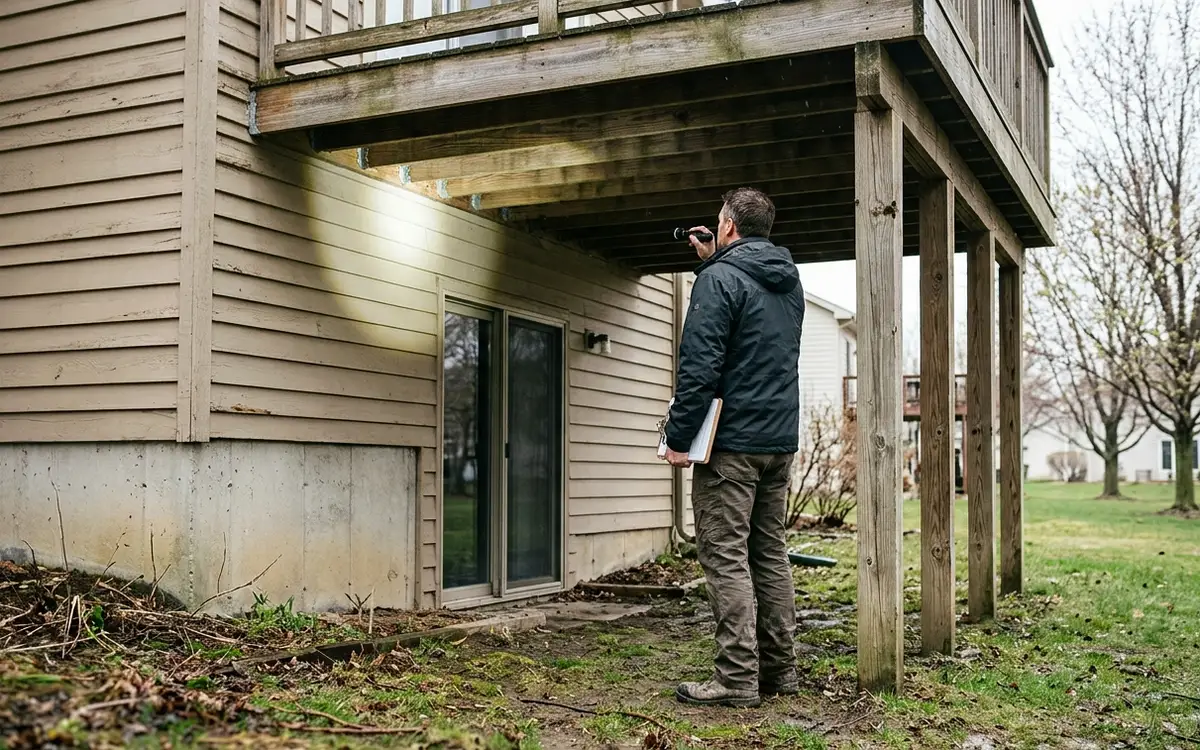
We crawl under, probe the wood, check every connection that carries load and give you a plain written list of what we found.
- Phones answered 24/7
- Written scope before work starts
$185 to $395 per visit, based on 2026 Twin Cities jobs.
A deck safety inspection is a hands-on check of the parts that carry load: the ledger and its flashing, footings and posts, beams, joists, hangers and fasteners, plus railings and stairs. You get a written summary with photos and clear priorities. In Minneapolis it typically costs $185 to $395 per visit, depending on deck size, height and how much of the frame we can reach.
What an inspection catches before a deck fails
Deck failures rarely happen out of nowhere. The usual cause is a connection that has been deteriorating for years: a ledger nailed to the house with no flashing, joist hangers rusted through, a post sitting on a footing that heaved, or railing posts held on with a couple of screws. None of those show from a lawn chair. An inspection puts eyes and hands on the hidden parts of the structure so problems get fixed while they're still repairs, not emergencies.
We start where the deck meets the house, since that's where the most serious failures begin. We look for flashing above the ledger, check for proper bolts or structural screws instead of nails, and probe the ledger and the house rim joist for soft wood. From there we follow the load path down: joists and hangers, beams and their connections to posts, posts and their bases, and the footings below. Railings and stairs get pushed, pulled and measured.
The report is written for you, not for a code book. Each item gets a plain description, a photo when it helps, and a priority: fix now, fix this season, or keep an eye on it. We don't pad the list. If the deck is sound, you'll hear exactly that. If it isn't safe to use until something is repaired, we tell you before we leave, and we can price the repair if you'd like us to handle it.
Reasons to book a deck inspection this year
Buying or selling a home
A general home inspection usually covers a deck only briefly. A focused deck inspection gives buyers and sellers a clear picture of the ledger, footings and railings before closing.
Deck older than twenty years
Decks built in the 1980s and 1990s often used nailed ledgers with no flashing and hangers that corrode against treated lumber. Age alone is a good reason to look underneath.
Bouncy or sagging floor
A floor that flexes, dips or vibrates when someone walks across it can mean undersized joists, failed hangers or a beam that has settled. It deserves a close look before the next party.
Railing posts that move
Push on each rail post. If any rocks more than slightly, the attachment has loosened or the wood around the bolts has rotted, and the railing may not hold someone who leans hard.
Stains on the house wall
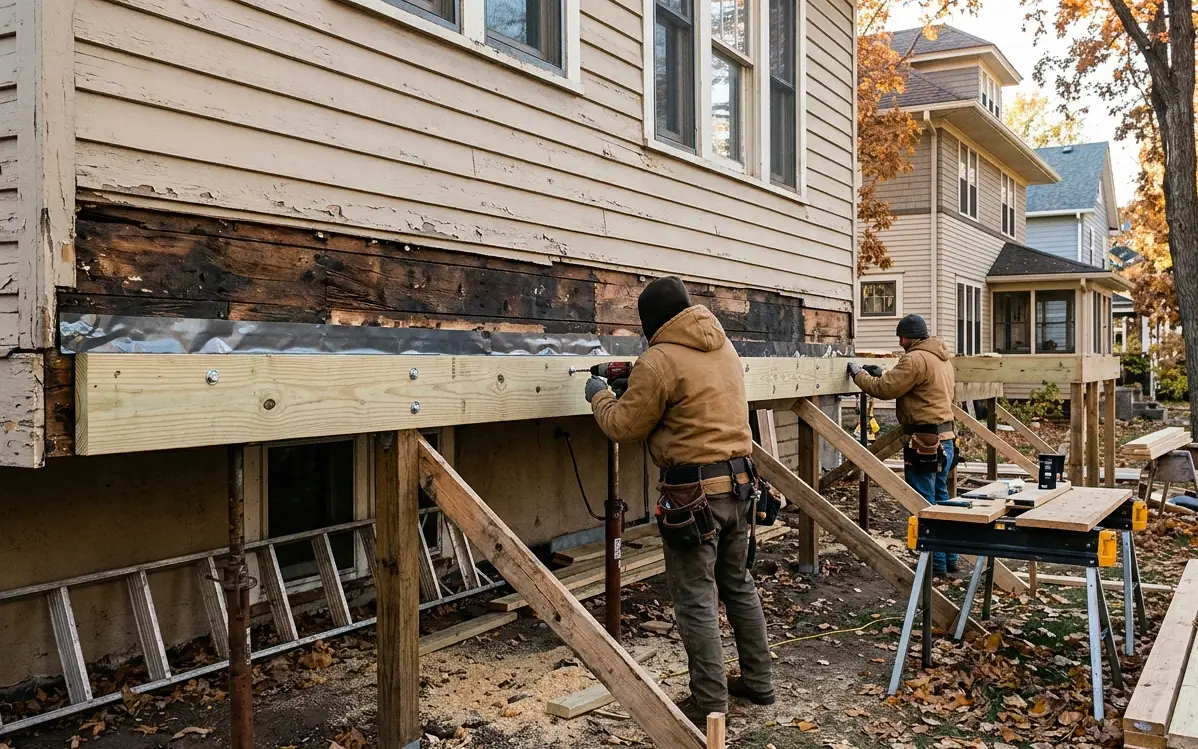
Dark streaks, peeling paint or soft siding below the ledger point to water getting behind it. That moisture rots the ledger and the house rim joist, often completely out of sight.
Stairs pulling away or leaning
Stringers that have separated from the deck, treads that rock, or a stair that leans to one side usually mean rot at the bottom or failed connections at the top.
How a deck inspection visit runs
- 01Call
Call to book
You phone us, tell us roughly how big and how high the deck is and when it was built, and we set a time. Most visits take one to two hours on site.
- 02Visit
Start at the house
We check the ledger connection first: flashing, fastener type and spacing, and the condition of both the ledger and the house rim joist behind it.
- 03Scope
Follow the frame down
Joists, hangers, beams and post connections get checked by eye and by probe, looking for rot, corrosion, splits, missing fasteners and undersized members.
- 04Prep
Check posts and footings
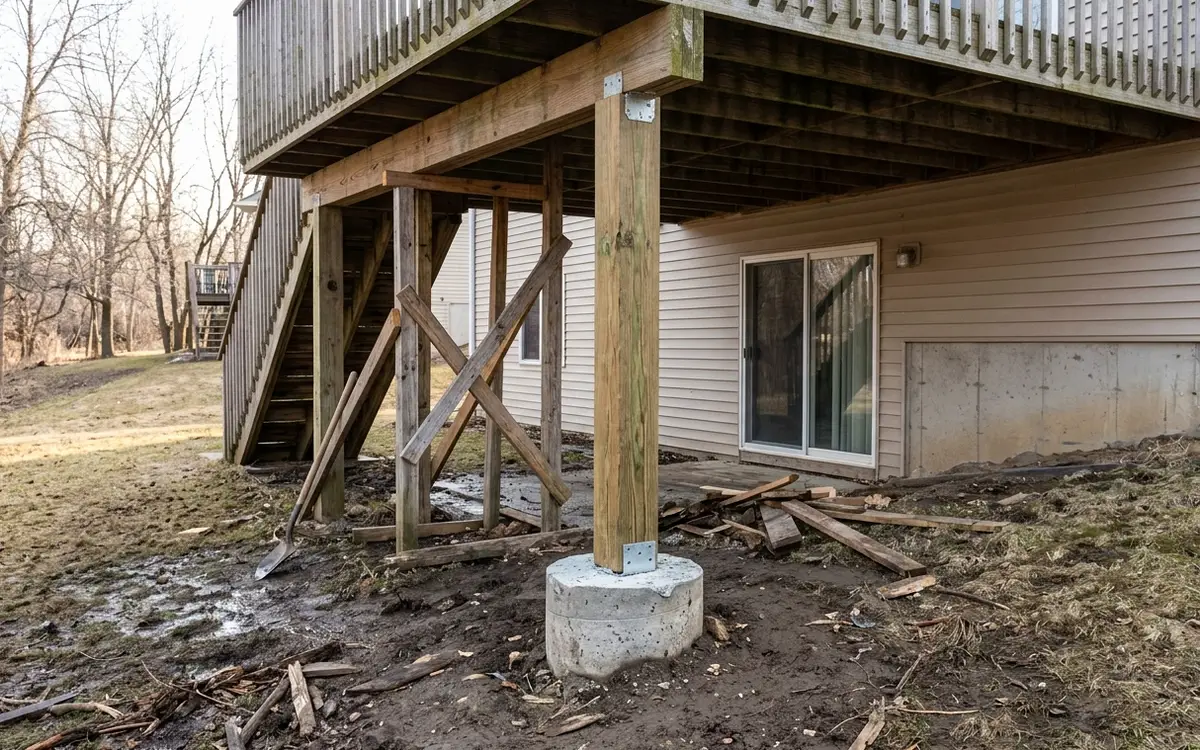
Posts get checked for rot at the base and for plumb. Where we can, we look for signs that footings stop short of frost depth, such as heaving, tilting or gaps.
- 05Build
Test railings and stairs
Each rail post gets a firm push, baluster gaps and rail heights get measured, and stairs are checked for stringer rot, loose treads and secure attachment.
- 06Check
Written report and priorities
Afterward you receive a written report with photos and plain priorities. If anything is unsafe, we tell you on site and mark the problem area clearly.
Inspection options for different situations
Annual safety walkthrough
A yearly check of the ledger, connections, railings and stairs, timed for spring after the snow melts. It suits owners of older decks who want problems caught early and a running record of the deck's condition.
Pre-purchase deck inspection
Booked during a home sale, this visit goes deeper on the deck than a general home inspection can. Buyers get a written report they can bring to negotiations, and sellers can fix issues before listing.
Post-storm or post-winter check
After a heavy snow season, a fallen limb or a stretch of hard freeze-thaw, we look for heaved footings, cracked posts, loose railings and new movement where the deck meets the house.
Structural check before refinishing
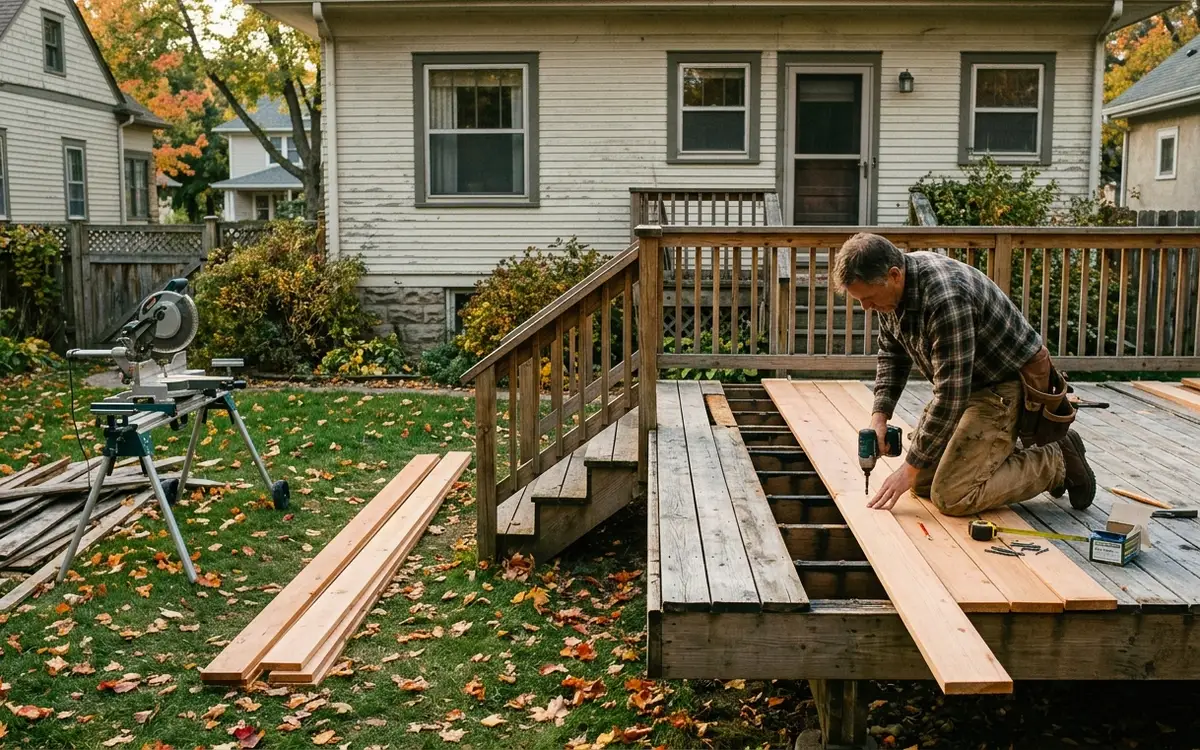
Before you spend money on staining, restoration or new decking, we confirm the frame underneath is worth keeping. It's the simplest way to avoid refinishing a deck that needs structural repair first.
What a deck inspection typically costs
A deck safety inspection in Minneapolis typically runs $185 to $395 per visit. A small, ground-level deck with an open underside sits at the low end. Tall walkout decks, multi-level layouts, stacked porches and decks with enclosed undersides take more time and land higher. We give you an expected price on the phone and confirm it on site, once we've seen the deck, before we start.
What changes the price
- Overall size and the number of levels or landings
- Deck height, especially second-story walkout decks on tall posts
- Whether the underside is open or closed in with skirting or a ceiling
- Number of stair runs that need checking from top to bottom
- Stacked porches on duplexes and triplexes with several connected levels
- Photo detail needed in the report for a home sale
What Minnesota frost and snow do to a deck's structure
Minnesota code requires deck footings to bear below frost depth, which is 42 inches in the Twin Cities. Footings that stop short get pushed up in freeze-thaw cycles, and every March, April and November brings plenty of those. The result is posts that tilt, beams that rack and floors that develop a hump or a dip. Older decks, and decks added without a permit, are the ones we most often find sitting on shallow footings or on concrete blocks resting on the soil.
Snow load is the other Minnesota stress test. A deck covered by deep, wet snow carries far more weight than a summer party, and undersized joists or failing hangers show it as sag or bounce. Tall second-story decks on walkout homes in Plymouth, Eden Prairie and Woodbury add height and long stair runs to the picture, while the stacked rear porches on Minneapolis duplexes and triplexes carry several levels on shared posts. Each type gets checked with those loads in mind.
Where we do deck inspection around Minneapolis
Deck Inspection jobs take our carpenters to these cities and neighborhoods most weeks, and to the rest of the metro too.
- Minneapolis 55414
- Saint Paul 55102
- Bloomington 55420
- Brooklyn Park 55443
- Plymouth 55447
- Woodbury 55125
- Maple Grove 55369
- Lakeville 55044
- Blaine 55434
- Eagan 55122
- Burnsville 55337
- Eden Prairie 55344
- Coon Rapids 55433
- Apple Valley 55124
- Edina 55424
- Minnetonka 55305
- St. Louis Park 55416
- Shakopee 55379
- Maplewood 55109
- Cottage Grove 55016
- Richfield 55423
- Roseville 55113
- Inver Grove Heights 55076
- Andover 55304
- Savage 55378
- Fridley 55432
- Chanhassen 55317
- Prior Lake 55372
Questions about deck inspection
How long does a deck safety inspection take?
Most inspections take one to two hours on site, depending on size, height and access underneath. A small ground-level deck goes quickly, while a tall multi-level deck with stairs and a closed-in underside takes longer. You don't need to be home for the whole visit, but we like to walk through the findings with you at the end if you can.
What happens if the deck inspection finds something unsafe?
We tell you before we leave and explain exactly what the problem is and why it matters. If a railing or a stair isn't safe to use, we suggest keeping people off that part until it's fixed. The written report lists the repair, and if you want us to handle it, we price the work separately so you can decide.
Does a deck inspection help when selling a house in Minneapolis?
It can. Buyers often ask about older decks, and a written report showing a sound ledger, proper footings and solid railings answers those questions early. If the inspection turns up problems, you can fix them before listing instead of negotiating under pressure. It's especially useful for homes with original decks from the 1980s and 1990s.
Can a deck inspection tell whether the footings are deep enough?
Not always for certain without digging, but there are clear clues. Posts that tilt, gaps between post bases and piers, uneven floors and heaving after winter all point to footings above the 42-inch frost depth. Where it matters, we can expose one footing to measure it. City permit records sometimes show the original design, too.
Should a deck with a nailed ledger get an inspection right away?
If you know or suspect the ledger is attached only with nails, yes, book a look soon. Nailed ledgers with no flashing were common on decks built in the 1980s and 1990s, and they can rot from behind without visible signs. Until it's checked, avoid crowding the deck, and keep heavy items like hot tubs and big planters off it.
Talk to us about deck inspection
Call any hour about deck inspection, tell us what you are seeing, and we will set a time to look and write up a scope.