Care & Inspection · Minneapolis, MN
Deck cleaning and washing in Minneapolis
Pollen, mildew, leaf tannins and a winter's worth of grime turn a deck slick and dingy, and on composite boards the dark spots can look permanent.
We wash with the right cleaner for your boards and a pressure low enough to lift the dirt without tearing up the surface.
- Phones answered 24/7
- Written scope before work starts
$0.65 to $1.45 per square foot, $285 trip minimum, based on 2026 Twin Cities jobs.
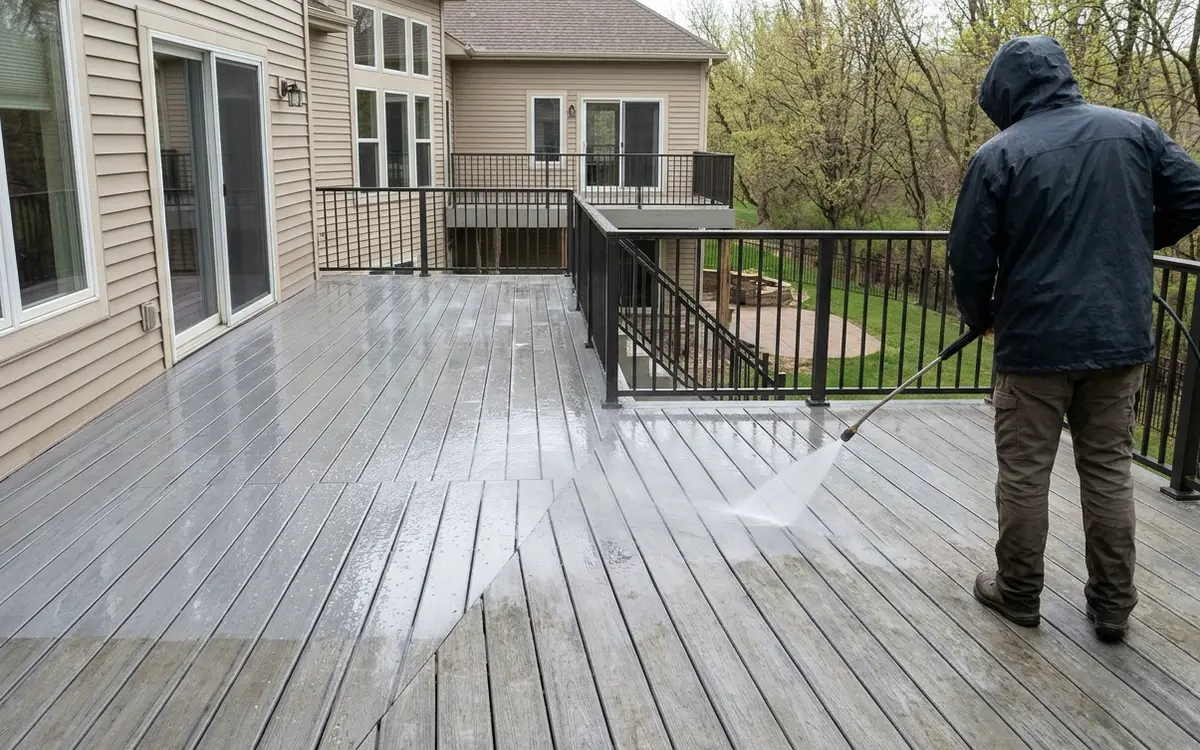
Deck cleaning means clearing debris from between boards, applying a cleaner matched to wood or composite, scrubbing mildew and stains, and rinsing at a pressure that won't fuzz the grain or scar capped boards. Railings, stairs and fascia are included. In Minneapolis it typically costs $0.65 to $1.45 per square foot, $285 trip minimum, depending on size, buildup and how easy the deck is to reach.
What a proper deck wash does that a garden hose can't
Dirt on a deck is more than cosmetic. Pollen, leaf litter and the fine grit that blows in over winter hold moisture against the boards, and that damp film is exactly what mildew and algae need. On wood, the growth eats into soft surface fibers. On composite, it settles into the textured grain and leaves dark blotches that a hose and a broom won't budge. A slippery stair after a spring rain is often the first sign the surface needs a real cleaning.
Pressure is where most weekend washes go wrong. A gas pressure washer at full power can carve furrows into cedar and pine, raise splinters, and wear through the protective cap on some composite boards. We let deck-specific cleaners do most of the work and keep the rinse pressure low, with a wide fan tip held a steady distance from the surface. The goal is boards that look the same afterward, only brighter, not a floor striped with wand marks.
The right cleaner depends on what you're standing on. Oxygen-based cleaners handle mildew and general grime on wood and are gentler on nearby plants than chlorine bleach. Older decks with gray, weathered boards may also get a brightener that restores color and prepares the wood for stain. Composite and PVC boards from makers like Trex, TimberTech, Fiberon and AZEK each come with care sheets, and we follow the one for your board so the wash stays within what the manufacturer recommends.
When your deck is due for a thorough wash
Slick boards after rain
If the stairs or shaded parts of the floor feel slippery when wet, a film of algae or mildew has built up. That film is a fall risk, especially on stairs down to the yard.
Green or black blotches spreading
Growth usually starts in shady corners, under planters or along the north side of the house and spreads outward. Catching it early keeps it from staining deep into composite texture.
Gaps packed with debris
Leaves, seeds and pine needles wedged between boards hold water against the board edges and the joists below. Clearing those gaps helps the whole deck dry out between rains.
Pollen and grime film
Cottonwood fluff, tree pollen and road dust settle into a yellow-gray layer every spring. It dulls the color and gives mildew something to grow in if it stays all season.
Rust or leaf tannin marks
Metal furniture feet, planters and wet leaves leave orange and brown marks on both wood and composite. Most of them come out with the right cleaner if they haven't baked in for years.
Stain coming up soon
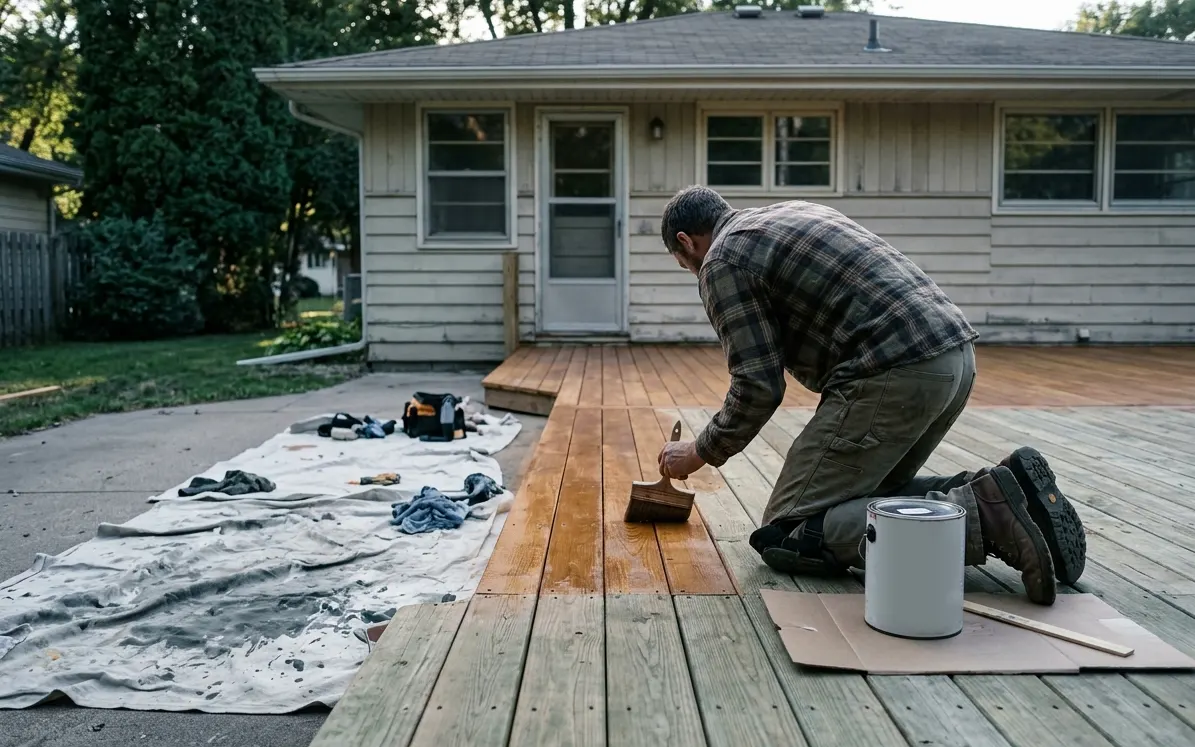
Any wood deck heading for a new coat of stain needs a full cleaning first. Stain applied over dirt and mildew traps them under the finish and shortens its life.
How we wash a deck without damaging it
- 01Call
Phone call and board check
You call, we confirm the deck size and board type, and we ask about any stains you want gone. If you know the composite brand, tell us, since care sheets differ.
- 02Visit
Move and protect
We move furniture and planters, cover outlets, lights and delicate plants, and wet down nearby beds so any cleaner runoff stays diluted.
- 03Scope
Clear the board gaps
A gap tool and blower pull leaves, seeds and packed dirt from between the boards so water can drain and the joists below can dry out.
- 04Prep
Apply cleaner and dwell
The right cleaner goes on in sections and sits long enough to loosen mildew and grime. Stubborn spots get a soft brush scrub rather than more pressure.
- 05Build
Low-pressure rinse
Rinsing with a wide fan tip held at a steady distance carries the loosened dirt off the floor, rails, stairs and fascia without marking the surface.
- 06Check
Walkthrough and dry time
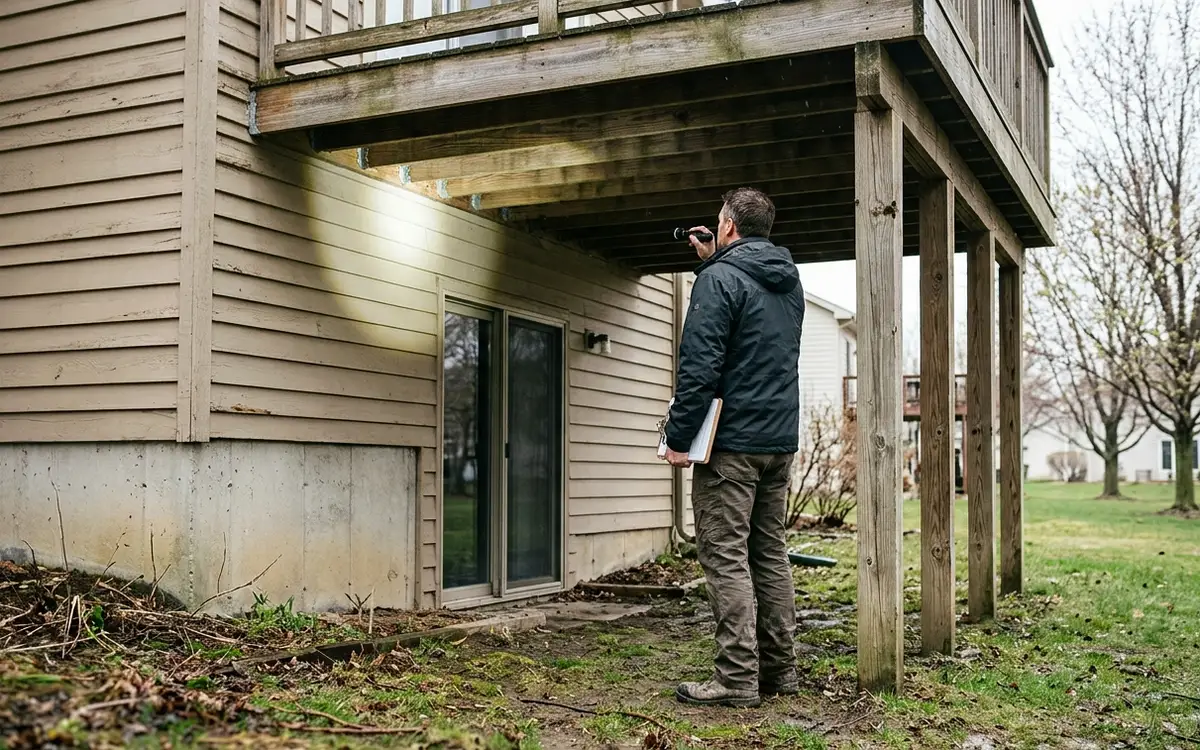
Once it's rinsed, the deck needs a few hours to dry before furniture goes back. We walk it with you and point out anything that needs repair or a fresh finish.
Cleaning methods matched to wood, composite and PVC
Soft wash for composite
Capped composite and PVC boards get a cleaner made for synthetic decking, a soft brush scrub and a low-pressure rinse. We follow the board maker's care sheet so the wash stays inside their recommendations for your product.
Oxygen cleaner for wood
Pressure-treated pine and cedar respond well to oxygen-based cleaners that lift mildew and gray without the harshness of chlorine bleach. A gentle rinse follows, keeping the wood fibers intact and the surface smooth underfoot.
Cleaning plus brightener
Older wood decks that will be stained soon get a brightener after cleaning. It neutralizes the cleaner, evens out the color and opens the grain so the next finish soaks in the way it should.
Seasonal maintenance washes
Some owners like a spring wash to clear winter grime and a fall wash to clear leaves before snow. Regular cleaning keeps buildup light, which makes each visit quicker and easier on the boards themselves.
What deck cleaning typically costs
Deck cleaning in Minneapolis typically runs $0.65 to $1.45 per square foot, with a $285 trip minimum for small decks. Heavy mildew, packed board gaps, composite stains and tall stairs move the number up, while a lightly dirty ground-level deck sits at the low end. We confirm the price after seeing the deck and its boards, and that's the number we work from.
What changes the price
- Square footage of floor, stairs and landings to be washed
- Amount of mildew, algae and tannin staining on the boards
- Board type, since composite and PVC need gentler cleaners and slower work
- Railing style and the number of balusters to scrub by hand
- Debris packed into board gaps that needs clearing out first
- Brightener added for wood decks that will be stained soon
Spring and fall washes for Twin Cities decks
Twin Cities decks come out of winter carrying a season of grit, salt residue and leaf litter that sat under the snow. As soon as the snow melts and nights stay above freezing, usually in April or May, a spring wash clears that layer before mildew takes hold in the wet weeks that follow. If you used rock salt, rinsing it off early helps, since salt can pit some boards. A plastic shovel and calcium magnesium acetate are easier on most surfaces next winter.
Fall cleaning matters just as much in Minnesota. Leaves from mature boulevard and backyard trees pile into board gaps and corners, then freeze in place for months, staining both wood and composite. Lake lots around Lake Nokomis, Lake Harriet and Lake Minnetonka also see heavy pollen and algae in damp, shaded spots. A wash in late September or October, before the first hard frost, lets the deck go into winter clean and dry. If staining is due, it follows the spring wash once the wood dries.
Where we do deck cleaning around Minneapolis
Deck Cleaning jobs take our carpenters to these cities and neighborhoods most weeks, and to the rest of the metro too.
- Minneapolis 55414
- Saint Paul 55102
- Bloomington 55420
- Brooklyn Park 55443
- Plymouth 55447
- Woodbury 55125
- Maple Grove 55369
- Lakeville 55044
- Blaine 55434
- Eagan 55122
- Burnsville 55337
- Eden Prairie 55344
- Coon Rapids 55433
- Apple Valley 55124
- Edina 55424
- Minnetonka 55305
- St. Louis Park 55416
- Shakopee 55379
- Maplewood 55109
- Cottage Grove 55016
- Richfield 55423
- Roseville 55113
- Inver Grove Heights 55076
- Andover 55304
- Savage 55378
- Fridley 55432
- Chanhassen 55317
- Prior Lake 55372
Questions about deck cleaning
Will pressure washing during a deck cleaning damage my composite boards?
It can if the pressure is too high or the tip is held too close. Many composite makers caution against high-pressure washing because it can scar the cap layer and affect their coverage. We rely on cleaners made for composite, a soft brush and a low-pressure fan rinse, and we follow the care sheet for your specific board brand.
How often should a deck get a professional cleaning in Minnesota?
Once a year works for most decks, ideally in spring after the snow melts. Shaded decks, lake lots and decks under big trees often benefit from a second wash in fall to clear leaves before winter. Between visits, sweeping and clearing the board gaps every few weeks keeps buildup light and makes the next cleaning go faster.
Is deck cleaning safe for the plants around my deck?
We take real steps to protect them. Beds and shrubs near the deck get wetted down before cleaning and rinsed again afterward so runoff stays diluted, and delicate plants get covered. We favor oxygen-based cleaners over chlorine bleach on wood. If you have a vegetable garden right below the deck, tell us, and we'll plan coverage and runoff around it.
Can a deck cleaning remove rust stains left by metal furniture?
Most rust marks lift with an oxalic acid cleaner or a rust remover approved for your board type. Fresh marks come out easily, while stains that have baked in for several summers may fade rather than disappear completely. On composite, we check the manufacturer's care sheet first, because some makers recommend specific cleaners for rust and rule out others.
Do I need a deck cleaning before the deck gets stained?
Yes. Stain over dirt, pollen and mildew bonds to the grime instead of the wood and fails early. A full cleaning, often followed by a brightener, gives the stain clean fibers to soak into. After washing, the boards need a couple of dry days before staining. We can book both visits together so the timing lines up with the weather.
Talk to us about deck cleaning
Call any hour about deck cleaning, tell us what you are seeing, and we will set a time to look and write up a scope.