Railings & Details · Minneapolis, MN
Deck railing installation in Minneapolis
Your deck railing gives when you lean on it, the balusters have gaps a toddler could squeeze through, and the top rail is splitting at the posts.
We rebuild guards with posts bolted into solid framing, rails at code height and baluster spacing built to pass the 4-inch sphere test.
- Phones answered 24/7
- Written scope before work starts
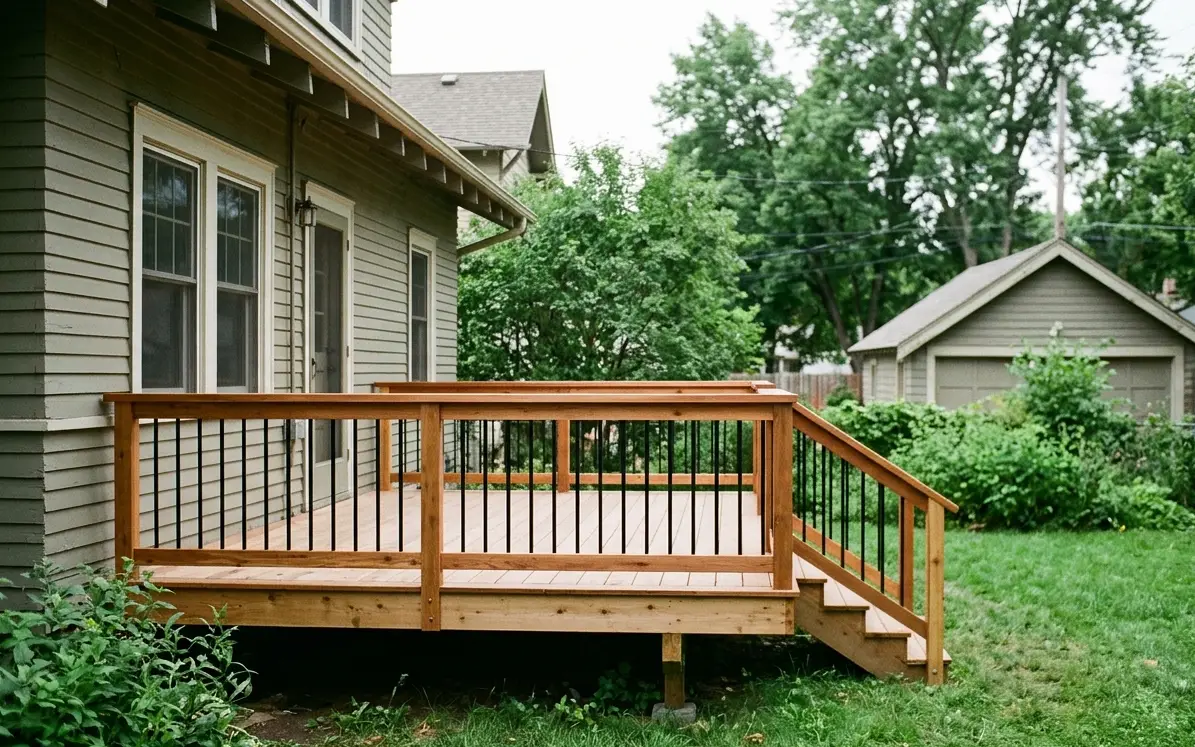
$68 to $212 per linear foot, based on 2026 Twin Cities jobs.
Deck railing installation means setting posts that bolt into the deck framing, then running top and bottom rails with balusters, cable or glass between them. Guards are required where a deck sits more than 30 inches above grade, at least 36 inches tall, with no opening that passes a 4-inch sphere. Around Minneapolis, a new railing typically runs $68 to $212 per linear foot, depending on material and post count.
Why a railing that looks fine can still fail a hard lean
Most railing trouble starts at the posts, not the balusters. On many older Twin Cities decks, posts were notched and fastened to the rim with two lag screws, which leaves only half the post to resist someone leaning hard. After a few decades of freeze-thaw, those lags loosen and the wood around them softens. You feel it as a slight give at the top rail. We check every post by pushing on it, then pull a few balusters to see what the fasteners underneath look like.
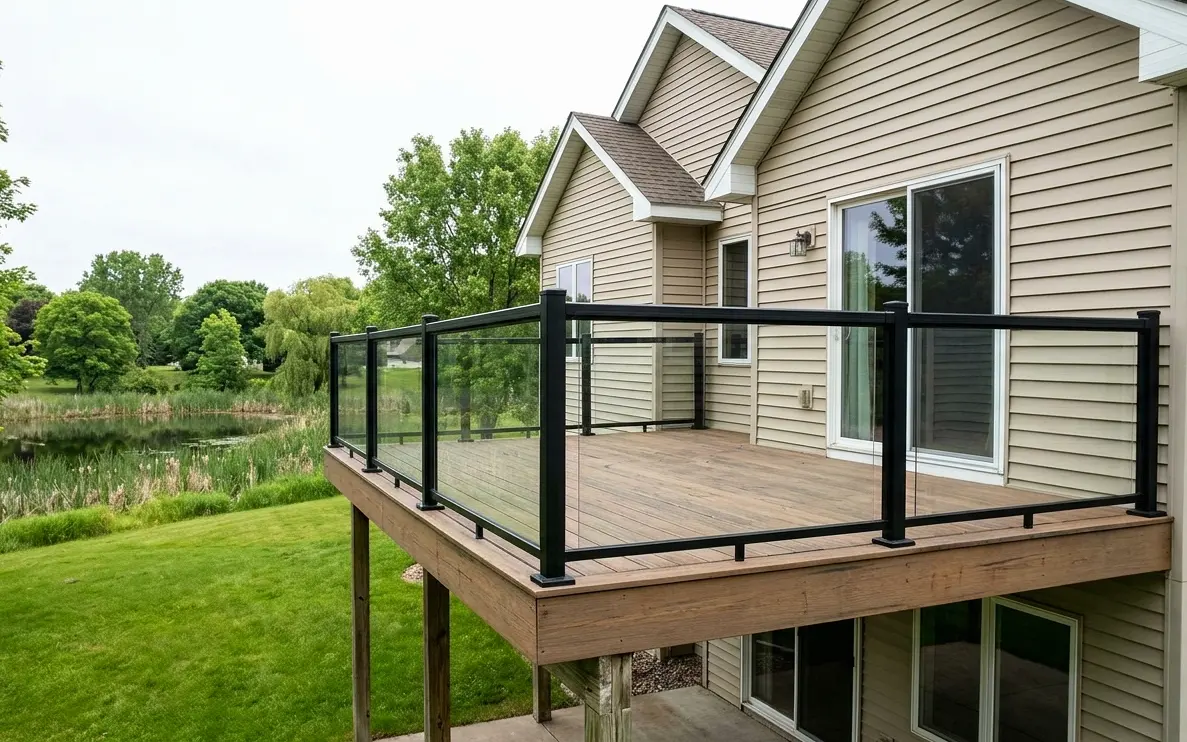
A new railing is also one of the quickest ways to change how a deck looks without replacing a single board. Swapping a chunky 2 by 2 wood baluster rail for black aluminum, a composite system or a mixed style opens the view to the yard and makes the whole deck feel newer. Because the rail sits right at eye level when you're seated, it shapes the view more than the decking does. That's why we bring top rail profiles and baluster colors to the first visit.
Revo Deck Systems builds railings on decks we frame and on existing decks, as long as the framing underneath is sound. If the rim joist is soft or the posts were set on rotted blocking, we tell you before anything gets ordered. Sometimes the fix is new blocking and through-bolted posts; other times a section of rim has to come out and be replaced. Either way, you will know which situation you have, and what it adds to the price, before the old railing comes off.
Which railing material fits your deck, your view and your budget
Pressure-treated or cedar wood
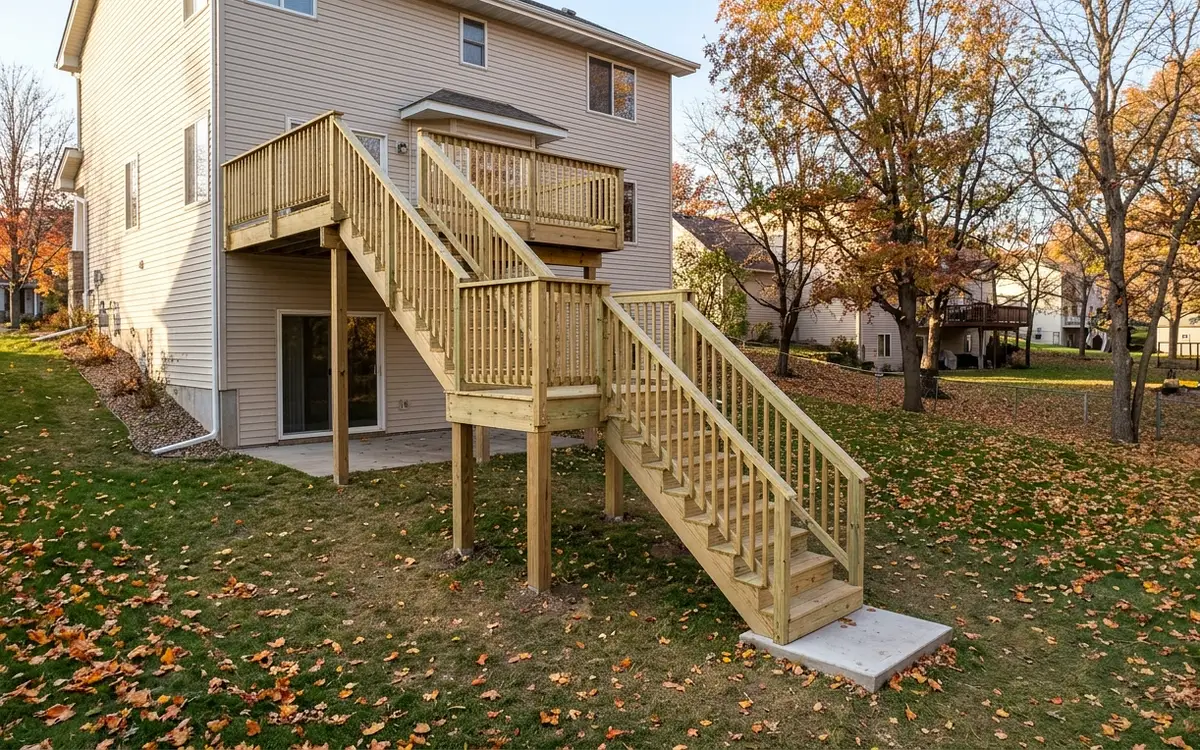
Wood rails cost the least to build and suit older homes well, especially painted rails on bungalows and foursquares. Plan to stain or paint every few years, since Minnesota sun and snow wear the finish fastest on the top cap.
Composite rail systems
Rail lines from Trex, TimberTech, AZEK and Fiberon slide sleeves over structural posts and come in colors that match their decking. They skip the staining cycle and resist splitting, though they cost more than wood up front.
Powder-coated aluminum rail
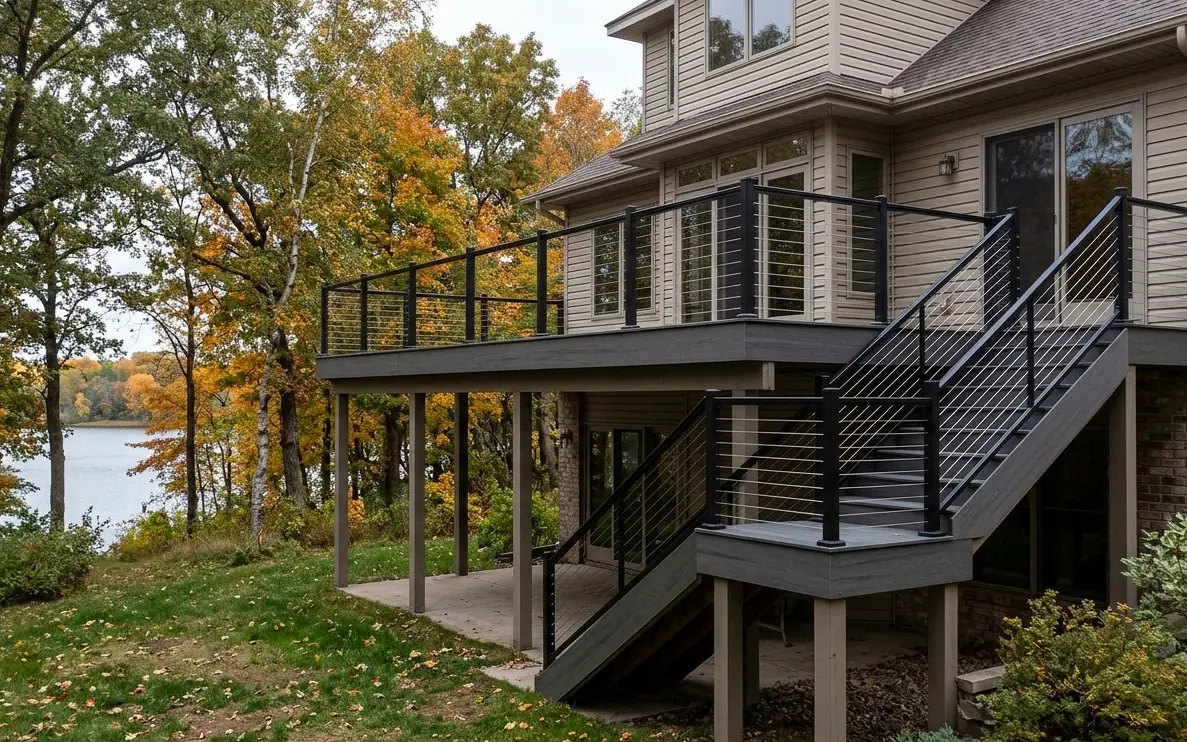
Aluminum systems from Westbury, Fortress and Key-Link come as panels or kits with slim balusters that open up the view. The finish stands up to snow well, and the posts mount to blocking with structural brackets.
Wood cap over metal balusters
A wide wood or composite top cap over black metal balusters gives you a drink ledge and a cleaner look than an all-wood rail. It is a popular middle ground on remodels where the budget stops short of full aluminum.
How a railing job runs from the first visit to the final push test
- 01Call
Site visit and post check
We measure every run, test each post and look at the rim and blocking underneath. You get material options side by side with linear-foot totals for each one.
- 02Visit
Layout and permit review
Post locations, stair rail runs and gate spots get marked out. If the work ties into a permit for a new deck or a major repair, we handle the drawings and the application.
- 03Scope
Old railing comes off
Old rails, balusters and caps come off in sections and leave the site with us. We pull old nails and lags so nothing sharp is left sticking out of the rim.
- 04Prep
Block and bolt each post
Solid blocking goes in between joists, and each post is through-bolted or mounted with a structural bracket. This step is what keeps a railing stiff for many winters.
- 05Build
Rails, infill and handrails
Top and bottom rails go on, then balusters, panels or cable. Every opening gets checked with a 4-inch gauge, and stair handrails are set 34 to 38 inches above the nosing.
- 06Check
Final walk and cleanup
Standing beside you, we push on every post, check the gate swing and latch, then clean up cut-offs and sawdust. Any required inspection is booked before we leave.
What deck railing typically costs per foot in Minneapolis
Most railings we build typically run $68 to $212 per linear foot installed. Simple pressure-treated rails sit at the low end, while composite sleeves, aluminum panels and mixed systems climb toward the top. Stairs, corners and gates add posts and labor, so two decks with the same footage can price quite differently. The real number comes after we see the deck, test the posts and measure every run.
What changes the price
- Railing material, from treated wood at the low end to aluminum and composite systems
- Post count, since corners, stairs and short runs all add posts per foot
- Condition of the rim joist and whether new blocking or rim repair comes first
- Stair handrails and angled sections, which take more cutting and fitting than straight runs
- Gates, especially self-closing gates with latches for pools, pets or small kids
- Deck height and access, since second-story decks need staging and slower handling
When a deck railing is past tightening a few screws
Posts move when you push
Grab the top of a post and push sideways. If it shifts more than a little or creaks at the rim, the connection below has loosened or the wood has started to rot.
Balusters spaced too far apart
Older railings were often built with wide gaps between balusters. Current code says a 4-inch sphere must not pass through, which matters once kids or small dogs share the deck.
Top rail below your hip
Residential guards need to stand at least 36 inches above the deck surface. Many older decks were built shorter, or lost height when thicker new boards raised the walking surface.
Split or checked rail caps
Deep cracks along the top rail hold water after every rain and snowmelt. That moisture works down into the posts and speeds rot right where the railing carries the most load.
Rust streaks below the fasteners
Orange or black stains under screws and brackets mean the hardware is reacting with treated lumber. Corroded fasteners lose strength long before their heads look badly damaged.
Stair handrail loose or missing
Stair handrails should sit 34 to 38 inches above the stair nosing and be easy to grip. A wobbly or missing stair rail is worth fixing before anything else on the deck.
What Minneapolis winters and housing stock do to deck railings
Twin Cities railings take a beating that railings in milder places never see. Snow piles against the balusters, ice forms on the top cap, and the freeze-thaw swings of March, April and November work water into every post hole and screw. Rock salt tossed toward the stairs can pit some composite and aluminum finishes over time, so we suggest calcium magnesium acetate or a plastic shovel, plus a look at the maker's care sheet. We also hold the bottom rail high enough above the boards that you can clear snow without prying at balusters.
Housing type shapes the railing too. On a 1920s bungalow in Longfellow or a Tudor revival in Southwest, painted wood rails with square balusters usually look right at home. The tall second-story decks on 1980s to 2000s walkout homes in Maple Grove, Plymouth and Eden Prairie sit a full story above the yard, where a stiff, see-through railing matters most. Stacked rear porches on duplexes and triplexes need guards on every level, and those older porch rails are often the shortest and loosest ones we find.
Where we do deck railings around Minneapolis
Deck Railings jobs take our carpenters to these cities and neighborhoods most weeks, and to the rest of the metro too.
- Minneapolis 55414
- Saint Paul 55102
- Bloomington 55420
- Brooklyn Park 55443
- Plymouth 55447
- Woodbury 55125
- Maple Grove 55369
- Lakeville 55044
- Blaine 55434
- Eagan 55122
- Burnsville 55337
- Eden Prairie 55344
- Coon Rapids 55433
- Apple Valley 55124
- Edina 55424
- Minnetonka 55305
- St. Louis Park 55416
- Shakopee 55379
- Maplewood 55109
- Cottage Grove 55016
- Richfield 55423
- Roseville 55113
- Inver Grove Heights 55076
- Andover 55304
- Savage 55378
- Fridley 55432
- Chanhassen 55317
- Prior Lake 55372
Questions about deck railings
How tall does a deck railing have to be in Minneapolis?
Residential guards need to be at least 36 inches tall, measured from the walking surface to the top of the rail. They are required anywhere the deck surface sits more than 30 inches above the ground below. Stair handrails are measured differently, at 34 to 38 inches above the stair nosing. We build to these heights and confirm details with the city when your project carries a permit.
Can you replace just the deck railing and keep my existing boards?
Yes, as long as the framing under the posts is solid. We test the rim joist and blocking first. If the boards are in good shape, the new railing goes on over them and the posts bolt through to the framing. If the rim is soft, we repair that section before the new rail goes up so each post has something firm to hold.
How far apart can deck railing balusters be?
No opening in the guard can let a 4-inch sphere pass through. In practice, that means balusters set with a gap a little under 4 inches and checked with a gauge as they go in. Older decks with wider spacing don't meet current rules, and we bring them up to that spacing whenever we rebuild a railing.
Is a composite deck railing worth it over a wood railing?
Composite rail costs more up front than treated wood, but it skips the stain or paint cycle and resists the cracking wood caps develop after a few Minnesota winters. If you plan to stay in the house for many years, the saved upkeep often matters more than the starting price. We bring samples of both so you can compare them against your actual deck.
Do I need a permit to replace a deck railing in Minneapolis?
A straight railing swap on a sound deck is often treated as repair work, but rules vary between Minneapolis and each suburb. If the job changes guard height, adds stairs or comes with framing repairs, a permit becomes more likely. We check the rules for your city before work starts and handle the drawings and application whenever one is needed.
Talk to us about deck railings
Call any hour about deck railings, tell us what you are seeing, and we will set a time to look and write up a scope.