Railings & Details · Minneapolis, MN
Deck privacy screens and walls in Minneapolis
Your deck sits a few yards from the neighbor's kitchen window or faces a busy alley, and you never quite relax out there.
We build privacy screens and walls that block the sightline you care about, framed strong enough for wind, with gaps that let breeze through.
- Phones answered 24/7
- Written scope before work starts
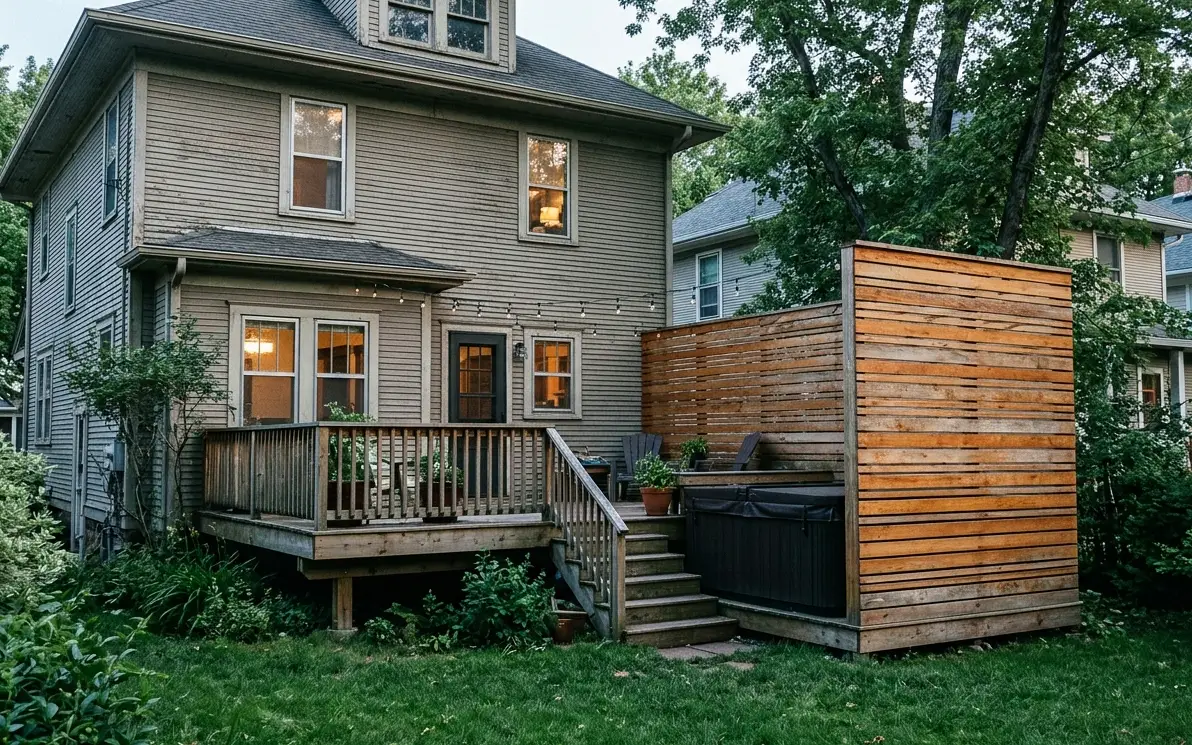
$1,460 to $5,980 per screen run, based on 2026 Twin Cities jobs.
A deck privacy screen is a framed wall of slats, panels or lattice anchored to the deck structure, usually five to eight feet tall and placed to block one or two key sightlines. The posts tie into joists with blocking and structural hardware, because screens catch wind like a sail. In Minneapolis, a typical project costs $1,460 to $5,980 per screen run, depending on height, length and material.
Blocking the view you mind without boxing in the deck
Most homeowners don't need a wall around the whole deck. They need one panel in the right spot: the side facing a neighbor's patio, the corner where the hot tub sits, or the run along an alley. We start by standing where you sit and working out which sightlines bother you, and at what height. A six-foot screen at the right angle often does more than a longer wall in the wrong place, and it costs less while keeping the deck feeling open.
Wind is the engineering problem. A solid screen on a raised deck acts like a sail, and that force goes straight into the posts and the joists below. We tie screen posts into the frame with added blocking and through-bolts or Simpson Strong-Tie hardware, and on taller screens we leave gaps between slats so gusts pass through. A slatted screen with half-inch gaps still hides most of the view from a few feet away, while letting a summer breeze reach your chair.
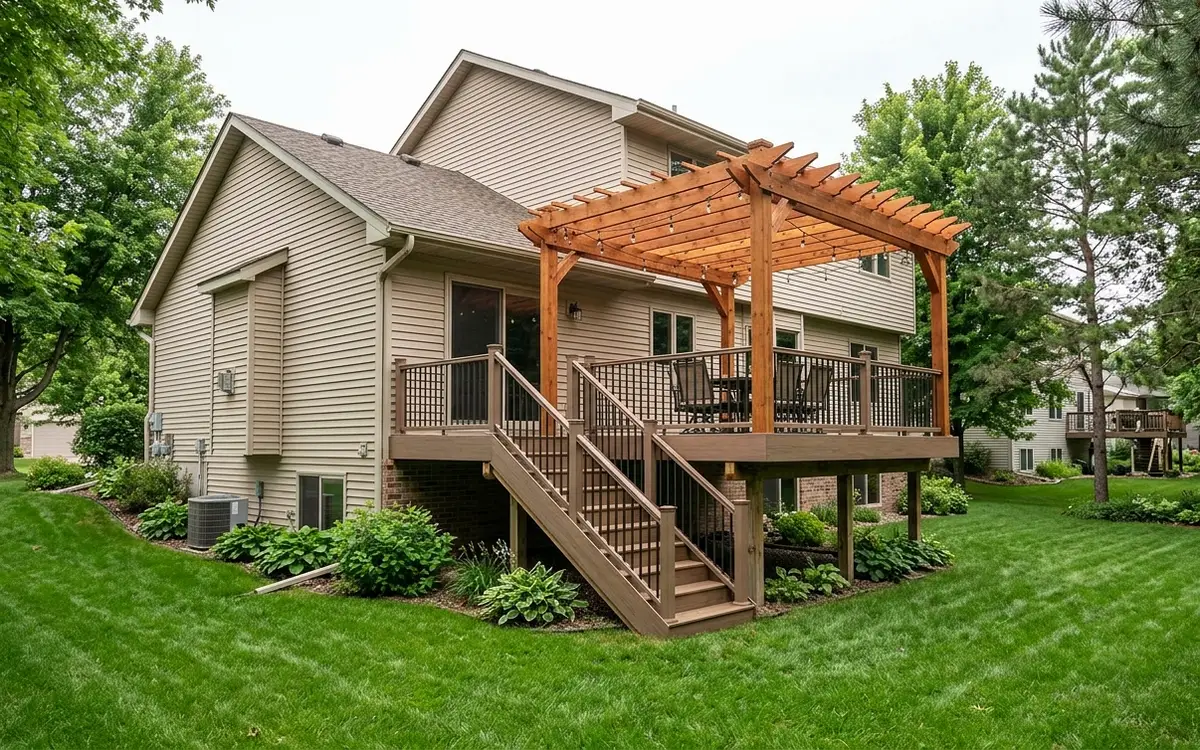
Screens do other jobs besides privacy. They shade a west-facing deck in late afternoon, hide a utility meter or air conditioner, and give a pergola or hot tub corner a sense of enclosure. Some homeowners add planters at the base or run string lights along the top rail. Revo Deck Systems builds screens on new decks and adds them to existing ones, as long as the framing under each post location is sound. Talk to us about what you want hidden and we'll mark it out on site.
Slats, panels and lattice: privacy screen styles that fit
Horizontal slat screens
Cedar, composite or PVC boards run sideways between posts with even gaps. It's the most requested look on newer decks, it lets wind slip through, and it pairs well with cable or aluminum railings on the rest of the deck.
Solid composite or PVC walls
Tongue-and-groove composite or PVC panels block the view fully and stop most wind. They work best on ground-level decks or short runs, since a solid wall puts more load on the posts and the framing beneath them.
Lattice and trellis panels
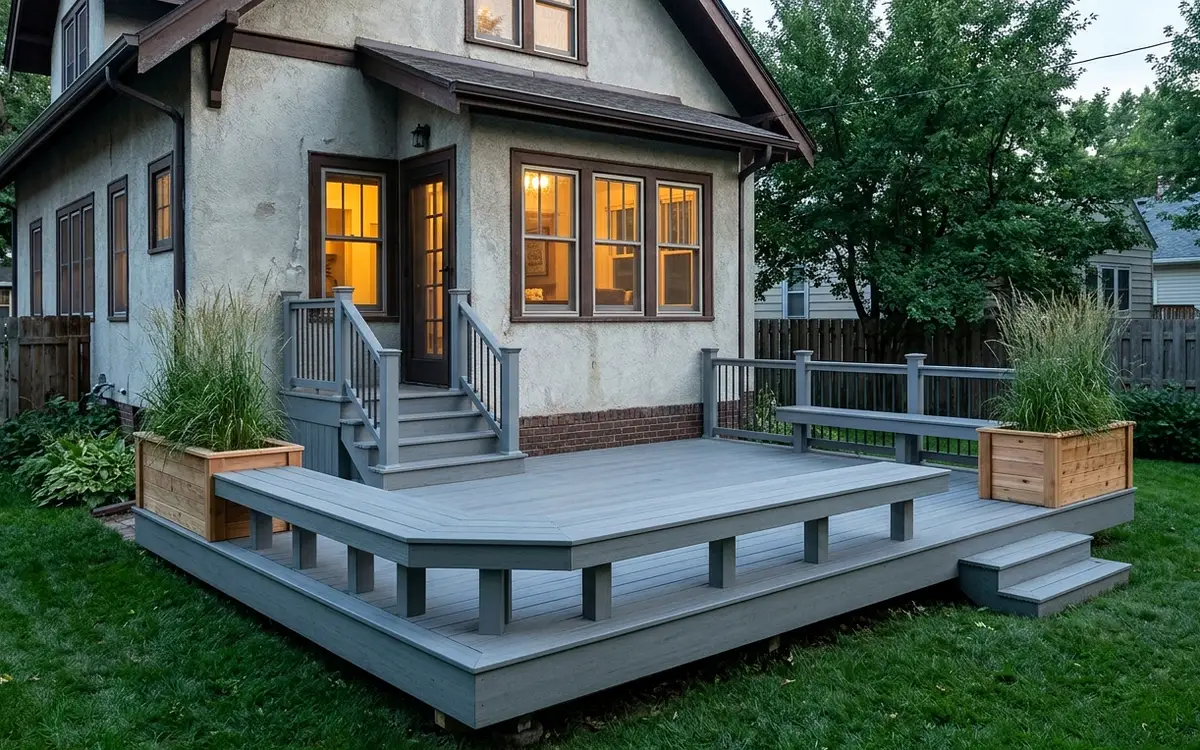
Framed lattice in a square or diagonal pattern gives partial privacy and a classic look on bungalows and Tudors. Add a planter at the base, and climbing vines can fill the openings over a few summers.
Metal or laser-cut panels
Aluminum or powder-coated steel panels in a cutout pattern, set between wood or aluminum posts. They hold their shape, never rot and cast patterned shade across the deck, though they run higher per screen than wood.
How we lay out and build a privacy screen
- 01Call
Find the sightlines
We sit where you sit, stand where you stand and mark which views to block and at what height. That lets us keep the screen as short as it can be.
- 02Visit
Check posts and framing
We look at the joists and rim where screen posts will land. Screens load the frame more than railings do, so weak spots get blocking or repair before anything goes up.
- 03Scope
Confirm height and permits
Tall screens and walls can fall under zoning or fence height rules in some cities. We check what applies at your address and handle drawings and the permit when one is needed.
- 04Prep
Set and brace the posts
Posts get through-bolted to blocked joists or set in structural brackets rated for treated lumber. On tall screens, a top rail ties the posts together so they move as one.
- 05Build
Install slats or panels
We space slats with a gauge so the gaps stay even, hide fasteners where the material allows, and leave a small gap at the bottom so water drains away.
- 06Check
Cap, trim and test
A top cap sheds water off the end grain. We push on every post to check for flex, clean the site and go over care for your chosen material.
What a deck privacy screen typically costs
A deck privacy screen in Minneapolis typically costs $1,460 to $5,980 per screen run, meaning one continuous section between end posts. A six-foot run of lattice on a ground-level deck sits near the low end, and a tall composite or metal wall on a raised deck with extra blocking moves toward the top. We'll give you the real number after we see the deck and check the framing.
What changes the price
- Height and length of each screen run, plus how many separate runs you need
- Slat material, from cedar and treated lumber to composite, PVC or metal panels
- Open slatted design versus a solid wall that needs heavier posts and bracing
- Deck height, since raised decks need more blocking under every screen post
- Framing repairs needed before the posts can be anchored to the joists
- Extras like a top cap, built-in planters, low-voltage lighting or a matching gate
When a privacy screen is worth adding to your deck
Neighbors are right there
On city lots in Minneapolis, side yards can be narrow and decks often face a neighbor's windows or patio. One well-placed screen takes back that side of the deck.
Your hot tub feels exposed
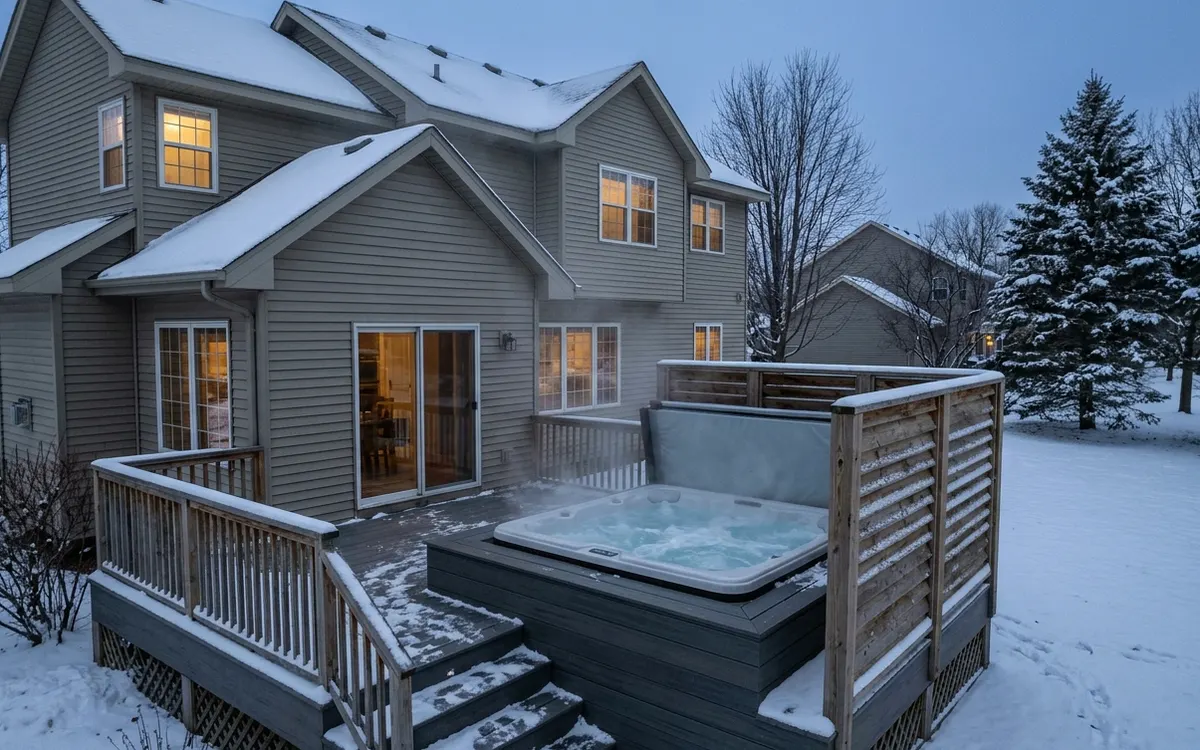
Soaking next to an alley or under a neighbor's second-story window rarely feels relaxing. A screen on one or two sides gives the corner real privacy without a full enclosure.
Afternoon sun bakes the boards
A west-facing deck can be too hot to use from late afternoon until sunset in July. A slatted screen on that side cuts glare and throws shade across the seating.
Wind whips across the deck
Lake lots and open suburban yards get steady wind. A partly open screen slows gusts enough that napkins stay on the table and the grill flame stays steady.
Something unsightly sits nearby
Trash bins, an AC condenser, a utility box or a blank garage wall can disappear behind a short screen built to match the deck and the house trim.
A railing alone feels too open
A standard guard keeps people from falling but does nothing for privacy. Where your inspector accepts it, a screen can stand in place of a rail section on the same posts.
Screens built for Minnesota wind, snow and tight city lot lines
Twin Cities weather puts screens through more than sun. Spring storms push hard on anything tall, and snow drifts against the base of a screen all winter. We frame posts to resist that wind load and leave a drainage gap at the bottom so meltwater doesn't sit against the slats through the freeze-thaw weeks of March and April. On composite screens we follow the maker's spacing for expansion, because boards shrink and grow with the big temperature swings between a January night and a July afternoon.
Lot layout matters too. Duplexes and triplexes with stacked rear porches, found across the older parts of Minneapolis, often look straight into the next building's porch, and one screen panel per level can change how the space feels. Bungalow lots in Longfellow and Southwest have narrow side yards where a screen near the property line makes a deck usable again. In suburbs like Woodbury and Eden Prairie, tall second-story decks overlook neighboring yards, so we size screens to block the downward view while leaving your own view of the yard open.
Where we do privacy screens around Minneapolis
Privacy Screens jobs take our carpenters to these cities and neighborhoods most weeks, and to the rest of the metro too.
- Minneapolis 55414
- Saint Paul 55102
- Bloomington 55420
- Brooklyn Park 55443
- Plymouth 55447
- Woodbury 55125
- Maple Grove 55369
- Lakeville 55044
- Blaine 55434
- Eagan 55122
- Burnsville 55337
- Eden Prairie 55344
- Coon Rapids 55433
- Apple Valley 55124
- Edina 55424
- Minnetonka 55305
- St. Louis Park 55416
- Shakopee 55379
- Maplewood 55109
- Cottage Grove 55016
- Richfield 55423
- Roseville 55113
- Inver Grove Heights 55076
- Andover 55304
- Savage 55378
- Fridley 55432
- Chanhassen 55317
- Prior Lake 55372
Questions about privacy screens
How tall can a deck privacy screen be?
Most screens we build stand five to eight feet above the deck floor. Some cities treat tall deck walls like fences and limit their height near the lot line, so we check the rules for your address. Taller screens also need stronger posts and more blocking. We'll suggest the shortest height that still blocks the view you care about.
Will a privacy screen on my deck block too much breeze?
Not if it's slatted. Gaps between boards let air move while still breaking up the view from most angles. A solid wall stops the breeze and catches more wind, so we usually save those for short runs or ground-level decks. On a hot, still evening, a slatted screen often feels better than nothing at all, because it adds shade.
Can you add a privacy screen to the deck I already have?
Usually. We lift a few boards or work from below to add blocking at each post location, then through-bolt the posts to the frame. If the joists in that area are soft or undersized, we fix them first. A screen can also replace a section of railing where the posts and height meet the guard rules your inspector applies.
Which deck privacy screen material stands up best to Minnesota winters?
Composite and PVC handle moisture and freeze-thaw with little upkeep, and aluminum panels can't rot at all. Cedar weathers well and looks warm, but it needs a sealer every few years from a brand like Cabot or Ready Seal. Whatever you pick, a top cap and a gap at the bottom keep water from soaking into the end grain.
Do I need a permit for a privacy wall on my deck in Minneapolis?
Sometimes. If the screen is part of a new or permitted deck, it goes on the same drawings. A tall wall added later may count as a structural change or fall under fence height rules. We check what your city requires, prepare the drawings when a permit is needed and line up the inspections so you don't have to.
Talk to us about privacy screens
Call any hour about privacy screens, tell us what you are seeing, and we will set a time to look and write up a scope.