Repair & Replacement · Minneapolis, MN
Deck replacement in Minneapolis, frame to railing
When the boards, the frame and the footings are all tired, patching one piece at a time costs more than starting fresh and still leaves you with an old deck.
We tear out the old structure, set new footings below frost, and build a deck that fits how you use the yard now.
- Phones answered 24/7
- Written scope before work starts
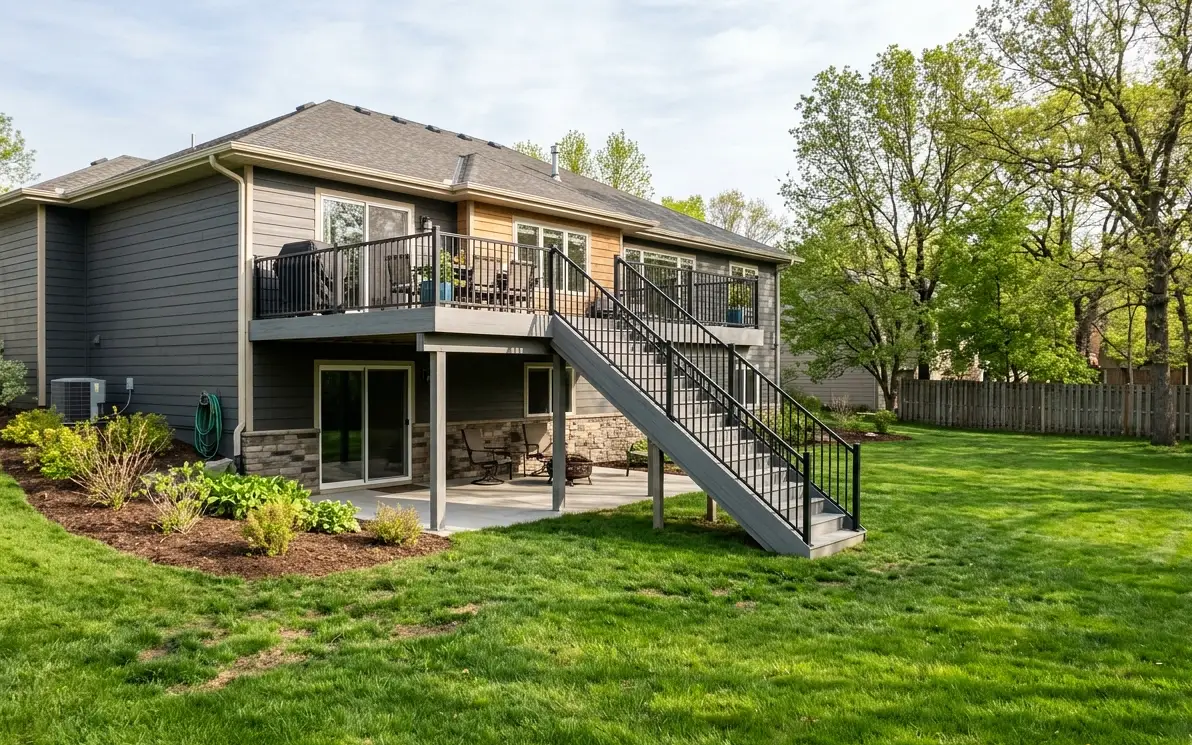
$42 to $98 per square foot including tear-off, based on 2026 Twin Cities jobs.
Deck replacement means removing the old deck down to the ground, then building a new one with fresh footings, framing, decking, stairs and railings. Most Minneapolis replacements are permitted and inspected. A typical project runs $42 to $98 per square foot including tear-off, with material, height and railing style moving the number most. A 12 by 16 foot deck is 192 square feet, which gives you a quick way to ballpark it.
When a new deck makes more sense than another round of repairs
We usually recommend replacement when the problems are spread through the whole structure rather than sitting in one corner. A rotted ledger, footings that stop a foot below grade, joists spaced too far apart and railings that never met current height rules add up to a deck that cannot be repaired into a safe one. Each fix would touch the others. Starting over lets us correct the attachment, the footings and the layout in one permitted job instead of chasing failures every spring.
Replacement is also a chance to change the deck itself. Many older decks in Minneapolis were built small, with a single set of steep stairs and no room for a table and a grill at the same time. You can widen the footprint, add a landing, drop to a step-down level or turn the stairs toward the garage path. We draw the new layout, mark it out on your lot, and adjust it with you before anything is ordered.
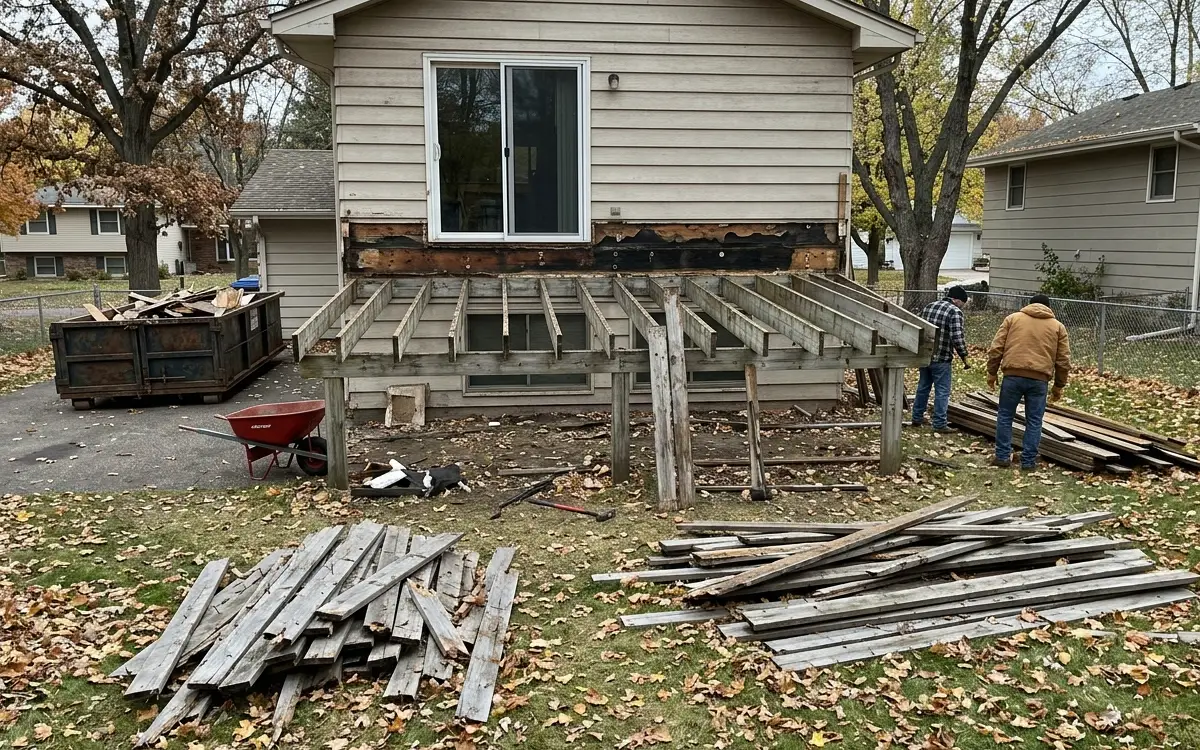
The tear-off is counted in our price range, so there is no separate demolition bill. We remove the boards, railings, framing and any old concrete that is in the way, and we haul all of it off. Old footings that sit in the right spot and reach full depth can sometimes stay, but most older piers in the Twin Cities were poured too shallow. Talk to us about your deck and we'll tell you honestly which parts, if any, are worth keeping.
Choosing the materials for your replacement deck
Pressure-treated framing and decking
Treated pine keeps the cost toward the lower end of the range. It needs a stain or sealer every couple of years and weathers to gray if left alone, but it is easy to repair later.
Cedar decking on treated framing
Cedar has a warm color and natural resistance to decay, and it stays cooler underfoot than many synthetic boards. Plan on regular cleaning and stain to keep the color from fading to silver.
Composite boards like Trex or TimberTech
Capped composite skips staining, resists fading, and handles snow and shoveling well, though it costs more up front. Makers back their boards with long limited warranties, and we'll tell you which one applies.
PVC decking such as AZEK
PVC boards contain no wood fiber, so they shrug off moisture close to the ground and around hot tubs. They sit near the top of the range and need joists spaced to the maker's span tables.
How a deck replacement moves from tear-off to final inspection
- 01Call
Site visit and measurements
We measure the old deck, check the house wall behind the ledger and talk through how you want to use the space. Then we sketch options on your actual lot.
- 02Visit
Drawings and permit
Once the layout is set, we prepare the drawings Minneapolis or your suburb requires and pull the building permit. Inspections typically include the footings and final framing.
- 03Scope
Tear-off and haul away
Our carpenters remove the decking, railings, joists and posts, then check the house rim joist. Any rot found behind the old ledger gets repaired before new framing goes up.
- 04Prep
Footings below frost
New footings go to 42 inches or deeper, either poured concrete or helical piers. The inspector looks at the holes before any concrete goes in.
- 05Build
Framing, decking and rails
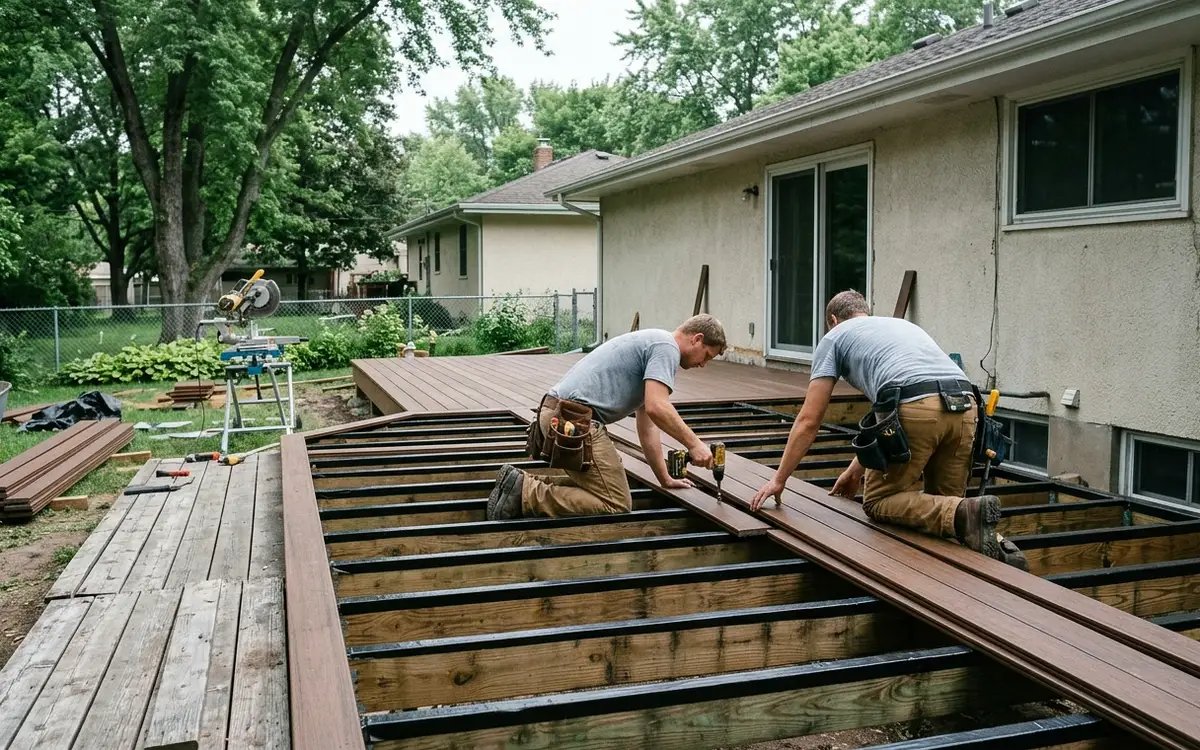
We flash and bolt the new ledger, frame to the span tables for snow load, then lay boards, build the stairs and install railings with rated hardware.
- 06Check
Final inspection and walkthrough
After the city signs off, we walk the deck with you, explain the care routine for your material and leave the yard raked and clean.
How the price of a new deck adds up
A typical Minneapolis deck replacement runs $42 to $98 per square foot including tear-off of the old deck. Treated lumber at a modest height sits near the bottom. Composite or PVC boards, a tall walkout frame, cable or glass railings and a long stair run push it toward the top. The real number comes after we see the deck and the lot, and it depends on the choices you make.
What changes the price
- Decking material, from pressure-treated pine to cedar, composite or PVC
- Deck height above grade and the length of the stair run
- Railing style, with cable, glass or aluminum costing more than wood
- Rot repair needed on the house rim joist behind the old ledger
- Number of footings, and whether helical piers replace poured concrete
- Extras like built-in benches, lighting, skirting or a privacy screen
Signs your deck has reached the end of its life
Rot in several joists
When soft spots show up in more than a few joists, the moisture problem is structural. Sistering every one of them usually costs close to what new framing would.
Ledger nailed without flashing
Decks built in the 1980s and 1990s often hang on nails with no flashing above the ledger. Water has had decades to rot that board and the house rim behind it.
Shallow or tipping footings
Twin Cities footings must reach 42 inches. Older piers that stop short heave a little each winter, and you'll see posts leaning or beams riding off their supports.
Railings below current height
Guards that sit low or have wide gaps between balusters are a fall risk. On a tall deck, bringing them up to current rules often means new posts and new framing too.
Boards splitting across the surface
Widespread checking, splinters and cupped boards mean the decking itself is spent. Putting a new surface over an aging frame is only a short-term answer in that case.
A layout that no longer works
If the deck is too small, too high or has stairs in the wrong place, replacement lets you fix the design at the same time you fix the structure underneath.
Building a replacement deck for Twin Cities snow and soil
Minnesota code puts deck footings at 42 inches in the Twin Cities because frost drives deep here. Most of the old decks we replace sit on piers that stop well short of that, which is why their posts lean and their stairs drift away from the frame. A new deck also has to carry months of heavy snow, so we size joists, beams and spans for that load rather than for a summer party. The season is busiest from May through October, but we can still set footings in winter with frost blankets or helical piers.
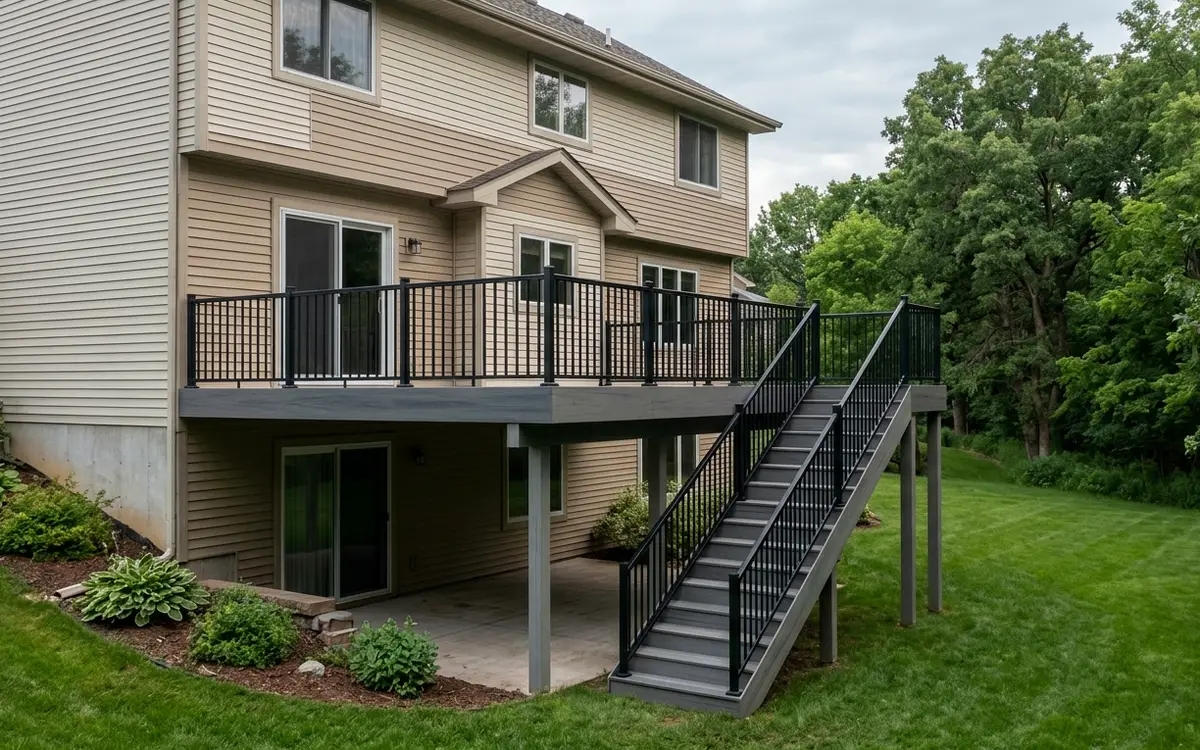
Lot shape changes a replacement more than people expect. A walkout lot in Plymouth, Maple Grove or Eden Prairie often means a tall second-story deck with a long stair run and usable space underneath. A 1920s bungalow in Longfellow or Southwest usually has a short drop to a narrow yard and an alley garage, which favors a low deck with a wide stair toward the back walk. Lake lots around Lake Minnetonka bring grade changes and views worth framing around. We design around the lot you actually have.
Where we do deck replacement around Minneapolis
Deck Replacement jobs take our carpenters to these cities and neighborhoods most weeks, and to the rest of the metro too.
- Minneapolis 55414
- Saint Paul 55102
- Bloomington 55420
- Brooklyn Park 55443
- Plymouth 55447
- Woodbury 55125
- Maple Grove 55369
- Lakeville 55044
- Blaine 55434
- Eagan 55122
- Burnsville 55337
- Eden Prairie 55344
- Coon Rapids 55433
- Apple Valley 55124
- Edina 55424
- Minnetonka 55305
- St. Louis Park 55416
- Shakopee 55379
- Maplewood 55109
- Cottage Grove 55016
- Richfield 55423
- Roseville 55113
- Inver Grove Heights 55076
- Andover 55304
- Savage 55378
- Fridley 55432
- Chanhassen 55317
- Prior Lake 55372
Questions about deck replacement
How long does a deck replacement take in Minneapolis?
Tear-off usually takes a day. Footing holes, the footing inspection and concrete cure add a few days, then framing, decking and railings follow. A simple low deck moves quickly, while tall walkout decks and multi-level layouts take longer. Permit review time varies by city, so we'll give you a realistic window before we start rather than a hopeful one.
Can a deck replacement reuse my old footings?
Sometimes, but not often in the Twin Cities. A footing can stay only if it reaches 42 inches, is sound concrete, and sits exactly where the new layout needs support. Many older piers were poured shallow or are too small for current loads. We dig beside a sample footing to check its depth before we count on any of them.
Should my deck replacement be composite or wood?
It depends on how much upkeep you want and what you plan to spend. Treated and cedar decks cost less up front but need cleaning and stain every few years. Capped composite and PVC cost more but skip staining and handle snow and shoveling well. We bring samples of each so you can compare color, texture and heat underfoot.
Can deck replacement change the size or shape of my old deck?
Yes, and many homeowners use the replacement to do exactly that. You can widen it, add a landing, split it into two levels or move the stairs. A larger footprint may need setback checks and new permit drawings, which we prepare. We stake the new outline in your yard so you can see how it fits before anything is ordered.
What happens to the old wood after a deck replacement?
We haul it all away as part of the tear-off: boards, joists, posts, railings and old hardware. Treated lumber should never be burned, so it goes to proper disposal. Any old concrete piers in the way are broken out and removed. Your yard gets swept for nails and screws before the new framing starts.
Talk to us about deck replacement
Call any hour about deck replacement, tell us what you are seeing, and we will set a time to look and write up a scope.