Care & Inspection · Minneapolis, MN
Deck staining and sealing in Minneapolis
Gray, thirsty boards soak up every rain, then crack, cup and splinter through one more Minnesota winter, and a deck that skipped its last coat ages fast.
We clean the wood, test that it's dry, and brush in a penetrating stain or sealer matched to your boards and the sun they get.
- Phones answered 24/7
- Written scope before work starts
$2.85 to $5.40 per square foot, based on 2026 Twin Cities jobs.
Staining and sealing means washing the deck, letting the wood dry, sanding where fibers have lifted, then brushing or back-rolling a penetrating stain or clear sealer onto the floor, rails and stairs. In Minneapolis it typically runs $2.85 to $5.40 per square foot, depending on the deck's condition, how much railing there is and which product suits the wood. We set the real number after we see the deck.
Why a coat of stain buys your deck years, not months
Sun and water do most of the damage to a wood deck, and they work as a pair. Ultraviolet light breaks down the lignin at the surface of each board, which is why untreated wood turns gray. That gray layer then holds water, and water sitting in the grain swells the fibers, opens checks and feeds mold. A good penetrating stain slows both processes. The pigment blocks a share of the UV, while the resins or oils keep water beading on top instead of wicking into the board.
Sealing isn't the same as painting. Paint and solid film coatings sit on top of the wood and eventually peel, especially on horizontal surfaces where snow rests for months at a time. Penetrating products soak into the top layer of the board and wear away gradually, so the next coat goes on without scraping. We steer most Minneapolis homeowners toward semi-transparent or semi-solid penetrating stains for deck floors, and save solid stains for railings, skirting and vertical boards where they hold up better.
Timing matters as much as the product in the can. New pressure-treated lumber often arrives wet from the treatment plant, and stain brushed onto wet wood just sits on the surface and flakes off. We use a simple water bead test: sprinkle a little water on a board, and if it beads instead of soaking in within a few minutes, the wood isn't ready yet. Cedar and older boards usually accept stain sooner, though they still need a dry stretch after washing before we open a can.
How to tell your deck is overdue for stain
Water soaks in fast
Pour a cup of water on a sunny section of the floor. If it darkens the wood and disappears within a minute or two, the old finish is gone and the boards are drinking moisture.
Boards have turned silver gray
That even gray color means UV light has broken down the surface fibers. It's cosmetic at first, but the weathered layer holds water and speeds up checking and splitting.
Splinters on the stair treads
Raised grain and loose slivers show up first where feet land most, usually the top step and the path to the door. Sanding and a fresh coat smooth them back out.
Old stain wearing off unevenly
Traffic lanes go bare while corners and spots under chairs still look stained. Patchy wear tells you the finish has done its job and the floor needs a cleaning and recoat.
Black or green spots appearing
Mildew and algae grow where shade and moisture linger, often near planters, under the grill or along the north side of the house. They feed on unprotected wood fibers.
Fine cracks along the grain
Small surface checks widen every time water freezes inside them. Sealing them out of the weather while they're still hairline slows the damage before boards split end to end.
What happens on a staining job, start to finish
- 01Call
Phone call and walkthrough
You call, we come look at the deck, check the old finish, test how the wood takes water and talk through color. Then you get a written price before any work goes on the calendar.
- 02Visit
Move, cover and protect
We clear furniture and grills, cover siding, windows, plants and the patio below, and tape off door thresholds, brick and anything else the stain shouldn't touch.
- 03Scope
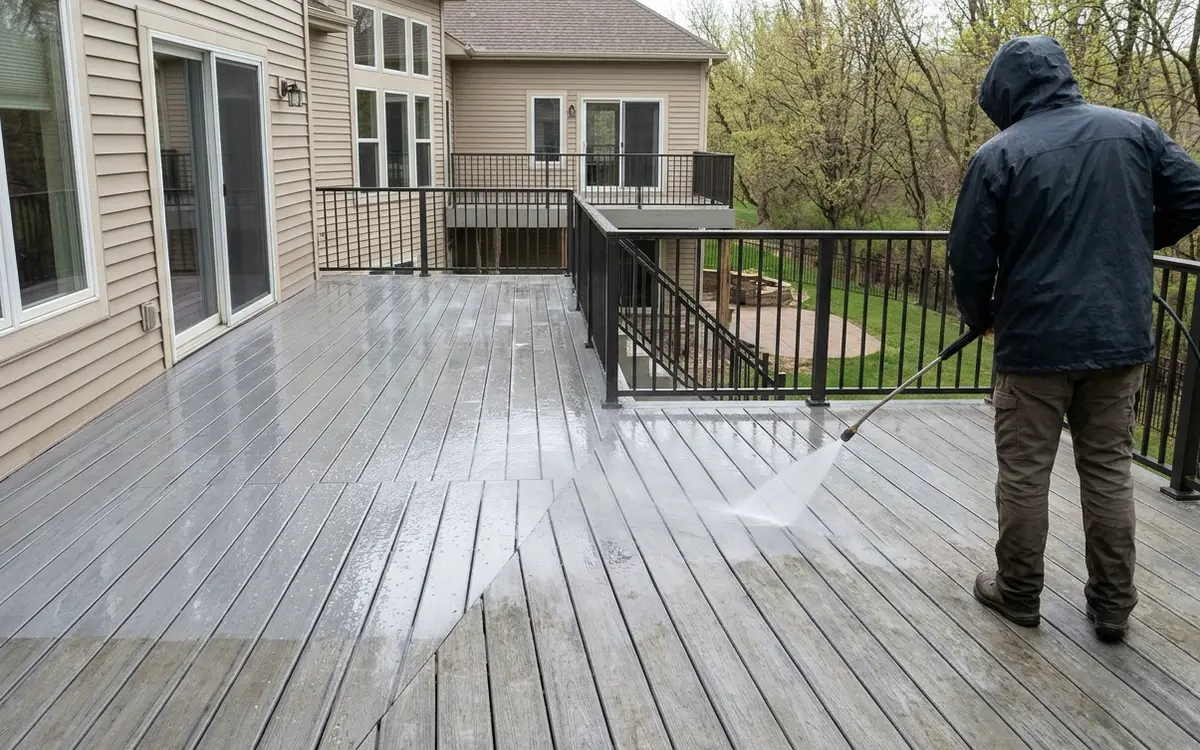
Wash and brighten the wood
A deck cleaner and low-pressure rinse lift dirt, mildew and loose gray fibers. On older decks a brightener follows to neutralize the cleaner and open the grain for stain.
- 04Prep
Dry time and sanding
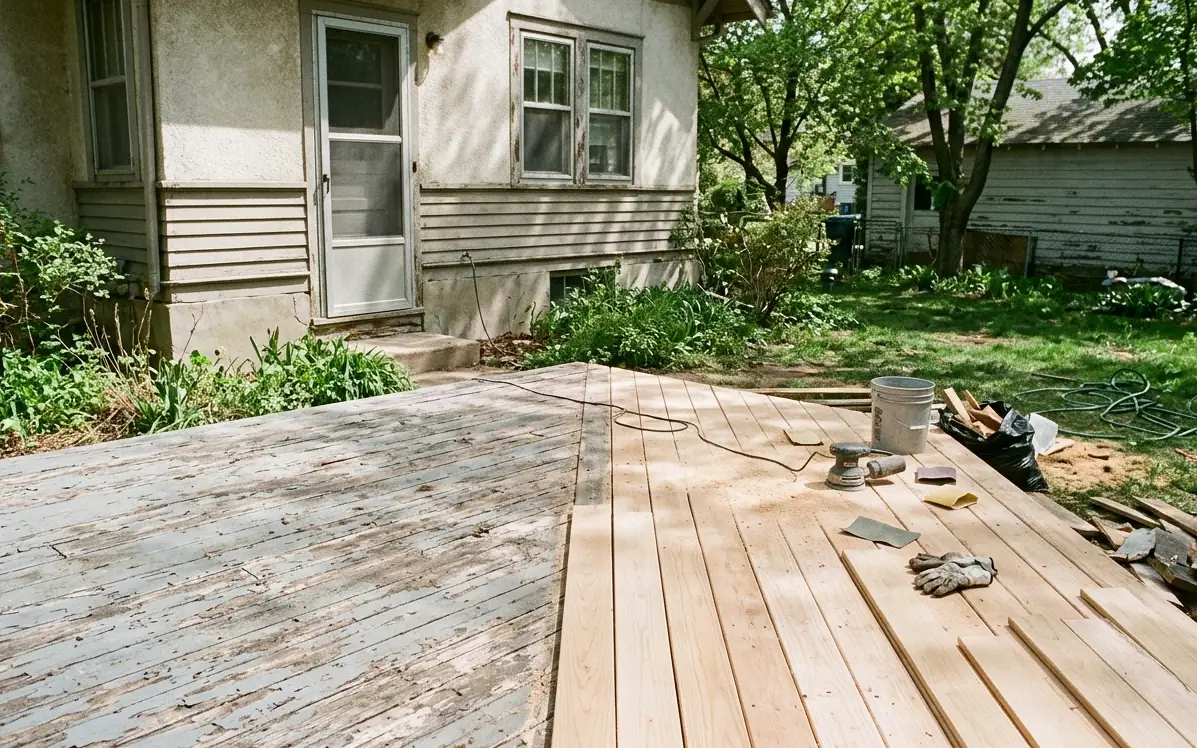
Boards need a dry stretch after washing, usually a couple of sunny days. Once they pass the water bead test, we sand raised grain and splinters on treads and handrails.
- 05Build
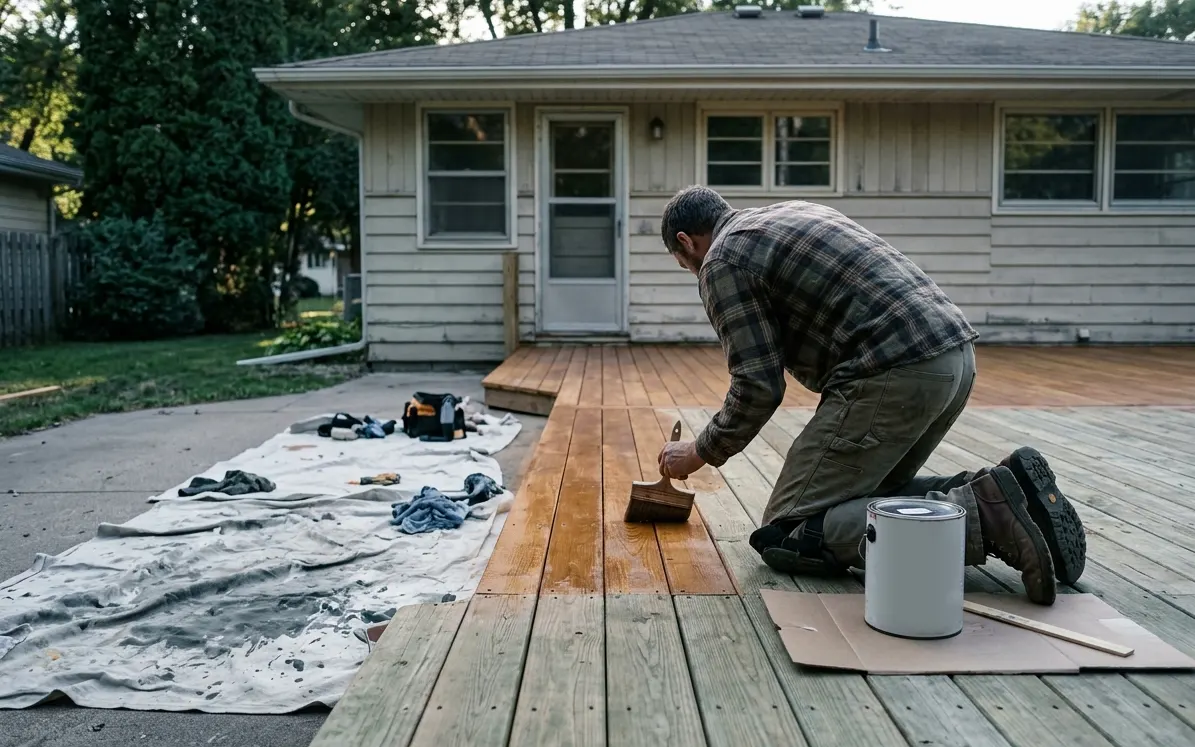
Stain applied by brush
Stain goes on by brush or back-roller along the full length of each board, a few boards at a time so lap marks don't show. Balusters and rails get brushed by hand.
- 06Check
Cure and final check
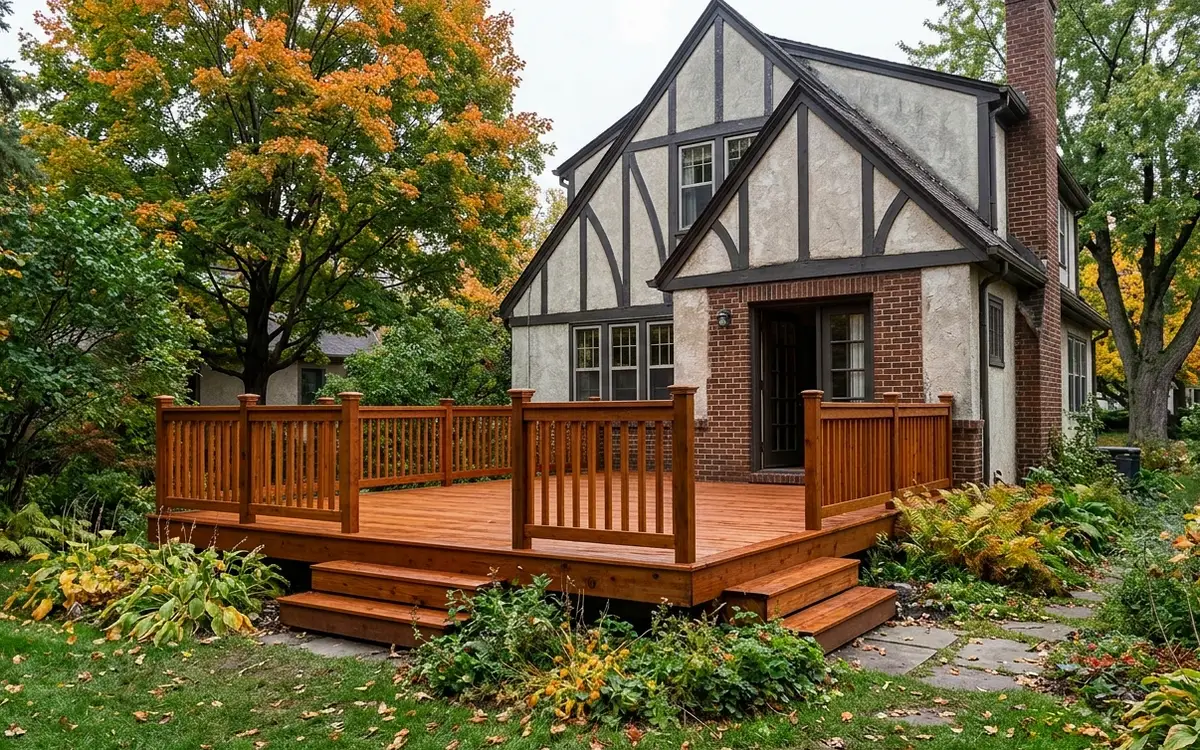
The deck stays clear of furniture until the finish cures, typically a day or two. We walk it with you, explain upkeep and leave the leftover stain labeled for touch-ups.
Choosing between clear sealer, semi-transparent and solid stain
Clear water-repellent sealer
A clear sealer keeps water out and shows the full grain of new cedar or freshly cleaned boards. It offers little UV protection, so the wood still grays, and most decks need a fresh coat every year or two.
Semi-transparent penetrating stain
This is our usual pick for deck floors. A light pigment load blocks more sun while the grain still shows through. It wears down instead of peeling, so recoating means a wash and a new coat, not a day of scraping.
Semi-solid and solid stain
Heavier pigment hides mismatched boards and old repairs and holds up well against UV. On floors, solid stains can peel in high-traffic spots after a few winters, so we mostly use them on railings, fascia and skirting.
Oil versus water-based formulas
Oil-based stains soak deep and look rich on cedar, while water-based products dry faster, clean up with water and resist mildew well. We use Cabot, Sherwin-Williams, Behr, Ready Seal and Superior depending on the wood and the finish already there.
What staining and sealing typically costs
For a typical Minneapolis deck, staining and sealing runs $2.85 to $5.40 per square foot. The low end covers a newer deck in decent shape with simple railings. Heavy graying, peeling old finish, lots of balusters and tall stairs push it higher. We price your deck after seeing it and testing the wood, and that written number is the one we work from.
What changes the price
- Deck size and number of levels, counted in square feet of floor area
- Railing style, since dozens of balusters take far more brush time than cable or glass
- Condition of the old finish, especially peeling film that has to be stripped first
- Stair count and height, with tall walkout stairs adding ladder and staging work
- Product choice, from clear sealers to heavier semi-solid stains and penetrating oils
- Yard access and how much covering the siding, plants and patio below need
Staining around Twin Cities weather and a short season
Stain needs dry weather and temperatures above roughly 50 degrees, both while it goes on and for the hours after. In the Twin Cities that leaves a staining season from late spring to early fall. May mornings can still dip into the 40s, and October brings cold nights and early frost, so we schedule around forecasts and skip days when rain is due before the finish sets. If your deck needs heavy washing and a long dry spell first, booking early in the season gives the work room to breathe.
Minnesota winters are the real test for any finish. Snow can sit on a deck floor from November into March, and every freeze-thaw swing in early spring pushes moisture in and out of the wood. Rock salt can pit and discolor boards, so a plastic shovel and calcium magnesium acetate are kinder choices, though you should check the stain maker's care sheet first. South-facing decks on ramblers in Richfield or Roseville bake in summer sun and usually need recoating sooner than decks shaded by big trees in older city neighborhoods.
Where we do staining & sealing around Minneapolis
Staining & Sealing jobs take our carpenters to these cities and neighborhoods most weeks, and to the rest of the metro too.
- Minneapolis 55414
- Saint Paul 55102
- Bloomington 55420
- Brooklyn Park 55443
- Plymouth 55447
- Woodbury 55125
- Maple Grove 55369
- Lakeville 55044
- Blaine 55434
- Eagan 55122
- Burnsville 55337
- Eden Prairie 55344
- Coon Rapids 55433
- Apple Valley 55124
- Edina 55424
- Minnetonka 55305
- St. Louis Park 55416
- Shakopee 55379
- Maplewood 55109
- Cottage Grove 55016
- Richfield 55423
- Roseville 55113
- Inver Grove Heights 55076
- Andover 55304
- Savage 55378
- Fridley 55432
- Chanhassen 55317
- Prior Lake 55372
Questions about staining & sealing
How long should new pressure-treated lumber dry before deck staining?
It depends on how wet the boards were when they arrived. Some kiln-dried treated lumber accepts stain within weeks, while boards that came wet from the plant may need a few months. The water bead test settles it: sprinkle water on the deck, and if it beads on the surface, wait. If it soaks in within a few minutes, the wood is ready for its first coat.
How often does a Minneapolis deck need staining and sealing?
Most decks here need a fresh coat every two to three years, though floors in full sun may need attention sooner and shaded vertical surfaces last longer. Railings and fascia often hold their color well past the floor. The water test is your best guide: when water stops beading on the boards in high-traffic spots, plan a cleaning and recoat for the next dry stretch.
Can deck staining still happen in October in the Twin Cities?
Sometimes. Early October often brings dry afternoons above 50 degrees, and those work if nights stay above freezing and no rain is forecast for a day. Late October and November are usually too cold and damp for stain to cure properly. If the season closes before we can get to your deck, we'll book it for late spring rather than force a poor coat.
Is a clear deck sealer enough, or does my deck need a tinted stain?
Clear sealers stop water but do little against sun, so the wood still grays within a season or two. If you like the natural look and don't mind recoating often, clear works fine. For longer gaps between coats, a semi-transparent stain with some pigment protects the surface better while still letting the grain show. We can put down test patches so you can compare.
Can new deck stain go over peeling solid stain on the floor?
Not well. New stain bonds to whatever is underneath it, so if the old coat is lifting, the new one lifts right along with it. Peeling film has to come off first, by stripping and sanding, before a fresh penetrating stain can soak in. That extra prep is restoration work, and we price it that way after seeing how much of the floor is affected.
Talk to us about staining & sealing
Call any hour about staining & sealing, tell us what you are seeing, and we will set a time to look and write up a scope.