Repair & Replacement · Minneapolis, MN
Deck footing and post repair in Minneapolis
Leaning posts, a deck corner that drops a little more every spring, or stairs drifting away from the frame usually trace back to footings that sit above frost.
We shore the deck, dig or drive new support below 42 inches, and set fresh posts on proper bases and caps.
- Phones answered 24/7
- Written scope before work starts
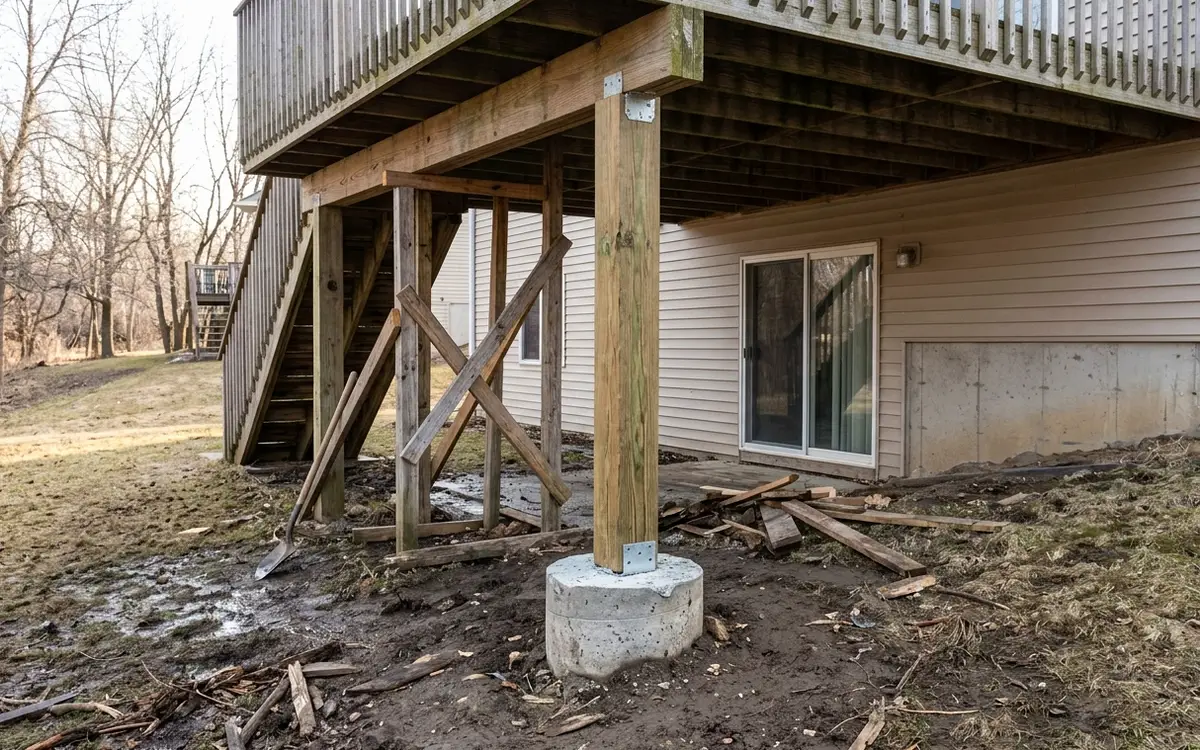
$465 to $1,290 per footing, based on 2026 Twin Cities jobs.
Footing and post repair replaces the supports under a deck: rotted or leaning posts, cracked or shallow concrete piers, and bases that let posts sit in water. In the Twin Cities, footings must reach 42 inches below grade. A typical repair runs $465 to $1,290 per footing, with the count, the access and the choice of poured concrete or helical piers setting the total for your deck.
Signs a deck footing or post is failing
Posts out of plumb
Hold a level against each post. A noticeable lean, especially one that gets worse every spring, points to a footing that is moving with the frost.
Concrete cracked or tipped
Piers that show cracks, chips or a visible tilt have lost bearing. Shallow piers often rise a little above the ground after a hard winter and never settle back.
Rot at the post base
Probe the bottom of each post near the ground or the concrete. Soft, dark wood there means water is wicking up into the end grain and rotting it.
Deck slopes toward one corner
If a ball rolls toward one corner or patio chairs rock, a footing under that corner has probably settled or heaved since the deck was first built.
Gap at the beam
Daylight between the top of a post and the beam it supports means the beam has lifted or the post has dropped. Either way, the load is not reaching the ground.
Stairs drifting from the deck
Stair stringers resting on a paver or bare soil shift with the frost. A widening gap at the top of the stairs means the bottom of the run is moving.
Why deck posts lean and footings heave in the Twin Cities
Frost is the usual culprit. When soil freezes, it swells and lifts anything anchored above the frost line. A footing poured two feet deep gets pushed up a little in January and settles back unevenly in April. After a few winters the post leans, the beam tips, and the deck develops a slope you can feel with a level or a rolling ball. Minnesota code requires footings to reach 42 inches in the Twin Cities for exactly this reason.
Posts fail in their own ways. Older decks often have posts buried directly in soil or set into concrete with no gap at the bottom, so water wicks up the end grain and rots them from the inside. Others are notched to hold a beam, which weakens the post right where it carries the most load. We look at the footing, the post base, the post itself and the connection at the top, because any one of them can be the weak link.
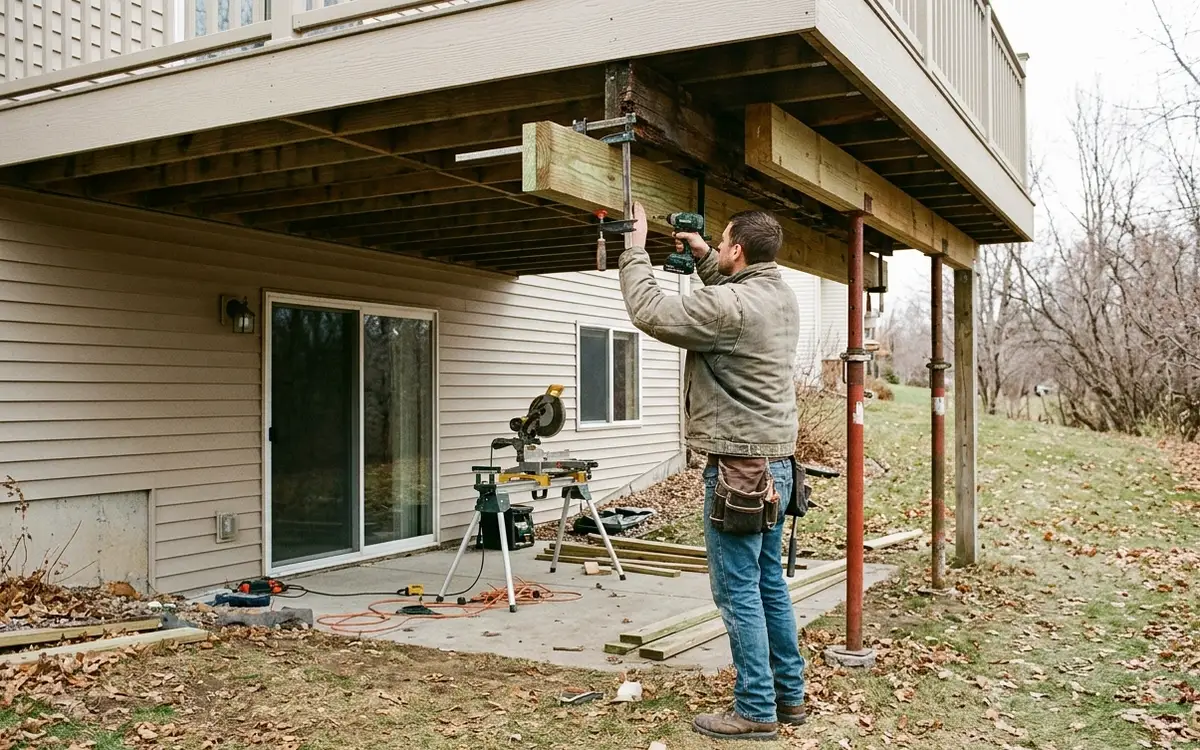
Repair does not mean taking the deck apart. We hold the frame up with temporary shoring, pull the failed post, and either dig a new footing beside the old one or drive a helical pier. A fresh post goes onto a standoff base and gets a post cap at the beam. If your deck has started to lean or a corner has dropped, keep people off that section and call us. We answer the phone around the clock.
How we repair footings and posts under a standing deck
- 01Call
Call us and stay off
Phone day or night. If the deck is leaning or a corner has dropped, keep everyone off that section and away from the area underneath it too.
- 02Visit
Assess every support
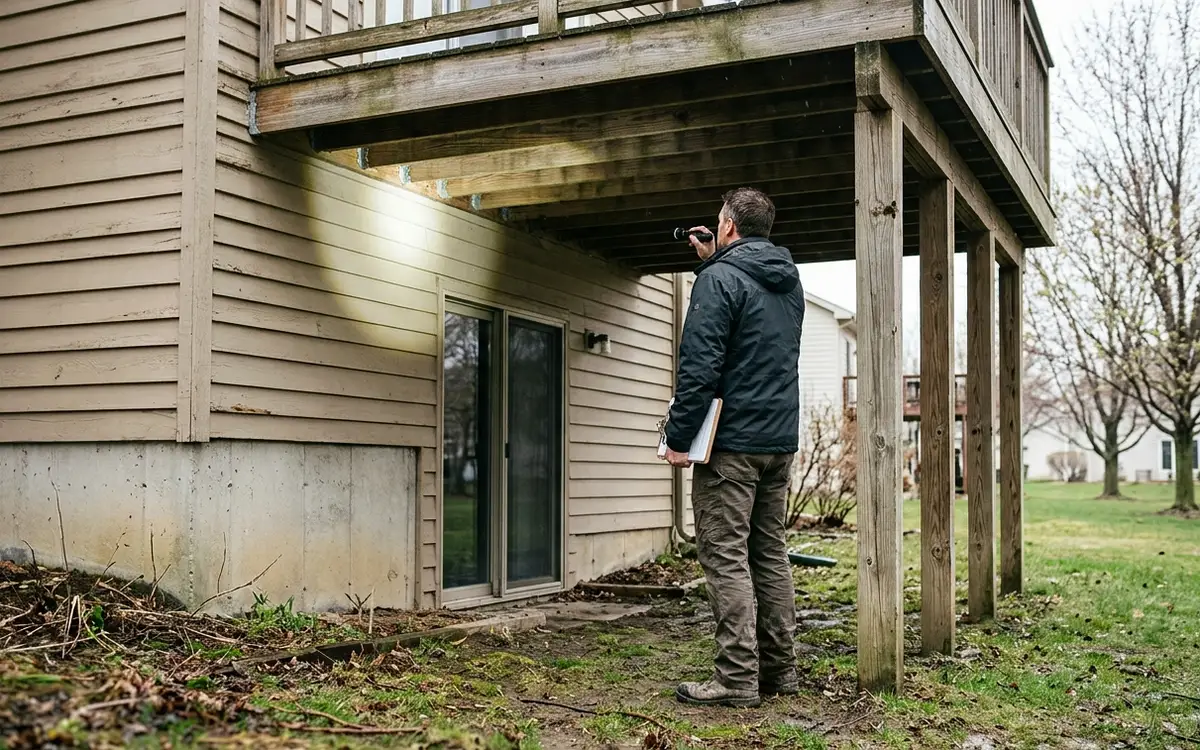
We check each post for plumb and rot, probe the bases, and dig beside a sample footing to see how deep the old concrete really goes.
- 03Scope
Shore the frame
Temporary posts go in under the beam so a failed post can come out without the deck moving. The shoring stays until the new support is set.
- 04Prep
Dig or drive new footings
New concrete footings go to 42 inches or deeper, or helical piers are driven below frost. The inspector checks footing holes before concrete when a permit is required.
- 05Build
Set new posts and hardware
Fresh treated posts go onto standoff bases and get post caps at the beam. All hardware is rated for treated lumber so the connections hold up.
- 06Check
Level, release and recheck
The beam is brought back to level, the shoring comes out and we check the deck with you. Old concrete and posts get hauled away.
What footing and post repair typically costs
Footing and post repair typically runs $465 to $1,290 per footing in the Twin Cities. A single replaced post on a new poured footing with easy access sits near the low end. Helical piers, tall posts, tight access and beam work at the top move it higher. Most decks need more than one footing fixed, so the real total comes after we check every support.
What changes the price
- Number of footings that are shallow, cracked or out of position
- Poured concrete versus helical piers for the new support
- Post height and size on second-story and walkout decks
- Yard access for digging, from open lots to tight side yards
- Shoring needed to hold the beam while posts are swapped
- Winter work requiring frost blankets or thawing before digging
Ways to put a deck back on solid footings
New poured concrete footings
We dig to 42 inches or deeper, set a form tube with a flared base where the load calls for it, and pour concrete. The footing inspection happens before the pour when a permit applies.
Helical piers
A steel helical pier is driven into the ground below frost and can carry load right away, with no concrete cure time. It works well in winter, in tight spaces and on soft or wet soil.
Post replacement on standoff bases
Rotted or notched posts are replaced with 6 by 6 treated posts on raised bases that keep the end grain off the concrete. Post caps tie the beam to the top of each one.
Stair landing footings
Stairs that shift get a proper landing pad or footings at the bottom of the stringers, so the run moves with the deck instead of the frost. We can add a small landing for a safer last step.
Frost depth and footings on Twin Cities lots
The 42-inch footing rule exists because Twin Cities frost goes deep, and the many freeze-thaw swings of March, April and November keep the soil moving. Plenty of decks built before inspections were routine sit on shallow piers, surface deck blocks or posts set straight in the dirt. Those decks heave and settle on a yearly cycle. When we replace a footing, we go below frost so the support stays put, and we can work in winter with frost blankets or helical piers when a leaning deck can't wait.
Lot type changes the job. On walkout lots in Eden Prairie, Plymouth and Woodbury, tall posts carry second-story decks, and a single bad footing affects a lot of structure above it. Lake lots near Lake Minnetonka and slopes toward the Mississippi River often have wet or soft soil where helical piers make good sense. In older Minneapolis neighborhoods like Longfellow and Southwest, tight side yards and alley garages limit equipment, so we often hand-dig or use compact gear to reach the back of the house.
Where we do footings & posts around Minneapolis
Footings & Posts jobs take our carpenters to these cities and neighborhoods most weeks, and to the rest of the metro too.
- Minneapolis 55414
- Saint Paul 55102
- Bloomington 55420
- Brooklyn Park 55443
- Plymouth 55447
- Woodbury 55125
- Maple Grove 55369
- Lakeville 55044
- Blaine 55434
- Eagan 55122
- Burnsville 55337
- Eden Prairie 55344
- Coon Rapids 55433
- Apple Valley 55124
- Edina 55424
- Minnetonka 55305
- St. Louis Park 55416
- Shakopee 55379
- Maplewood 55109
- Cottage Grove 55016
- Richfield 55423
- Roseville 55113
- Inver Grove Heights 55076
- Andover 55304
- Savage 55378
- Fridley 55432
- Chanhassen 55317
- Prior Lake 55372
Questions about footings & posts
How do I know if my deck footings are deep enough?
You usually can't tell from the surface. We dig a hole beside one footing to measure its depth and see its shape. In the Twin Cities, footings must reach 42 inches. If the sample comes up short, the others likely do too, and posts that lean or rise each spring are another strong hint that the footings sit above frost.
Are helical piers better than concrete for deck footing repair?
Neither is always better. Concrete footings are familiar, easy to inspect and suit open yards. Helical piers go in without digging large holes, carry load right away and work in frozen ground, soft soil and tight spaces. We choose based on your soil, access and timing, and we'll explain the tradeoff and price both when either would work.
Can you replace a rotted deck post without taking the deck apart?
Yes. We shore the beam with temporary posts, cut out the old post and set a new one on a standoff base with a post cap at the top. The decking stays in place. If the footing under the old post is shallow or cracked, we replace it during the same visit so the new post has proper support.
Should a leaning deck post be treated as an emergency?
It depends on how far and how fast it moved. A slight lean that has not changed in years can be planned for. A post that moved this season, a beam sliding off its top, or a corner that dropped are reasons to keep everyone off and call us right away. We answer day and night and can set temporary shoring quickly.
Do deck footing repairs need a permit and inspection in Minneapolis?
Often, yes, because footings are structural. Minneapolis and most suburbs typically inspect footing holes before concrete is placed. We handle the drawings, pull the permit and schedule the inspection. Simple post swaps on sound footings may not need one, and we check with the city before work starts so you aren't caught out later.
Talk to us about footings & posts
Call any hour about footings & posts, tell us what you are seeing, and we will set a time to look and write up a scope.