Porches & Covers · Minneapolis, MN
Pergola building in Minneapolis
Your deck or patio gets full sun all afternoon, and without some shade the space sits empty from lunch until the sun finally drops.
We build pergolas that give you filtered shade and a sense of a room, anchored to footings or deck framing that will not shift.
- Phones answered 24/7
- Written scope before work starts
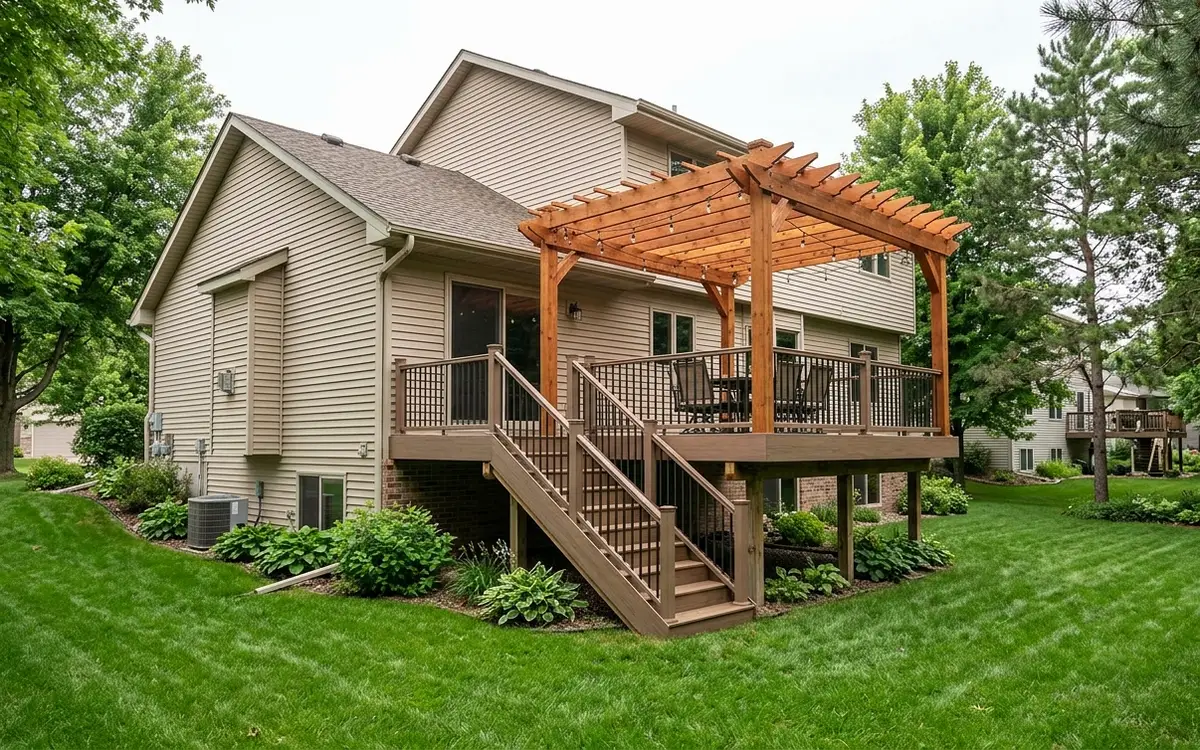
$4,860 to $22,700 per pergola, based on 2026 Twin Cities jobs.
A pergola is an open frame of posts, beams and rafters that shades a deck or patio and defines the space without a solid roof. We set posts on footings below frost depth or into reinforced deck framing, then cut and assemble the overhead in wood or aluminum. A typical Minneapolis pergola costs $4,860 to $22,700 per pergola, depending on size, material and how it is anchored.
How a pergola changes a sunny deck or patio
A pergola gives you shade, structure and a place to hang things, without closing in the sky. The rafters and slats break sunlight into moving stripes, which cuts glare and takes the edge off a hot afternoon. Add shade cloth, a retractable canopy or climbing vines and the shade gets deeper. Unlike a roof, it lets rain and snow pass through, so it needs no flashing to the house and no gutters, and the cost stays well below a covered deck.
The frame also makes a deck or patio feel like a room. A dining table under a pergola reads as an outdoor dining room, and the beams give you somewhere to hang string lights, a fan or a swing chair if the structure is sized for it. Freestanding pergolas work over patios and lawns. Attached pergolas run off the house wall or sit on top of an existing deck, and in some designs they share posts with the railing.
What holds a pergola up matters more than the beam detail. A tall, open frame catches wind, and posts resting on a thin patio slab or screwed to deck boards will loosen and lean within a few seasons. We set freestanding posts on footings below 42 inches and bolt deck-mounted posts through solid blocking in the joists with Simpson Strong-Tie hardware. That keeps the pergola square and tight through summer storms and many winters of freeze-thaw swings.
Cedar, treated pine or aluminum: choosing your pergola
Western red cedar
Cedar looks warm, resists rot naturally and takes stain well. It needs a fresh coat of a product such as Cabot or Ready Seal every few years to keep its color, or it weathers to a silvery gray.
Pressure-treated pine
Treated pine costs least and holds up outdoors, but it checks and twists more than cedar as it dries. We pick straight stock and stain or paint it once the wood has had time to dry out.
Aluminum louvered pergolas
Powder-coated aluminum frames with adjustable louvers open for sun or close for shade and light rain. They cost more than wood, and we only install systems rated for the snow load where you live.
Canopies, shade cloth and vines
A retractable Sunbrella canopy gives deep shade on demand and slides back for winter. Fixed shade cloth costs less, and vines offer living shade that fills in over a few growing seasons.
How a pergola goes from sketch to standing
- 01Call
Site visit and sizing
We measure the deck or patio, note sun direction, door swings and window heights, and suggest a size and post height that suit the space.
- 02Visit
Design and permit check
A sketch shows the post layout, beam sizes and rafter pattern. Some attached or larger pergolas need a permit in Minneapolis and the suburbs, which we handle.
- 03Scope
Footings or deck reinforcement
Freestanding posts sit on footings below 42 inches. For deck-mounted posts, we open the decking, add solid blocking and through-bolt the post bases.
- 04Prep
Posts, beams and rafters
Posts are set plumb and braced, beams are bolted with structural hardware, and rafters are notched or hung before slats go on in your chosen pattern.
- 05Build
Canopy, lights and wiring
Shade cloth, canopy tracks or privacy screens go on next. Any outlet, fan or lighting circuit is wired by an electrician we coordinate.
- 06Check
Finish coat and walkthrough
Wood gets stain or paint once it is dry enough, and we go over care, re-coat timing and winter tips with you before packing up.
Pergola cost in Minneapolis and what drives it
A pergola in the Twin Cities typically costs $4,860 to $22,700 per pergola. A small treated-pine frame over a ground-level patio sits near the low end, while a large cedar or aluminum louvered pergola on a second-story deck sits near the top. Footings, deck reinforcement, canopies and wiring all move it. The real number comes after we see the deck or patio and talk through what you want.
What changes the price
- Overall size and the span the beams have to cover
- Material: treated pine, cedar or powder-coated aluminum with louvers
- New footings for freestanding posts versus reinforcing existing deck framing
- Height, including tall posts on second-story or walkout decks
- Add-ons like a Sunbrella canopy, shade cloth or privacy screens
- Electrical work for lights, a fan or outlets by an electrician
When a pergola is the right fix for your outdoor space
Afternoon sun makes the deck unusable
A south- or west-facing deck can feel like a griddle by three o'clock. Slatted rafters and a canopy cut the heat enough that people actually stay outside.
The patio feels open and unfinished
A large paver patio with nothing overhead can feel like a parking pad. A pergola frames the space and gives the furniture a clear place to gather.
You want shade without a full roof
If a covered deck seems like too much cost or would darken the kitchen windows, a pergola gives partial shade and still lets daylight reach the house.
Neighbors look straight onto the deck
On tight city lots, a pergola with a privacy screen on one or two sides blocks sight lines from upstairs windows and alleys next door.
Lights and vines need a frame
Pergola beams carry string lights, hanging planters and climbing vines like clematis, grapes or hops, giving a plain deck the kind of detail people linger under.
An old arbor is leaning or rotting
Older pergolas set on shallow posts or built from untreated wood often lean, crack and rot at the base. Rebuilding on proper footings stops that from happening again.
Pergolas built for Twin Cities wind, sun and snow
Minnesota summers are short, so shade on the deck matters on the days that are truly hot. Many outer-suburb homes in Maple Grove, Eden Prairie and Lakeville have tall second-story decks facing west, and those decks take the full force of the afternoon sun. A pergola over part of the deck makes it usable through July. Down on the ground, the paver patios that sit outside walkout basements on lake lots around Lake Minnetonka often get a freestanding pergola to define a seating area.
Winter shapes how we build. A pergola does not shed snow the way a roof does, so snow piles on the slats and rafters, especially if a canopy is left in place. We size rafters with that weight in mind and remind you to retract or remove fabric covers before the first big storm. Posts sit on footings below 42 inches so frost heave cannot lift one corner, and standoff post bases keep the wood off the ground so it does not wick moisture and rot.
Where we do pergolas around Minneapolis
Pergolas jobs take our carpenters to these cities and neighborhoods most weeks, and to the rest of the metro too.
- Minneapolis 55414
- Saint Paul 55102
- Bloomington 55420
- Brooklyn Park 55443
- Plymouth 55447
- Woodbury 55125
- Maple Grove 55369
- Lakeville 55044
- Blaine 55434
- Eagan 55122
- Burnsville 55337
- Eden Prairie 55344
- Coon Rapids 55433
- Apple Valley 55124
- Edina 55424
- Minnetonka 55305
- St. Louis Park 55416
- Shakopee 55379
- Maplewood 55109
- Cottage Grove 55016
- Richfield 55423
- Roseville 55113
- Inver Grove Heights 55076
- Andover 55304
- Savage 55378
- Fridley 55432
- Chanhassen 55317
- Prior Lake 55372
Questions about pergolas
Can a pergola be attached to my existing deck?
Yes, when the deck frame can take it. We open the decking where each post lands, add solid blocking between joists and through-bolt structural post bases. If the deck has undersized joists or shallow footings, we may run the pergola posts down to their own footings instead. A pergola fastened only to deck boards will loosen in its first windy season.
Does a pergola need a building permit in Minneapolis?
It depends on size, height and whether it attaches to the house. Small freestanding pergolas are often exempt, while attached or larger ones usually need a permit in Minneapolis and many suburbs. Rules differ from city to city, so we check with the right office for your address and file the permit whenever one is needed.
How much shade does a pergola give without a canopy?
A slatted pergola gives partial, moving shade, often enough to take the glare and heat off a seating area, but not enough to keep you dry in rain. Closer slat spacing and deeper rafters add more. For full shade, add a retractable canopy, fixed shade cloth or adjustable aluminum louvers, which we can build into the frame from the start.
Should I take my pergola canopy down for the winter?
Yes. A fabric canopy left on a pergola collects snow and ice, which can tear the fabric and overload the rafters. Retract it fully or remove it and store it dry before the first heavy snowfall. The pergola frame itself stays up all winter without trouble once the slats are clear of fabric that could hold snow.
Is cedar or aluminum better for a pergola that lasts?
Cedar is warm, natural and easy to customize, but it needs stain every few years. Aluminum needs almost no upkeep and can include adjustable louvers, though it costs more and looks more modern. Both last a long time when built on solid footings. The choice usually comes down to the look of your house and how much upkeep you want.
Talk to us about pergolas
Call any hour about pergolas, tell us what you are seeing, and we will set a time to look and write up a scope.