Repair & Replacement · Minneapolis, MN
Deck resurfacing and board replacement in Minneapolis
Your deck frame is still solid, but the boards are splintered, faded and cupped, and staining them again every other spring has stopped making a real difference.
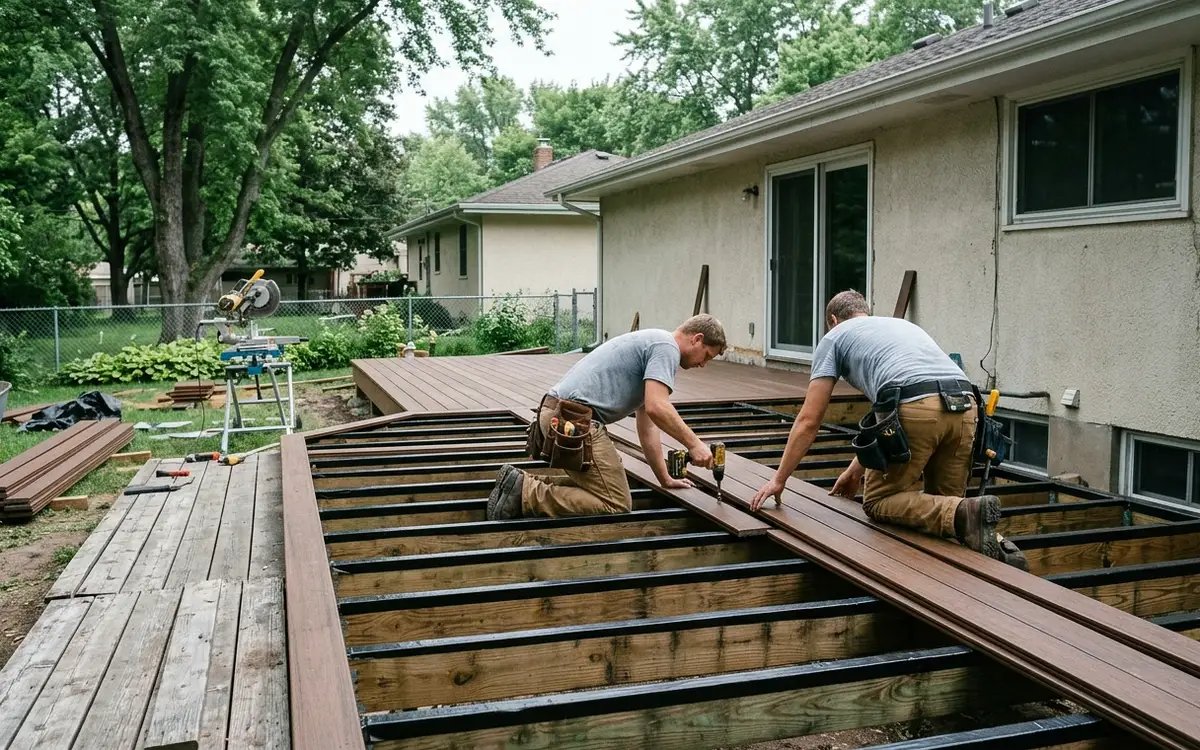
We strip the old surface, check and tape the joists, then lay new boards that suit the frame and the way you use it.
- Phones answered 24/7
- Written scope before work starts
$27 to $54 per square foot, based on 2026 Twin Cities jobs.
Deck resurfacing replaces the boards, stair treads and often the railings on a deck whose framing is still sound. We remove the old decking, inspect and repair joists, add joist tape and lay new composite, PVC or wood boards. In Minneapolis, resurfacing typically runs $27 to $54 per square foot, depending on the board you pick and how much frame work turns up once the old surface comes off.
Is a new surface all your deck really needs?
Resurfacing makes sense when the bones are good. If the ledger is flashed and bolted, the footings reach frost depth and the joists are firm, there is no reason to tear out a frame with years left in it. Swapping only the boards saves the cost of new footings and framing, and the work usually goes faster. The catch is that you only know how good the frame is once the boards are off, so we check closely before we price anything.
Most of our resurfacing jobs go from wood to composite. A treated or cedar surface that needs stain every year or two gets replaced with capped boards from makers like Trex, TimberTech or Fiberon. Composite has different span limits than wood, though. Many older decks have joists set 24 inches apart, which is too far for most composite boards running straight across, so we add joists between the old ones where the board maker calls for it.
We also look at everything that touches the boards. Stair treads, fascia, railings and post sleeves usually change with the surface so the deck looks finished rather than patched. Joist tape on top of every joist sheds water away from the screws and slows rot in the frame you are keeping. If the railing is short or loose, this is the right moment to fix it, because the decking around the posts is already open.
Board choices for a resurfaced deck
Capped composite decking
Trex, TimberTech, Fiberon and Deckorators all make capped boards that skip staining and hold their color. We confirm joist spacing for the board you choose and add joists wherever the old layout falls short.
PVC decking for wet spots
AZEK and similar PVC boards contain no wood fiber, which makes them a good fit for low decks, shady yards and areas near hot tubs. They run toward the higher end of the price range.
New cedar or treated boards
If you like real wood, new cedar or pressure-treated boards on the existing frame keep the cost down. You'll still need to clean and stain them on a regular schedule to hold the color.
Hidden fasteners or face screws
Hidden clip systems leave a clean surface with no screw heads showing. Color-matched face screws cost less and work well on stairs and picture-frame borders, and we'll show you both side by side.
How we resurface a deck without rebuilding it
- 01Call
Frame check before pricing
We pull a few boards or look closely from below to judge the joists, ledger and footings. If the frame is failing, you hear it before you buy new boards.
- 02Visit
Pick boards and colors
Samples come out so you can see board colors in your own light, next to your siding. Stair, fascia and railing choices get settled at the same time.
- 03Scope
Strip the old surface
The old decking, treads and fascia come off and go in our trailer. This is when hidden problems show up, such as soft joist tops or rusted hangers.
- 04Prep
Repair and prep the joists
Weak joists get sistered, extra joists go in where spacing is too wide, and joist tape goes on top of each one to shed water away from the screws.
- 05Build
Lay boards and trim
New boards go down with the right gap for the material, followed by stair treads, fascia and any picture-frame border. Railings are reset or replaced.
- 06Check
Final walk and care notes
At the end we walk the deck with you, clean up screws and offcuts, and leave the board maker's care sheet so you know which cleaners and shovels to use.
What resurfacing a deck typically costs
Deck resurfacing in Minneapolis typically runs $27 to $54 per square foot. Wood boards on a frame that needs nothing sit near the low end, while premium composite or PVC, hidden fasteners and new railings move toward the top. Added joists for composite spacing shift the number as well. The real price comes after we see your deck and know what is under the boards.
What changes the price
- Board material and product line, from treated pine to premium PVC
- Extra joists needed to meet composite or PVC spacing rules
- Sistering or replacing soft joists found once the boards come off
- Stair count, since every tread and riser gets new material too
- Hidden fasteners and picture-frame borders, which add labor time
- Railing replacement or new post sleeves to match the new surface
Signs your deck boards are done but the frame is not
Splinters and deep surface checks
Wood boards with cracks you can fit a coin into will keep splitting. Sanding and staining buys a season, but the grain is already open to water and ice.
Cupped or warped boards
Boards that curl at the edges hold puddles and catch bare feet. Cupping usually means the boards dried unevenly, and it rarely flattens back out on its own.
Stain that peels within a year
When fresh stain flakes off after one winter, the wood is too weathered to hold a finish. A new surface ends the cycle of yearly stripping and recoating.
Firm joists under soft boards
Push a screwdriver into the boards, then into the joists from below. Soft decking over solid framing is the classic case where resurfacing beats a full rebuild.
Faded or moldy early composite
Early composite boards without a cap layer can fade, grow mold and stain badly. Modern capped boards are a straight swap on most frames once spacing is checked.
Fasteners that keep backing out
Nails rising out of the boards every spring scratch feet and snag shovels. New boards go down with screws or hidden fasteners like CAMO or FastenMaster.
Why Minnesota winters favor a capped deck surface
Months of snow and the freeze-thaw swings of March, April and November are hard on an open-grain wood surface. Water soaks into checks and end grain, freezes, and opens them wider each cycle. Capped composite and PVC boards absorb very little water, so they stay flatter through the winter. Shoveling gets easier too, though you should still use a plastic shovel and read the board maker's care sheet before using any ice melt. Rock salt pits some boards, and calcium magnesium acetate is kinder to most surfaces.
Many of the decks we resurface sit behind 1950s and 1960s ramblers in Richfield, Crystal and Roseville, or behind older homes in Longfellow and Nokomis, where a 1990s rebuild left a solid frame and a tired surface. Those frames often have 24-inch joist spacing that suited wood boards but not composite, and we correct that during the job. Shady lots near Minnehaha Creek and the lakes tend to grow mold on wood boards, which is one more reason homeowners there move to a capped surface.
Where we do deck resurfacing around Minneapolis
Deck Resurfacing jobs take our carpenters to these cities and neighborhoods most weeks, and to the rest of the metro too.
- Minneapolis 55414
- Saint Paul 55102
- Bloomington 55420
- Brooklyn Park 55443
- Plymouth 55447
- Woodbury 55125
- Maple Grove 55369
- Lakeville 55044
- Blaine 55434
- Eagan 55122
- Burnsville 55337
- Eden Prairie 55344
- Coon Rapids 55433
- Apple Valley 55124
- Edina 55424
- Minnetonka 55305
- St. Louis Park 55416
- Shakopee 55379
- Maplewood 55109
- Cottage Grove 55016
- Richfield 55423
- Roseville 55113
- Inver Grove Heights 55076
- Andover 55304
- Savage 55378
- Fridley 55432
- Chanhassen 55317
- Prior Lake 55372
Questions about deck resurfacing
How do I know if my deck frame is good enough for resurfacing?
A sound frame has firm joists, a flashed and bolted ledger, footings that reach frost depth and hangers without heavy rust. You can probe the joists from below with a screwdriver as a first check. We take a closer look, often pulling a board or two, before we price the job, so you are not paying for new boards on a failing frame.
Can composite boards go on my old wood deck frame during resurfacing?
Usually, with some changes. Most composite boards need closer joist spacing than wood, often 16 inches on center, and many older frames are at 24 inches. We add joists between the old ones and put joist tape on top. Diagonal layouts need even tighter spacing, so we'll look at the pattern you want before laying anything out.
Does deck resurfacing include new stair treads and railings?
Treads, risers and fascia almost always change with the surface so everything matches. Railings are optional. If yours are solid and the right height, we can reset them or add new post sleeves. If they are loose or short, replacing them during resurfacing costs less than doing it later, because the boards around the posts are already open.
How long does resurfacing a deck usually take?
A midsize resurfacing job usually takes a few days on site. Tear-off is fast, frame repairs vary with what we find, and board installation depends on the layout and fastener type. Picture-frame borders, curves and hidden clips take longer. We'll give you a realistic timeline after the frame check, before any boards are ordered.
Is resurfacing worth it on a deck with an old unflashed ledger?
Only if the ledger gets dealt with first. A nailed ledger with no flashing may look fine and still be rotting where it meets the house. We check it when the first boards come off near the wall. If it is sound, we add flashing and through-bolts; if it is soft, we price a ledger repair before laying any new surface.
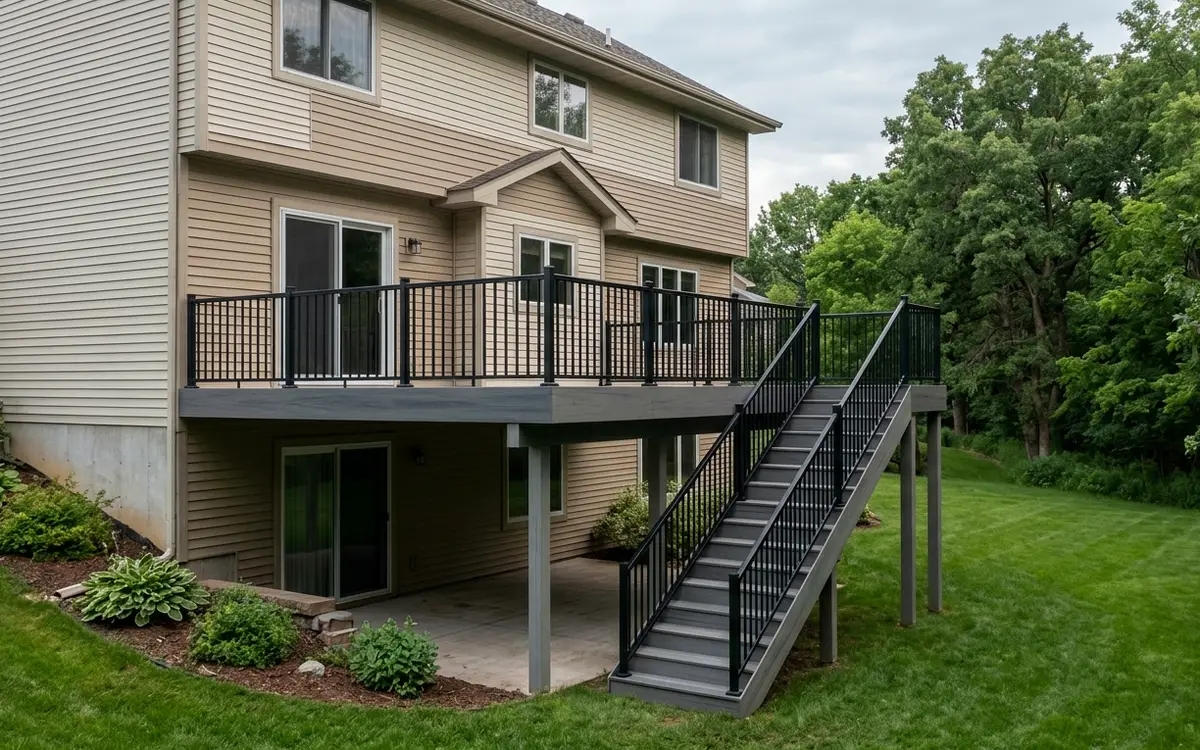
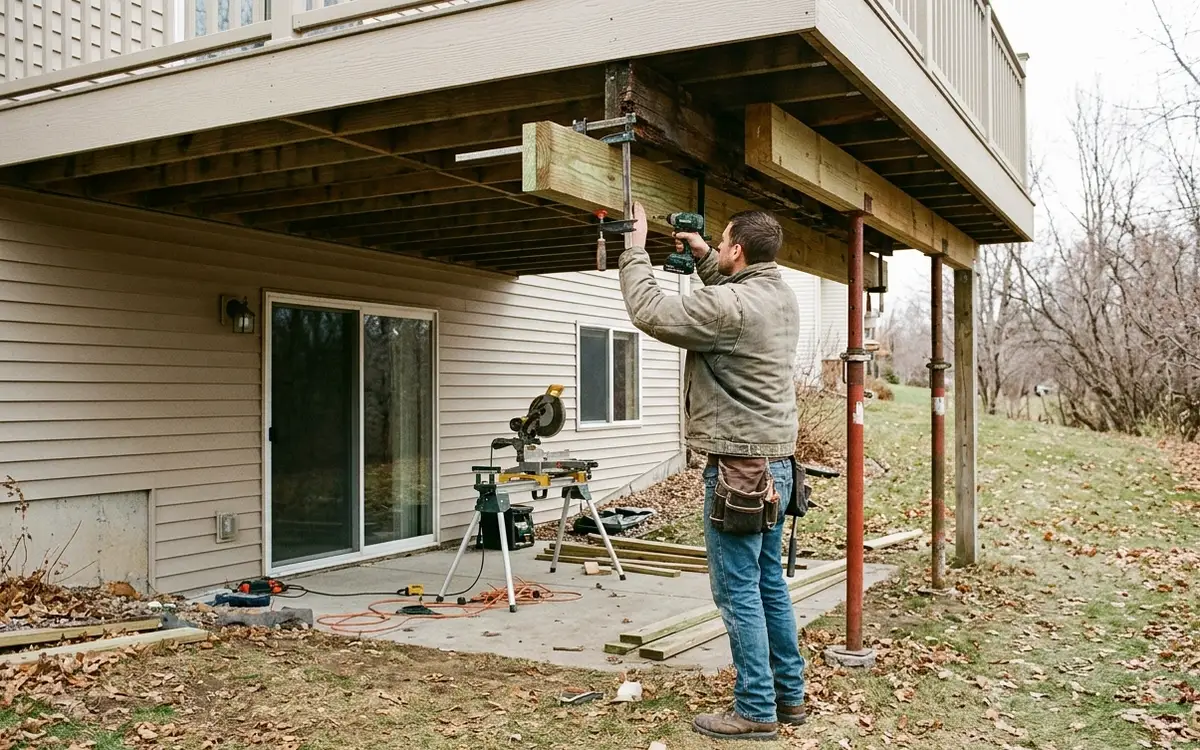
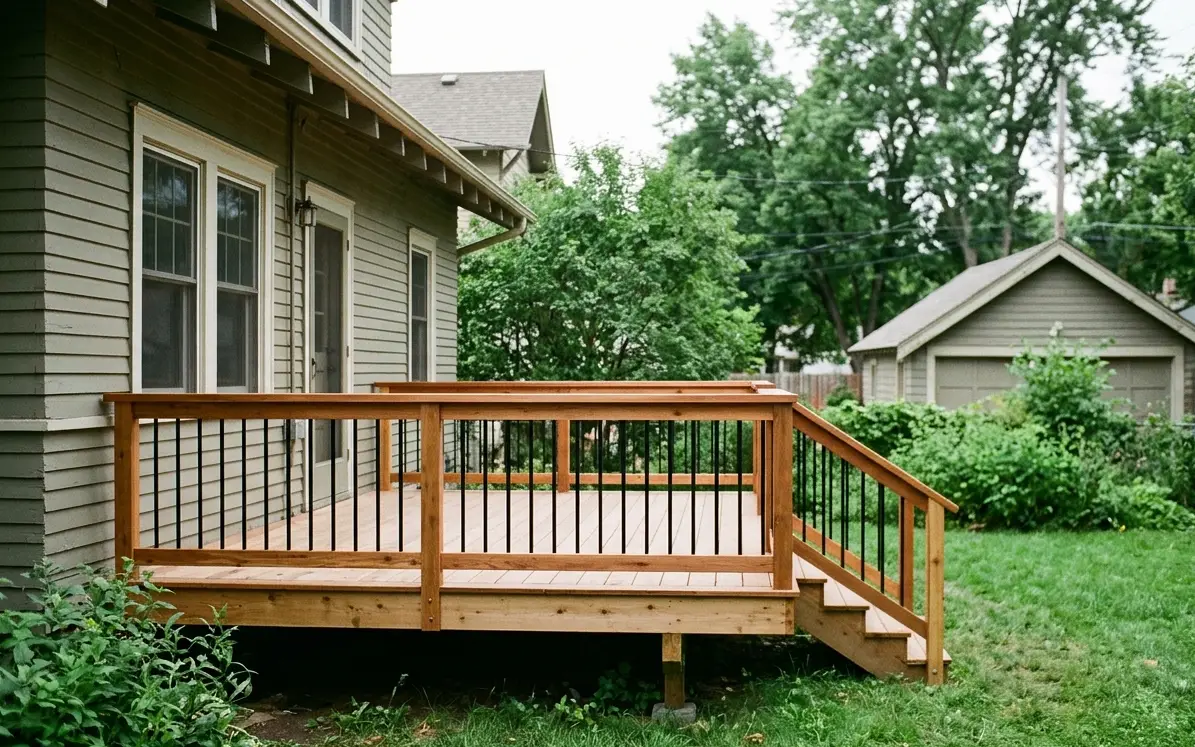
Talk to us about deck resurfacing
Call any hour about deck resurfacing, tell us what you are seeing, and we will set a time to look and write up a scope.