Railings & Details · Minneapolis, MN
Cable railing installation in Minneapolis
You want to see the lake or the yard from your deck chair, but thick wood balusters chop the view into slices and make the deck feel boxed in.
We build stainless cable railings on posts and frames stiff enough to hold the tension that keeps every cable tight and up to code.
- Phones answered 24/7
- Written scope before work starts
$118 to $247 per linear foot, based on 2026 Twin Cities jobs.
Cable railing installation means running stainless steel cables horizontally between heavy end posts, tensioning each run, and supporting the cables with intermediate posts or spacers so no opening passes a 4-inch sphere. The frame can be wood, aluminum or composite. In Minneapolis, cable railing typically costs $118 to $247 per linear foot, depending on frame material, run lengths and how many corners and stairs the railing turns.
Why cable railing needs a stiffer frame than any other rail
A cable rail looks simple, but every run pulls inward on its end posts with real force once the cables are tight. If those are ordinary wood rail posts on a couple of lag screws, they bend over time, the cables go slack, and the openings grow past what code allows. Good cable railing starts with oversize end posts, solid blocking and a top rail that ties the posts together. We design that frame first and choose the cable hardware second.
Cable also flexes more than a baluster does. Press on a single cable in the middle of a long run and it moves, which is why the 4-inch sphere test has to pass with the cable pushed aside, not just at rest. We keep spans between posts or spacers short enough, and the cables close enough together, that a gauge won't slip through when someone leans. That detail is where many cable rails go wrong, and it is easy to get right at layout.
Revo Deck Systems pairs cable with wood, composite or powder-coated aluminum frames depending on the house. Black aluminum posts with stainless cable suit a modern walkout in Woodbury or Eden Prairie. A cedar frame with cable infill can work on a cabin-style lake home with natural wood siding. We'll walk you through each frame option, show you the tensioner hardware up close, and explain how often the cables need a small turn to stay tight.
Cable railing frames and hardware you can choose from
Black aluminum post frames
Powder-coated aluminum posts from systems like Westbury, Fortress or Key-Link are made for cable tension and arrive drilled for the fittings. They stand up to snow and give the cleanest modern look of these four choices.
Wood frames with cable infill
Cedar or treated posts with a wood top rail cost less than metal frames. End and corner posts need to be larger and well blocked, and the wood must stay sealed so it doesn't twist under load.
Composite sleeves over structural posts
Some composite rail lines sell cable kits that match their decking colors. The structural post inside the sleeve carries the tension, so we confirm the kit is designed for cable before anything is ordered.
Visible or hidden tensioners
Swaged threaded fittings show a small stainless barrel at each end, while hidden tensioners tuck inside the post. Hidden hardware looks cleaner but costs more and can make later re-tensioning slower.
How we build a cable railing that stays tight
- 01Call
Measure runs and corners
We measure every straight run, corner and stair section and note where the views matter most. Long runs and many corners change both the hardware list and the price.
- 02Visit
Reinforce the framing
End and corner posts carry the heaviest load, so each one gets added blocking and through-bolts. Soft rim joists are repaired before any cable goes in.
- 03Scope
Set posts and top rail
Posts go in plumb, then the top rail ties them together. A stiff top rail is what keeps the end posts from leaning inward under cable tension over time.
- 04Prep
Drill and thread the cable
Holes are drilled in a straight line through each post, then the stainless cable is threaded and fittings are set at both ends. Intermediate posts or spacers limit cable deflection.
- 05Build
Tension and gauge test
Each cable is tightened in sequence so the posts stay straight. We push a 4-inch gauge between cables at mid-span to confirm nothing passes through.
- 06Check
Walk you through upkeep
Before leaving, we show you how to check tension and add a small turn when cables loosen. You also get a short list of cleaners that keep stainless bright.
What cable railing typically costs in Minneapolis
Cable railing typically runs $118 to $247 per linear foot installed around Minneapolis. Wood frames with visible fittings sit near the bottom of that range, while aluminum frames with hidden tensioners land near the top. Corners, stairs and short runs add end posts and fittings, which raises the cost per foot. We give you the real number once we have seen the deck, checked the framing and measured each run.
What changes the price
- Frame material, since aluminum and composite frames cost more than wood posts and rails
- End and corner posts, each needing heavier blocking and two sets of fittings
- Visible threaded fittings versus hidden tensioners tucked inside the posts
- Stair sections, which need angled fittings and more careful drilling
- Framing repairs needed under the posts before the deck can carry cable tension
- Very long runs that call for extra intermediate posts or cable spacers
When cable railing makes sense for your deck
A view worth keeping open
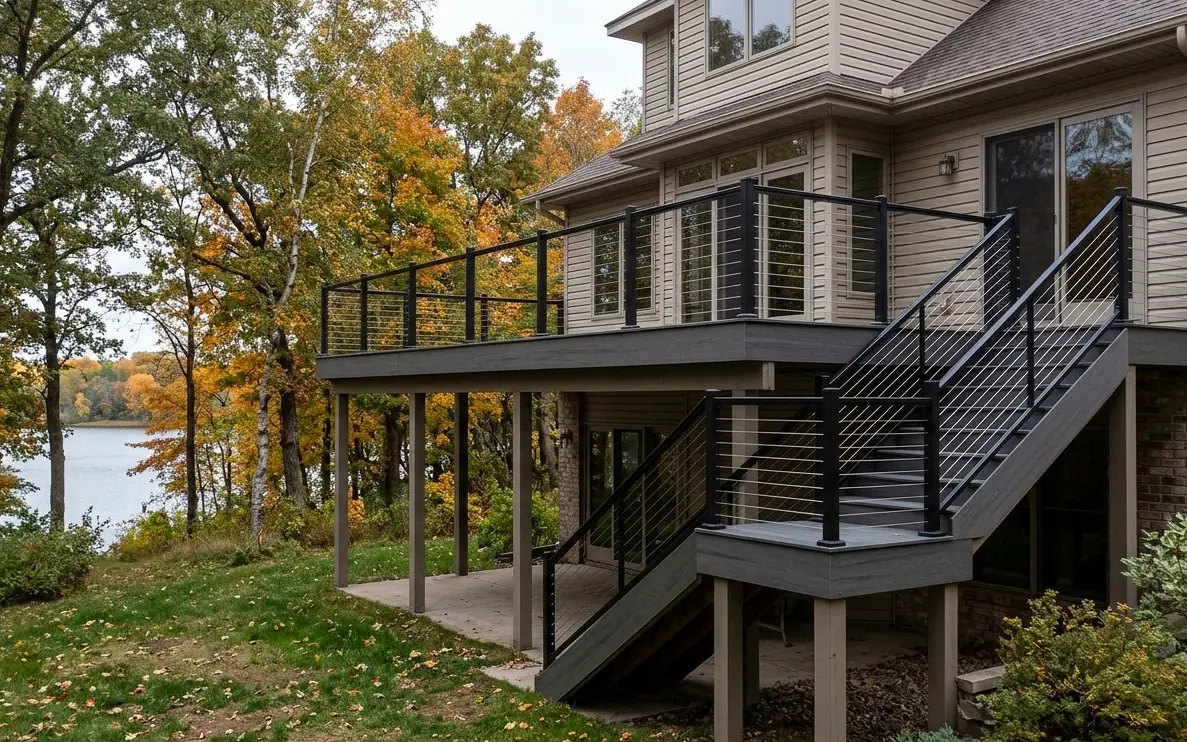
If your deck looks over a lake, a creek, a wooded ravine or a big backyard, cable keeps that view nearly clear when you're seated, where a baluster rail blocks it.
Existing cables gone slack
Cables that bow when you press them or hum in the wind have lost tension. Often the end posts have bent inward, which no amount of tightening will fix for long.
Wood balusters failing again
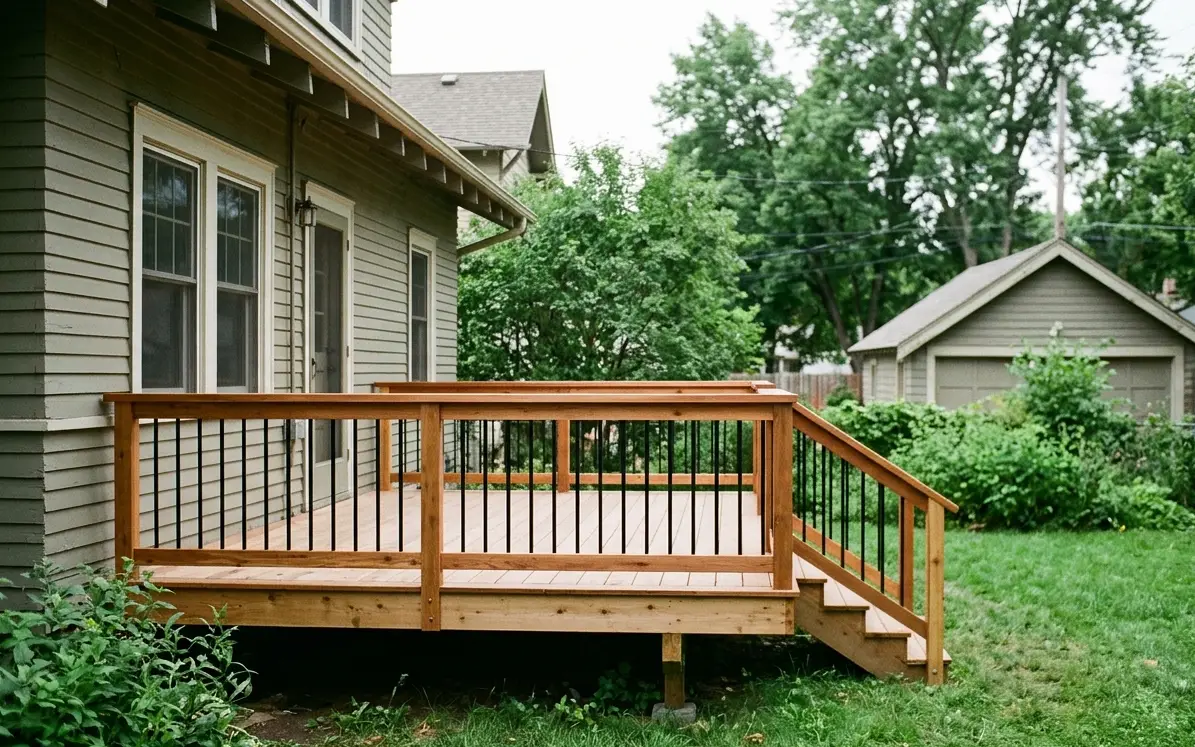
Split, twisted or rotting 2 by 2 balusters are a sign the old railing is near the end of its life. A rebuild is a good moment to switch the infill to cable.
Tall walkout or second-story deck
Decks perched high above a sloped yard feel far more open with cable infill. The open rail also lets more daylight reach the patio and the lower-level windows below.
Modern remodel on an older house
When a home gets new siding, windows or a modern addition, a heavy wood rail can look dated. Cable with black posts ties the deck to the updated exterior.
Rooftop deck or upper balcony
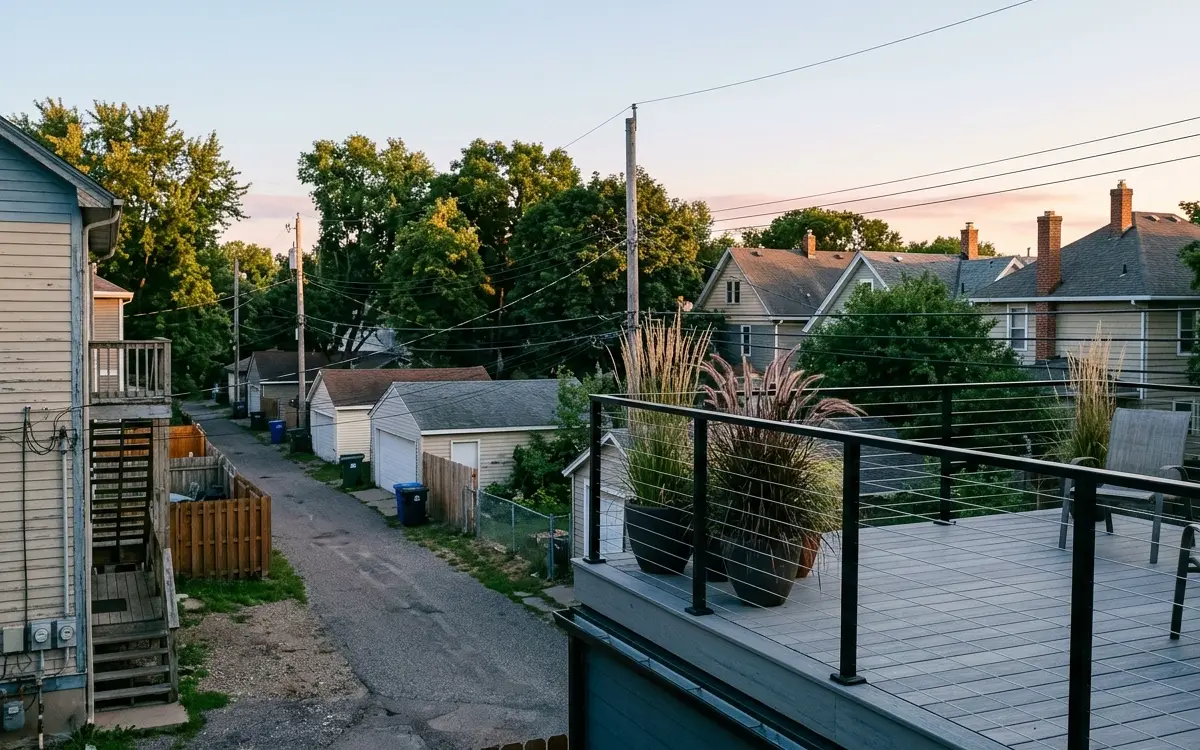
Small rooftop decks and upper balconies on city duplexes benefit from cable because it keeps the space from feeling caged in. The frame must still meet the 36-inch minimum height.
How cable railing holds up through a Twin Cities winter
Cold and heat change cable length, so a rail tensioned on a hot July afternoon tightens in January and loosens again in spring. That swing is why we size posts generously and tension cables to a middle point rather than as tight as they'll go. Expect to check tension once or twice a year, often after the freeze-thaw stretch in March and April. Heavy snow also sits on top of the rail all winter, so the top cap and its post connections need to be solid.
Cable is a natural fit for the lake lots and walkout homes around the metro. Decks facing Lake Minnetonka, the Chain of Lakes or Lake Nokomis are built for the view, and so are the tall second-story decks on 1980s to 2000s homes in Plymouth, Maple Grove and Woodbury. On older city homes, cable works best on rear decks out of street view, where it won't clash with a 1920s front porch. Salt carried up on boots can spot stainless, so a fresh-water rinse each spring helps.
Where we do cable railing around Minneapolis
Cable Railing jobs take our carpenters to these cities and neighborhoods most weeks, and to the rest of the metro too.
- Minneapolis 55414
- Saint Paul 55102
- Bloomington 55420
- Brooklyn Park 55443
- Plymouth 55447
- Woodbury 55125
- Maple Grove 55369
- Lakeville 55044
- Blaine 55434
- Eagan 55122
- Burnsville 55337
- Eden Prairie 55344
- Coon Rapids 55433
- Apple Valley 55124
- Edina 55424
- Minnetonka 55305
- St. Louis Park 55416
- Shakopee 55379
- Maplewood 55109
- Cottage Grove 55016
- Richfield 55423
- Roseville 55113
- Inver Grove Heights 55076
- Andover 55304
- Savage 55378
- Fridley 55432
- Chanhassen 55317
- Prior Lake 55372
Questions about cable railing
Does cable railing meet code in Minneapolis?
It can, when it is built right. The guard has to stand at least 36 inches tall wherever the deck sits more than 30 inches above grade, and no opening can pass a 4-inch sphere. With cable, that test happens with the cable pushed, since cables flex. We space cables and posts closely enough to pass and check every run with a gauge.
How often do cable railings need to be re-tightened?
Most cable rails need a check once or twice a year. Temperature swings change cable length, and the first season often brings some stretch as fittings settle in. A small turn on each tensioner usually brings the cable back. If cables loosen again within weeks, the posts may be bending, which points to a framing problem rather than a hardware one.
Can kids climb a cable railing on a deck?
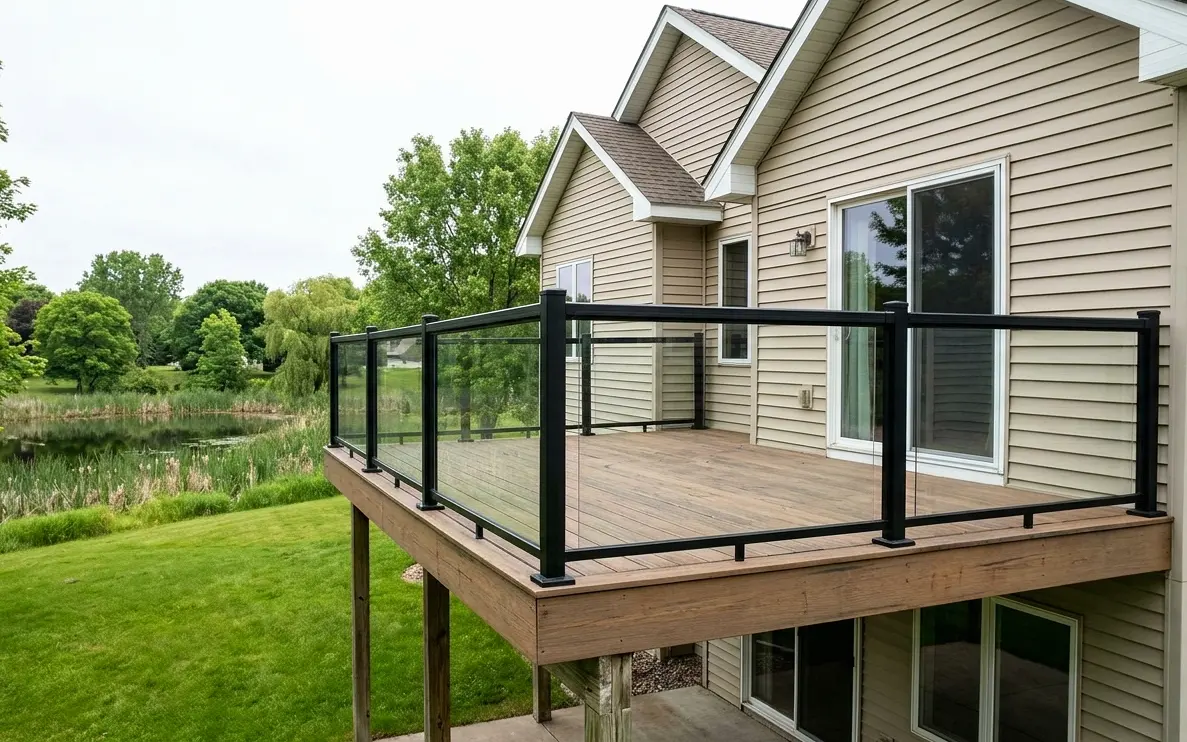
Horizontal cables can act a bit like a ladder for a determined child, and that is worth weighing if young kids use your deck. Code allows horizontal cable when the spacing passes the sphere test. Some families choose vertical balusters near the stairs and cable on the view side, or a glass section by the play area. We'll talk through those mixes with you.
Will cable railing work with my existing wood deck posts?
Usually not without changes. Standard wood rail posts aren't built for the steady pull of tensioned cable, and they lean inward over time. We typically add new, larger end and corner posts with solid blocking, then keep what can stay. If the deck framing is aging badly, a frame upgrade often makes more sense than reusing old posts.
How do I keep stainless cable railing from rusting?
Marine-grade stainless resists rust well, but salt, lawn chemicals and pool water can leave brown surface staining. Rinse the cables with fresh water in spring and fall, and wipe them with a stainless cleaner when spots show up. Keep rock salt away from the rail; calcium magnesium acetate is gentler on the hardware and on most deck boards.
Talk to us about cable railing
Call any hour about cable railing, tell us what you are seeing, and we will set a time to look and write up a scope.