Design & Patios · Minneapolis, MN
Deck extensions and additions in Minneapolis
Your deck fits two chairs and a grill, but not the table, and every summer gathering spills onto the lawn because there's nowhere else to stand.
We check your current frame, then add square footage on new footings and joists so the old and new sections act as one deck.
- Phones answered 24/7
- Written scope before work starts
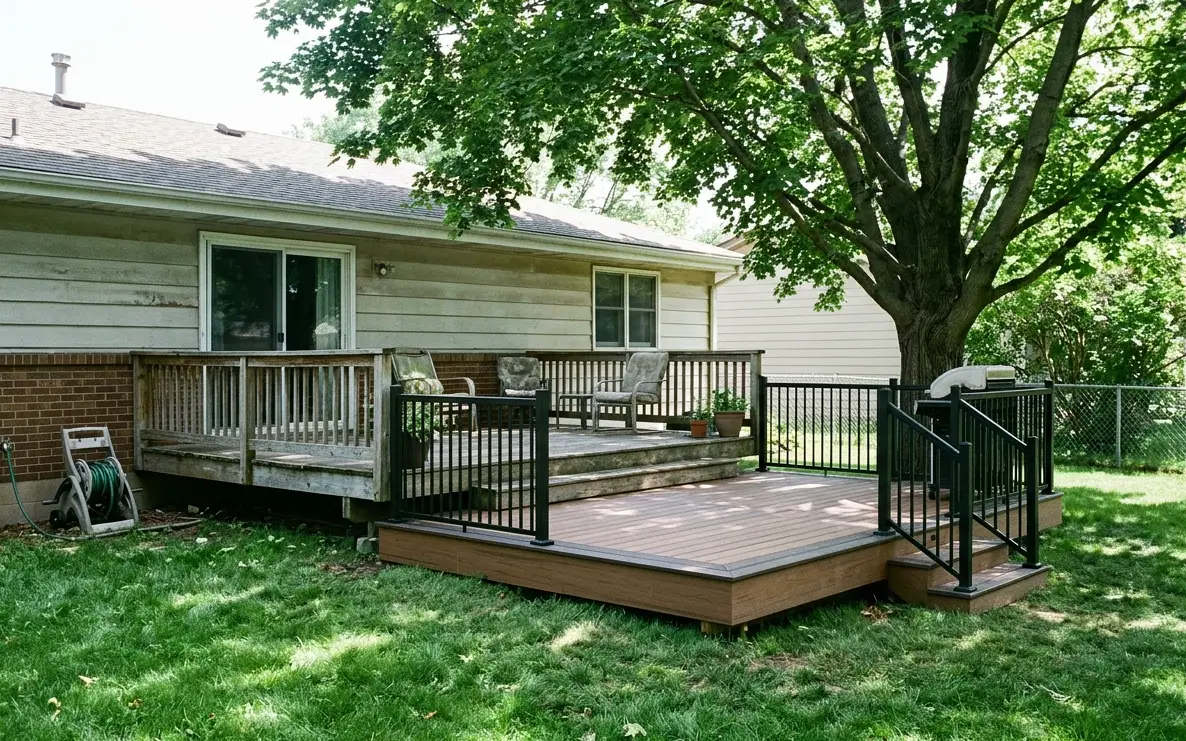
$47 to $93 per square foot added, based on 2026 Twin Cities jobs.
A deck extension adds area to a deck you already have: a wider section, a bump-out for a table, or a new level. We confirm the existing frame and footings are sound, add new footings and joists, and tie the two together. In Minneapolis, extensions typically run $47 to $93 per square foot added, based on height, framing condition and board matching.
When adding to your deck beats tearing it out
If the deck you have is structurally sound and only too small, extending it can save money compared with starting over. The existing footings, ledger and frame keep working, and the new section adds the space you're missing. The catch is that the old part has to be in good enough shape to last as long as the new part will. Extending a deck with a nailed, unflashed ledger or rotting joists just bolts fresh lumber onto an old problem.
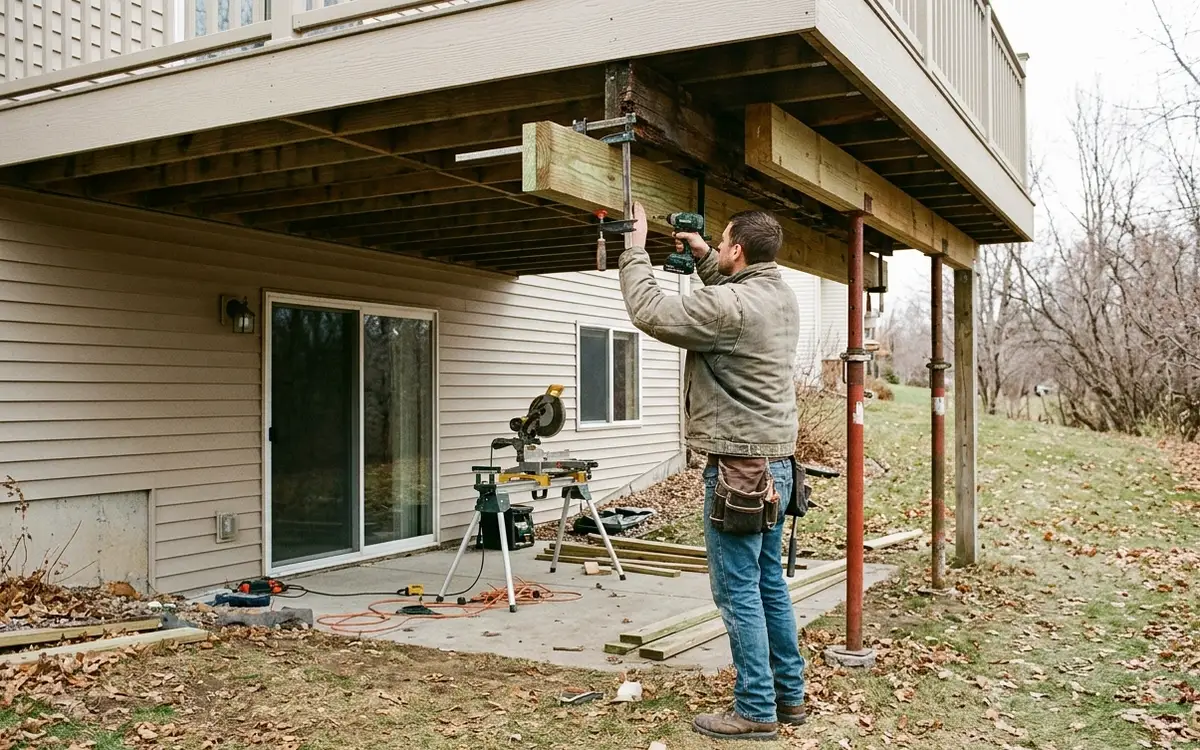
So every extension starts with an honest look at the original deck. We check footings for depth and heave, the ledger for flashing and bolts, joists and hangers for rot and corrosion, and the railing for strength. Plenty of decks built in the 1980s and 1990s fail at least one of those tests. When that happens, we lay out the options plainly: fix the weak parts and extend, or replace the deck with a larger one, which sometimes costs only a little more.
Blending old and new is the other big question. Wood that has weathered for ten years won't look like fresh lumber for a few seasons, and older composite colors get discontinued. We can separate the new section with a border board or a change in board direction, or resurface the whole deck so everything matches. Sometimes a step down to a new level makes the difference look intentional instead of looking like a patch.
Ways to add on: wider, deeper, or a new level
Extend the same level
New joists continue the existing deck surface outward or sideways on a new beam and footings. It reads as one larger deck, especially when the boards are blended carefully or the whole surface is resurfaced.
Add a step-down level
A second level a step or two lower joins the original deck. It hides any color difference, creates a natural zone for dining or a fire table, and often needs no railing between the levels.
Bump-out or bay section
A smaller projection, often angled, adds a spot for a table or grill without widening the whole deck. It's a budget-friendly way to gain usable space where the yard is tight.
Freestanding addition beside it
Where the original deck is sound but the house wall can't take another ledger, a new section stands on its own beam and footings next to the deck, joined by a shared walking surface.
How we add a new section onto an existing deck
- 01Call
Inspect the original deck
We check footings, ledger, joists, hangers, beams and railings, and pull a board or two if needed. You get a plain answer about whether the deck can carry an addition.
- 02Visit
Design and permit
Drawings show the existing frame, the new section, footings, beam connections and board layout. Extensions to attached decks need a permit, and we handle the drawings and filing.
- 03Scope
Fix weak points first
Any rot, loose ledger bolts, rusted hangers or missing flashing on the original deck gets repaired before the new section ties in, so both parts carry load properly.
- 04Prep
New footings and beam
Footings for the addition go 42 inches down, reaching frost depth like the existing deck should. The new beam and posts are set level with the original frame.
- 05Build
Tie in and frame
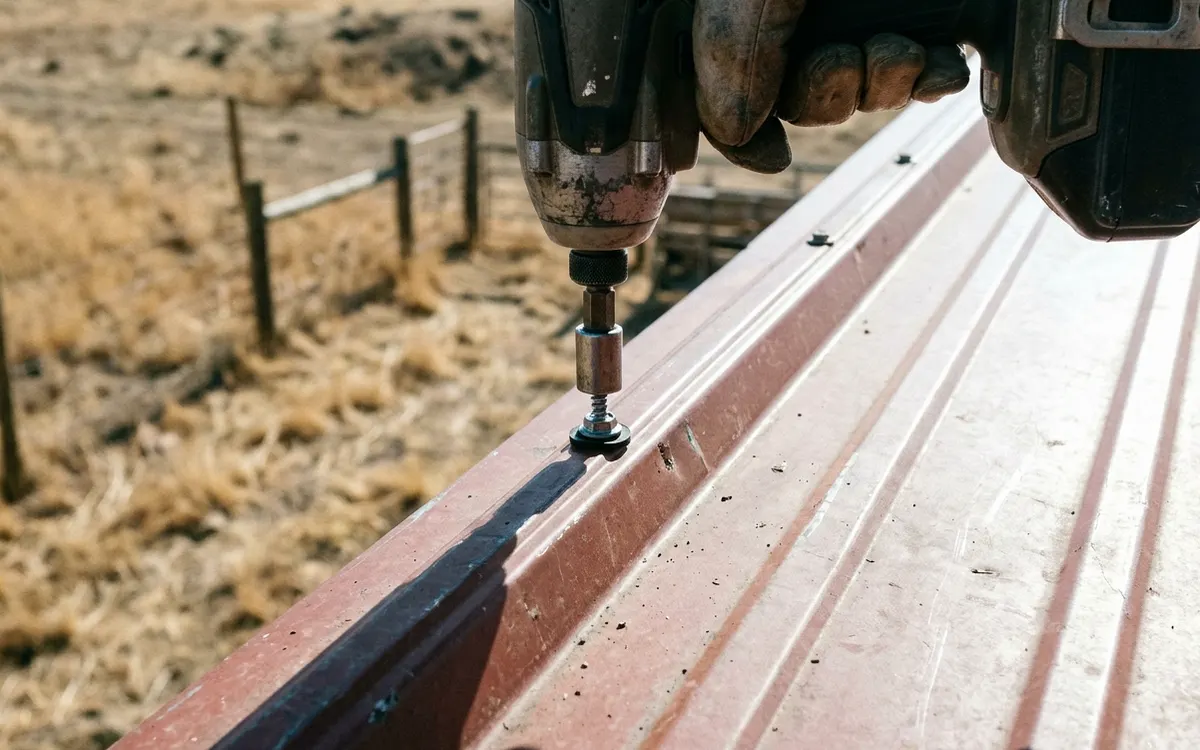
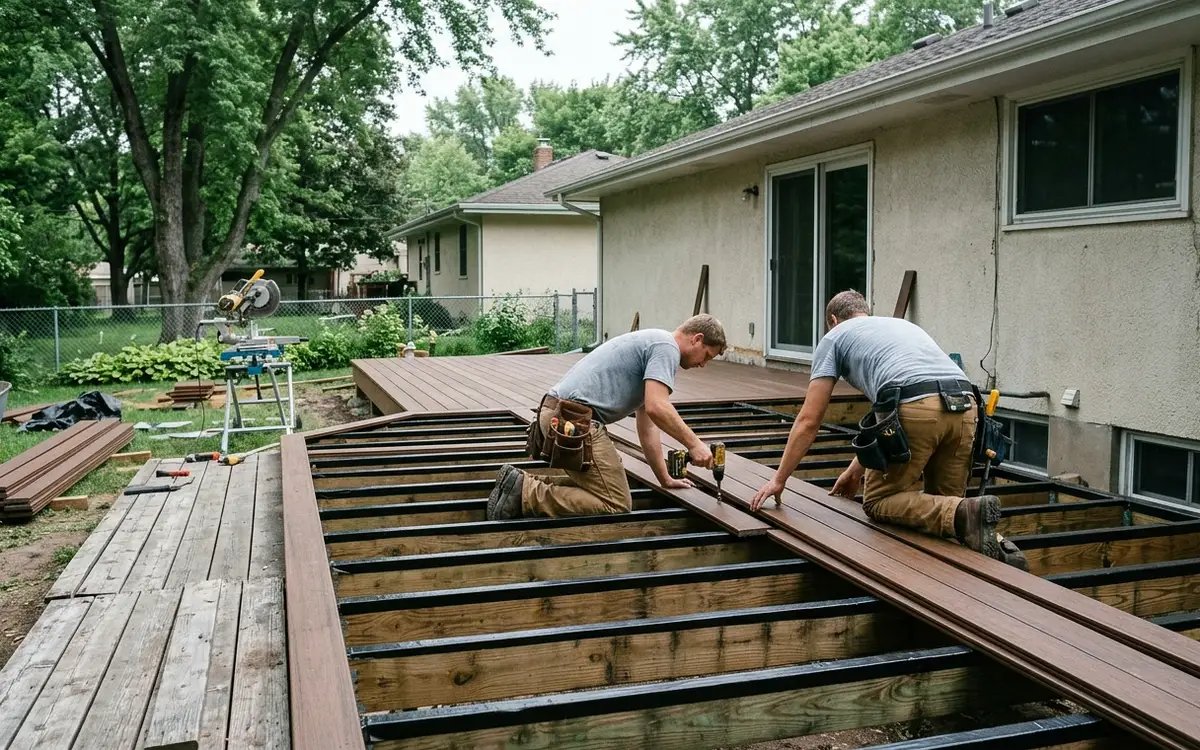
New joists connect to the existing structure with rated hangers and bolts, not toenails. Old railing sections come off where the deck opens into the addition.
- 06Check
Boards, rail and blend
Decking goes on with a border, a direction change or full resurfacing to blend old and new. Railings follow the new outline and get checked for strength at every post.
Typical cost to extend a deck in Minneapolis
Deck extensions typically run $47 to $93 per square foot added in the Minneapolis area. Low, simple additions with pressure-treated boards fall near the lower end. Tall additions, new levels, composite or PVC decking, and repairs to the original frame push the price up. The real number comes after we've inspected your current deck and know how much of it can stay.
What changes the price
- Condition of the original ledger, footings and joists before tying in
- Height of the addition and whether it needs new stairs or a landing
- Same-level extension versus a new step-down level or bump-out
- Board blending choice: a border, a direction change, or resurfacing the entire deck
- Railing removal where the decks join and new railing on the added outline
- Extra loads planned for the addition, like a hot tub or pergola
Signs your deck is a good candidate for an extension
The table never quite fits
If chairs hang off the edge when people sit down, or the grill has to live on the lawn, a few extra feet of depth usually solves it without a full rebuild.
Solid frame, short on space
A deck with tight joints, no bounce and footings that haven't heaved is worth keeping. That's the ideal base for adding a section rather than demolishing good structure.
Stairs land in the wrong place
An extension can move the stair run toward a patio, garage or gate. Adding a landing or wider section changes how people move through the yard.
Sun or shade on the wrong side
Extending toward the shady side, or out past a roof overhang, gives you a comfortable seating spot at the time of day you actually use the deck.
Hot tub or pergola planned
A new spa or pergola often needs room the current deck lacks. An extension designed for that load adds space and the support it requires in one step.
Old boards due for replacement
When the decking is worn but the frame is good, extending and resurfacing together lets you choose new boards for the whole deck so both sections match.
Extending older Twin Cities decks without inheriting their problems
Many of the decks we're asked to extend in Minneapolis and the inner-ring suburbs went up in the 1980s and 1990s on ramblers and split levels in places like Richfield, Robbinsdale, Crystal and Roseville. Those decks often used nailed ledgers with no flashing and hangers that were never rated for treated lumber. Before we add a single joist, we open up the ledger area, check the rim joist of the house for rot, and replace corroded hardware with hot-dip galvanized or stainless connectors.
Frost depth is the other common surprise. Some older decks sit on footings that stop well short of the 42 inches the Twin Cities require, and they've heaved unevenly over the years. If we extend one of those decks on new, properly deep footings, the two sections will move differently every winter and the joint between them will open up. So we check the old footing depth first, and where it's shallow, we add footings or helical piers under the original deck too.
Where we do deck extensions around Minneapolis
Deck Extensions jobs take our carpenters to these cities and neighborhoods most weeks, and to the rest of the metro too.
- Minneapolis 55414
- Saint Paul 55102
- Bloomington 55420
- Brooklyn Park 55443
- Plymouth 55447
- Woodbury 55125
- Maple Grove 55369
- Lakeville 55044
- Blaine 55434
- Eagan 55122
- Burnsville 55337
- Eden Prairie 55344
- Coon Rapids 55433
- Apple Valley 55124
- Edina 55424
- Minnetonka 55305
- St. Louis Park 55416
- Shakopee 55379
- Maplewood 55109
- Cottage Grove 55016
- Richfield 55423
- Roseville 55113
- Inver Grove Heights 55076
- Andover 55304
- Savage 55378
- Fridley 55432
- Chanhassen 55317
- Prior Lake 55372
Questions about deck extensions
Can you match new boards to my old deck on a deck extension?
Sometimes closely, sometimes not. Weathered wood takes a season or two before new lumber catches up, and older composite colors are often discontinued. We can bring samples to compare, use a border or direction change to separate the sections on purpose, or resurface the whole deck so the extension and the original read as one surface.
How do you tell if my existing deck is strong enough for a deck extension?
We look at footing depth and condition, how the ledger is attached and whether it's flashed, joist size and spacing, hanger condition and post sizes. If those pass, the deck can usually carry an addition built on its own new supports. If they fail, we'll explain whether repairs make sense or a full replacement is the better use of your money.
Does a deck extension need a new permit in Minneapolis?
In most cases, yes. Adding area to an attached deck, or to any deck more than 30 inches above grade, generally needs a building permit in Minneapolis and the suburbs. The inspector will look at the new footings and framing, and sometimes the connection to the original deck. We prepare the drawings and handle the permit and inspections.
Does a deck extension cost less than replacing the deck with a bigger one?
When the original deck is sound, an extension usually costs less because the footings, ledger and much of the frame stay. When the old deck needs a new ledger, new footings and new boards anyway, the savings shrink fast, and a full replacement can come close in price while giving you a cleaner design. We'll show you both numbers in that case.
Can a deck extension wrap around to another side of the house?
It can, and that turns the job into a partial wraparound. The new section gets its own ledger on the second wall, footings at the corner and along the new run, and corner framing that meets the original deck cleanly. We check windows, doors and grade on that side first, since they decide how far the extension can go.
Talk to us about deck extensions
Call any hour about deck extensions, tell us what you are seeing, and we will set a time to look and write up a scope.