Railings & Details · Minneapolis, MN
Deck skirting and lattice in Minneapolis
The open space under your deck collects leaves, invites rabbits and skunks, and shows off posts and footings you'd rather not look at from the yard.
We build vented skirting that closes the gap, suits your house and still lets air and water move under the deck.
- Phones answered 24/7
- Written scope before work starts
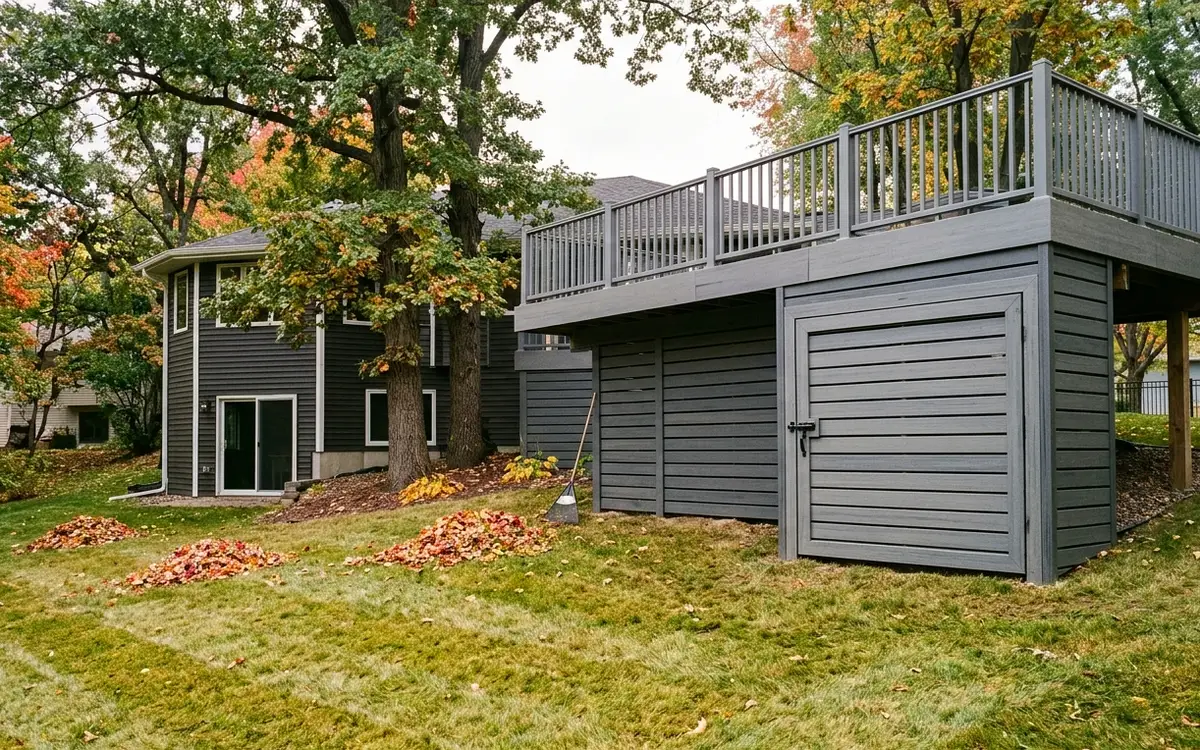
$27 to $71 per linear foot, based on 2026 Twin Cities jobs.
Deck skirting closes the open sides between the deck floor and the ground with lattice, slatted boards or solid panels fixed to a framed backer. We leave venting so the framing can dry, keep the bottom edge off the soil and build an access door. In Minneapolis, skirting typically runs $27 to $71 per linear foot, depending on height, material and how many doors you need.
What skirting does for the frame you can't see
Most decks look finished from the top and unfinished from the yard. The posts, beams and footings show, the gap fills with blown leaves, and animals discover a dry den. Skirting is the trim that fixes that view. Done well, it ties the deck to the house, picks up the siding or trim color and gives the base a clean, deliberate edge. Done poorly, it seals in moisture and rots the very framing it hides, which is why we spend most of our planning time on airflow.
Air needs a path in and a path out. We space slats, use open lattice or leave vent gaps behind solid panels, and we stop the skirting a couple of inches above grade or set it over a gravel strip so it can't wick ground moisture. Behind the skirt, a weed barrier and a layer of gravel keep plants from growing up into the joists. Where diggers are a problem, we bury hardware cloth in an L-shape along the bottom so they hit wire instead of soft dirt.
Every skirting job gets at least one access door, because you or a future inspector will need to see the posts, ledger and footings. We hang the door on stainless or coated hinges so it still swings after a few winters. If you plan to store a mower, kayaks or bikes under a tall deck, we can frame a wider door and slope the gravel so the floor stays dry. Phone us and describe what's under there now, and we'll tell you what makes sense.
Signs your deck is ready for skirting
Animals are moving in underneath
Fresh dirt piles, a musky smell or tracks leading under the deck mean rabbits, raccoons or skunks have found shelter. A skirt with buried wire mesh closes that door for good.
Leaves pile up every fall
Each autumn the gap under the deck fills with leaves that stay wet against posts and footings. Skirting with a cleanout door keeps most of it out and makes the rest easy to rake.
Old lattice is sagging or cracked
Thin, stapled lattice from kit panels splits, pops loose and goes gray within a few seasons. We replace it with heavier lattice or slats set into a proper frame.
Posts and footings look unfinished
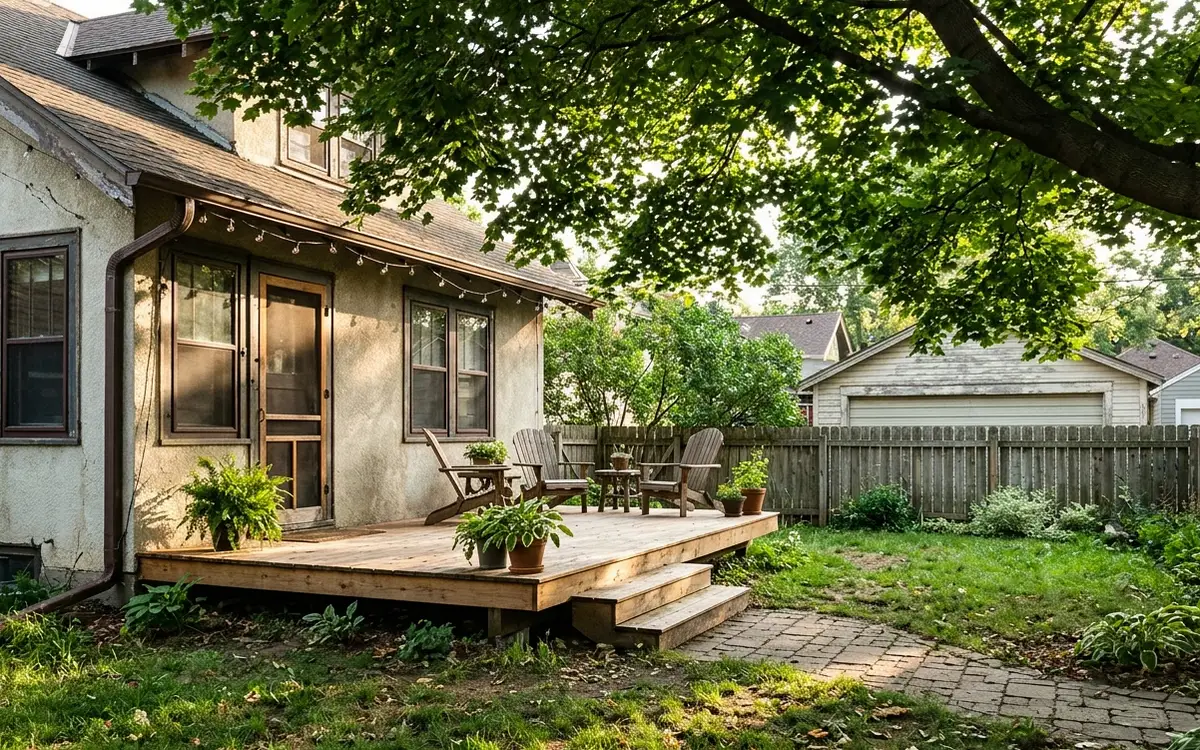
If your deck looks like it stands on stilts from the yard, skirting gives it a finished base. The difference is most noticeable on decks two to four feet off the ground.
You need covered storage space
A deck with enough height can hide hoses, garden tools and recycling bins. Skirting with a wide framed door turns that space into storage without building a shed.
Kids or pets keep crawling under
A dark gap under the deck is a hiding spot for toddlers and dogs, and sometimes they get stuck back there. A closed skirt with a latched door keeps them out.
How a skirting job runs from layout to latch
- 01Call
Measure and check clearances
We measure every run, check the height from grade to the rim board, and look at drainage and post condition. Any soft framing gets flagged before we cover it up.
- 02Visit
Choose style and door spots
You pick the material and pattern, and we mark where access doors go. At least one door lands near the ledger or a key post so later inspections are easy.
- 03Scope
Prep the ground underneath
We clear debris, lay weed barrier fabric and spread gravel along the perimeter. Where animals dig, hardware cloth goes in below grade along the full skirt line.
- 04Prep
Frame the backer
Treated nailers and a bottom rail go up between the posts, held off the dirt. This frame keeps the skirting flat and gives the door hinges something solid to grab.
- 05Build
Install panels and trim
Lattice, slats or panels go on with coated or stainless fasteners. We tuck the top edge under the rim board and trim the corners so the skirt looks built in.
- 06Check
Hang doors and clean up
Access doors get hinges and a latch that won't rust shut. We haul away the debris and show you how to open the door and check underneath.
Lattice, slats or solid panels: picking a skirting style
Heavy-duty lattice panels
Thick vinyl or composite lattice set into a framed channel. It vents well, costs the least of these options and suits bungalows and older homes. Diagonal and square patterns are both available, and the frame keeps panels from bowing or pulling loose.
Horizontal slat skirting
Deck boards or cedar slats run sideways with a small gap between each one. It looks clean and current, matches composite decks well and still lets air through. We frame it with vertical nailers every couple of feet so the boards stay straight.
Vertical board skirting
Boards stand on end with spacing between them, a look that pairs nicely with ramblers and farmhouse-style siding. Water sheds down the grain and drips off the bottom edge, which helps cedar and treated boards last longer outdoors.
Solid panels with vents
Fiber cement, PVC or composite sheet panels give the most finished base. We add screened vents near the top and bottom so air keeps moving, and we leave a gravel gap at grade so the panels never sit in wet soil.
How much deck skirting typically costs per foot
Skirting here typically runs $27 to $71 per linear foot, measured along the open perimeter of the deck. A short skirt in framed lattice sits near the bottom of that range, while a tall walkout skirt in composite slats with wide storage doors moves toward the top. We give you the real number after we see the deck, measure each run and check the ground underneath.
What changes the price
- Skirt height, since a tall walkout deck uses far more material per foot
- Material choice between lattice, cedar slats, composite boards or solid vented panels
- Number and width of access doors, plus hinges and latches rated for outdoor use
- Ground prep such as gravel, weed barrier fabric and buried wire mesh against diggers
- Grade changes along the run that call for stepped or angled bottom edges
- Framing repairs found once the space under the deck is opened and inspected
Skirting that rides out frost heave and snow piles in the Twin Cities
Minnesota ground moves. Frost pushes soil up in winter and drops it back in spring, and a skirt resting on the dirt gets shoved, racked and cracked. We hang the skirting from the deck frame and keep its bottom edge a couple of inches above grade, so the ground can heave without dragging the panels along. All winter, snow shoveled off the deck lands against the skirting, too. That's why Revo Deck Systems picks materials that tolerate wet contact without swelling, and why we check that the footings look sound before we close them in.
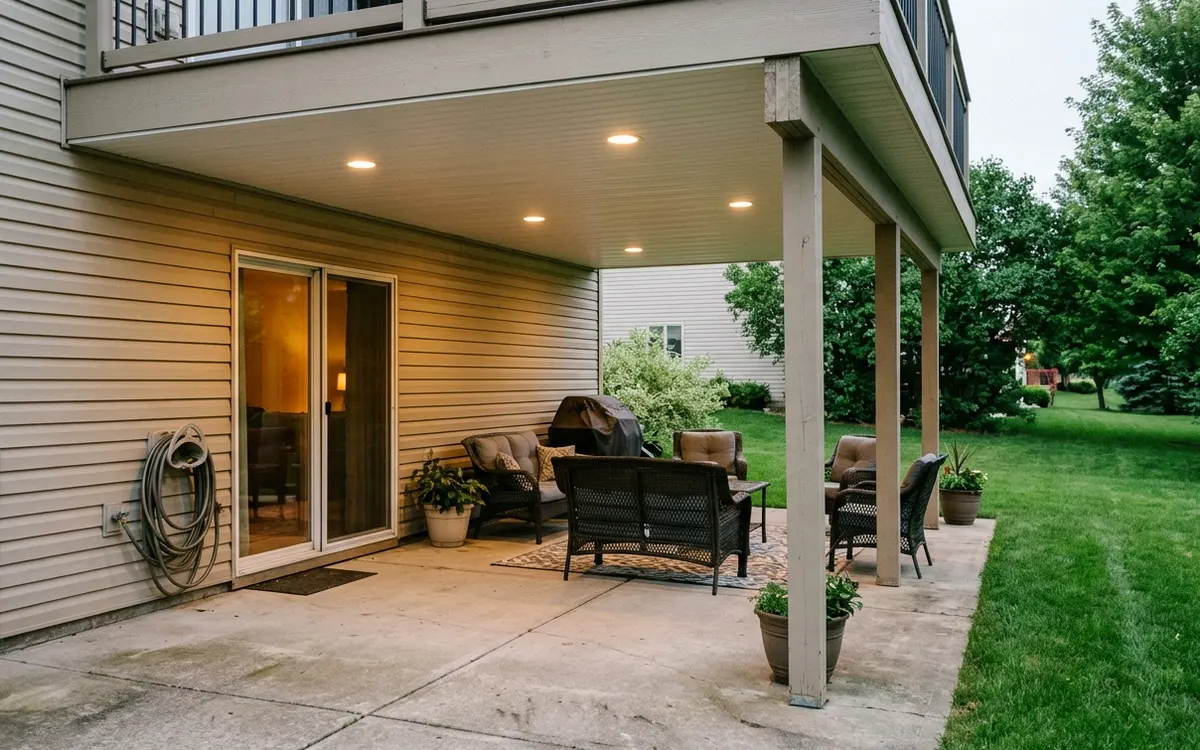
The homes here shape the style. Bungalows and foursquares in Southwest and Longfellow look right with framed lattice or vertical boards that echo old porch skirts. Post-war ramblers in Nokomis and Camden often take horizontal slats that suit a low, wide deck. Walkout homes in Eden Prairie, Plymouth and Lakeville have tall decks where the space underneath is big enough for storage or a small patio, and a full skirt with a wide door makes that room useful. On lake lots we watch the grade closely, so runoff exits instead of pooling under the deck.
Where we do deck skirting around Minneapolis
Deck Skirting jobs take our carpenters to these cities and neighborhoods most weeks, and to the rest of the metro too.
- Minneapolis 55414
- Saint Paul 55102
- Bloomington 55420
- Brooklyn Park 55443
- Plymouth 55447
- Woodbury 55125
- Maple Grove 55369
- Lakeville 55044
- Blaine 55434
- Eagan 55122
- Burnsville 55337
- Eden Prairie 55344
- Coon Rapids 55433
- Apple Valley 55124
- Edina 55424
- Minnetonka 55305
- St. Louis Park 55416
- Shakopee 55379
- Maplewood 55109
- Cottage Grove 55016
- Richfield 55423
- Roseville 55113
- Inver Grove Heights 55076
- Andover 55304
- Savage 55378
- Fridley 55432
- Chanhassen 55317
- Prior Lake 55372
Questions about deck skirting
Will deck skirting trap moisture and rot my deck framing?
It can if it's sealed tight, which is why we build airflow into every design. Slats get gaps, lattice stays open, and solid panels get screened vents near the top and bottom. The bottom edge stays off the soil on a gravel strip. With air moving through, the joists and posts dry out after rain the way they did before.
How do you keep animals from digging under new deck skirting?
We bury galvanized hardware cloth along the skirt line, bent in an L-shape that runs down and then out toward the yard. A skunk or rabbit digging at the base hits wire and gives up. If something already lives under the deck, we wait until it has moved out before closing the last panel, so nothing gets trapped inside.
Does deck skirting need an access door, and where should it go?
Yes. You'll want to reach the posts, footings and ledger for checkups and repairs, and an inspector may ask to see them someday. We usually place a door near the house side, where the ledger and drainage need watching most, and add a second door on long or wraparound decks so every corner can be reached.
Can you replace old lattice deck skirting without touching the rest of my deck?
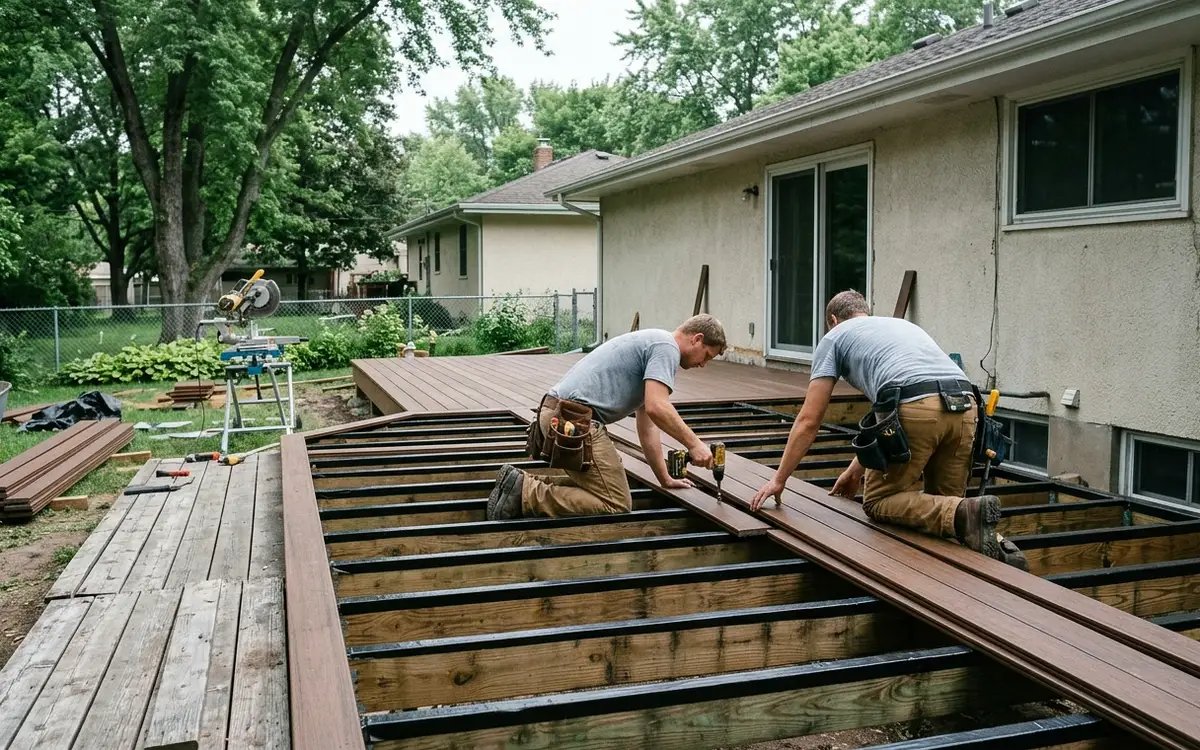
In most cases, yes. We pull the old lattice and staples, check the posts and rim, then frame and install the new skirting on its own. If we spot rot, loose posts or a failing ledger while the sides are open, we'll show you before going further, since that's when those repairs are easiest to reach.
Is deck skirting worth adding to a low ground-level deck?
On a deck less than a foot or so off the ground, skirting mostly hides the frame and blocks leaves. Airflow matters even more at that height, because there's little room for moisture to escape. We often use open slats or lattice there, and sometimes a simple fascia board with a gravel border does the job for less money.
Talk to us about deck skirting
Call any hour about deck skirting, tell us what you are seeing, and we will set a time to look and write up a scope.