Why the frost line sits at 42 inches in the Twin Cities
Minnesota code requires deck footings to bear below frost depth, and in the Twin Cities that depth is 42 inches. The idea behind it is simple. Soil above that line freezes every winter, and wet soil expands as it turns to ice. A footing resting in that frozen layer rides up with it. A footing whose bottom sits in soil that stays unfrozen has nothing pushing on its base, so the deck stays where we framed it. The 42 inches is measured from finished grade down to the bottom of the footing, not to the top.
That measurement detail trips people up more often than you'd think. If you plan to add a patio, regrade a garden bed or haul in topsoil after the deck goes in, the grade around each post can change. Cutting soil away from a footing can leave its bottom shallower than code allows, while piling soil against wood posts invites rot. Before we dig, we ask what the yard will look like a year from now, so the footing depth works with the final grade and not just with today's lawn.
What happens to a deck when footings stop short
Short footings rarely fail on day one. The trouble shows up after a few winters, usually in March, April or November, when the Twin Cities swing above and below freezing again and again. Each hard freeze lifts a shallow footing a little, a process called frost heave. Frozen soil can also grip the sides of the concrete and tug it upward, which is why smooth sides and a wider base help. Each thaw lets the footing settle back, but rarely to the exact spot where it started.
Over several seasons one post rises while its neighbor stays put. You end up with a deck that tips toward the house, a stair stringer pulling away from its landing, gaps opening at the ledger, or a patio door that scrapes the decking in winter and clears it in summer. Those symptoms point to the footings first. On many 1980s and 1990s decks around the metro we find shallow precast blocks or holes dug only as deep as a fence post, with the frame above twisting for years.
- Posts that sit higher in late winter than in midsummer
- A deck surface that slopes toward or away from the house
- Stair landings separating from the bottom step
- Cracked or tilted concrete showing around a post base
- Railing posts leaning even though their bolts are tight
Poured tube footings or helical piers: how we choose
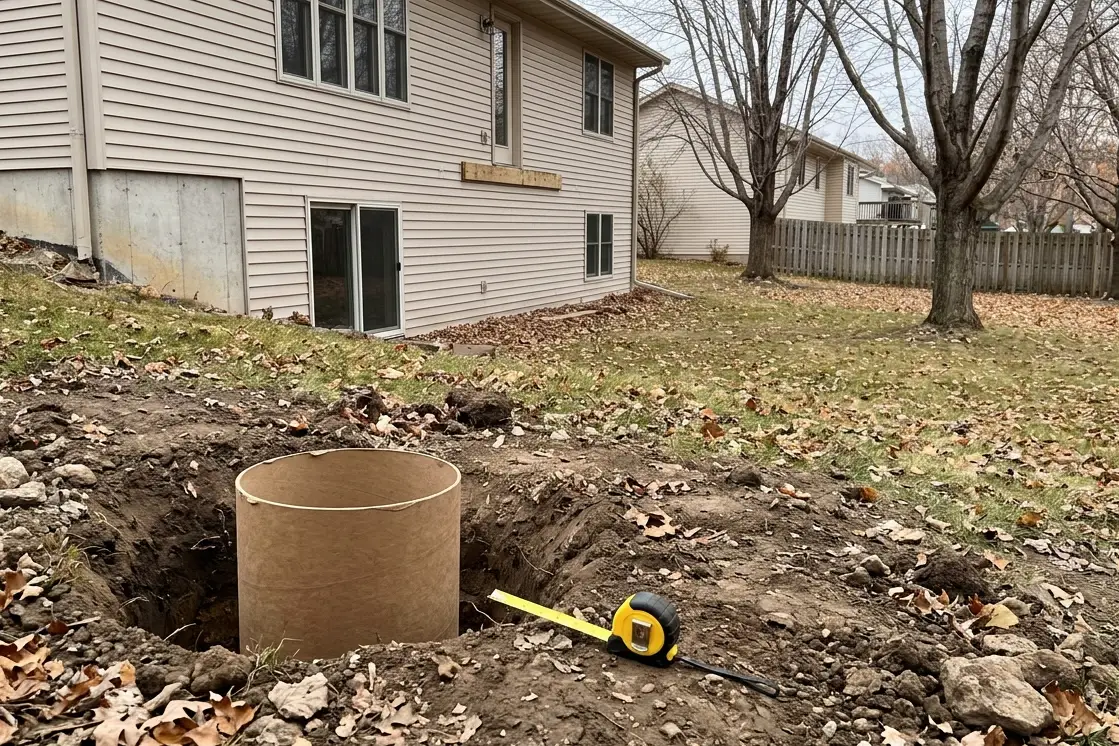
The most common footing here is a poured concrete pier. We auger a hole past 42 inches, set a round cardboard tube form, and fill it with concrete, adding a wider base where the design calls for one. A galvanized post base set into the top holds the wood post off the concrete so its end grain never sits in water. This method suits most yards with decent access, stable soil and room to haul concrete or run a mixer close to the holes.
Helical piers are steel shafts with screw plates that we turn into the ground with a hydraulic drive head until they reach the required depth and resistance. There is no curing time and no spoils pile, and they can go in during winter because nobody waits on concrete in frozen ground. They make sense on tight side yards, lake lots with wet soil, additions beside an existing foundation, and spots a compact machine can reach but a concrete truck cannot. Whether they cost more or less per footing depends on soil and access.
What a building inspector looks at on footing day
In Minneapolis and most suburbs, the footing inspection happens with the holes open, before any concrete goes in. The inspector checks depth with a tape, compares hole diameter against the approved drawings, and confirms the bottom sits on undisturbed soil rather than loose fill that fell back in. If a hole has standing water or caved sides, expect to clean it out before you get a pass. With helical piers, inspectors often ask for the installation record showing the depth and resistance reached at each pier.
Later, at the framing or final stage, the inspector looks at how the posts attach to the footings, how the beams connect, and whether the hardware is hot-dip galvanized or stainless and rated for treated lumber. A failed footing inspection is not a disaster, but it costs a return trip and a day or two on the schedule. We dig to the drawings, keep the holes clean and call for the inspection as soon as they are ready, so footing day is usually short and quiet.
- Bottom of each hole at or below 42 inches from finished grade
- Hole diameter that fits the size shown on the permit drawings
- Clean, undisturbed soil at the bottom with no loose fill
- Footing locations lining up with the beam and post layout
Fixing heaved footings on a deck you already own
If your deck has already moved, the repair depends on how many footings are involved and how much strain the frame has taken. Often we shore the beam with temporary posts, cut out the failed footing, and pour or drive a new one to full depth beside it. Then we reset the post, bring the beam back to level, and check every joist hanger and ledger fastener that was stressed while the deck sat out of line. In many cases the decking and railings stay in place through the whole repair.
Fixing a single footing and its post usually lands between $465 and $1,290 per footing around the Twin Cities. Where you land in that range depends on how deep the old footing goes, whether an auger or pier rig can reach it, how much shoring the frame needs, and whether the post itself has rotted. That range is a planning guide, not a quote, and the real number comes after we look at the deck. Call (612) 979-0602 any time, day or night, and talk to us about a deck that has started to tilt.
Common questions
Can I set deck posts on precast concrete blocks in Minnesota?
For a low freestanding deck close to the ground, some cities allow surface blocks, but a deck attached to the house or built well off the ground needs footings that reach 42 inches. Blocks sitting on top of the soil move with every freeze and thaw. Before you rely on blocks, ask your city building department, or call us and we will check what your design needs.
Do helical piers work for a deck right next to a basement foundation?
Yes, and they are often the better choice there. Digging a large hole beside a foundation means working in backfill that was never compacted well, and that soil may not hold a footing. A helical pier passes through the loose backfill and keeps turning until it reaches firm soil, so it gives a steady bearing point without a big excavation.
Can deck footings be installed in January?
They can. Helical piers go in through frozen ground with no curing time, and poured footings are possible when we thaw the ground and protect fresh concrete with frost blankets. Winter footing work also opens room in the spring schedule, so your deck can be framed as soon as the weather turns. Expect slower digging and some added cost for thawing and protection.