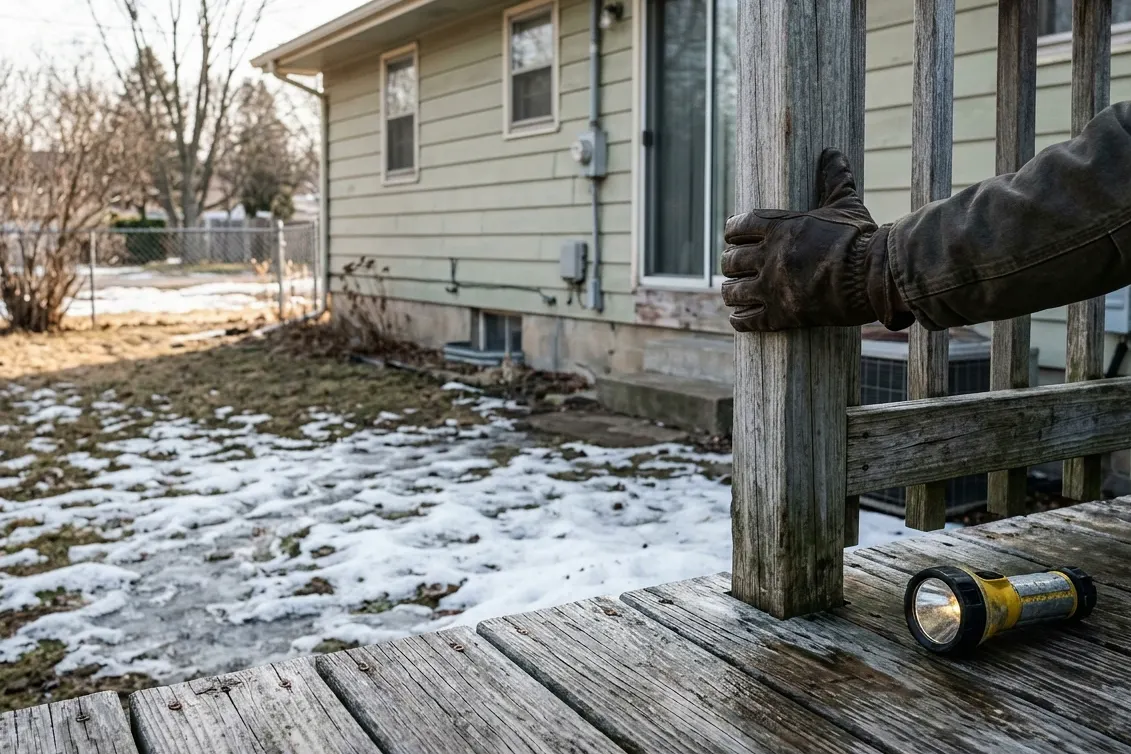
Start with a sweep and a slow walk across the boards
Clear off leaves, salt residue and the grit left behind by snowmelt, then walk the whole deck slowly in soft-soled shoes. You're feeling for soft spots, boards that flex more than their neighbors, and any that rock on their joists. Look closely at board ends near the house and along the outer edge, since those spots stay wet longest and rot first on wood decks. A soft spot the size of your palm is worth marking with tape so you can find it again.
Cracks along the grain are normal on wood, but splits that run through a fastener or across a board are not. Raised screws and popped nails become toe-catchers once the deck is busy. On composite decks, check for surface pitting from rock salt and for boards that have shifted at the ends. Most composite makers publish a care sheet that says which ice melts are safe for their boards. Rinse off any leftover salt or ice melt now, before it bakes onto the boards in summer sun.
- Soft or spongy spots under your feet
- Board ends turning dark, soft or split
- Screws and nails backing out of the surface
- Salt pitting or shifted ends on composite boards
Push on every rail and climb every stair
Grab the top of each railing post and push outward firmly, the way someone would lean over to call the kids in. A sound post barely moves. If it rocks, the problem is usually at the base, where the post meets the rim joist and moisture sits all winter. Check balusters for loose fasteners and the top rail for splits, especially on the side that faces the weather. A rail that gives an inch or more under your hand is a rail that should not be leaned on.
Stairs take a beating from shoveling, ice and boots. Step on each tread and listen for cracks or squeaks, then look underneath at the stringers where they meet the ground. Stringers that rest on soil or a cracked paver tend to rot from the bottom up. Make sure the handrail is tight from top to bottom, since it carries more weight on a slick spring morning than at any other time of year.
Posts, footings and the signs of frost heave
Walk around the deck and sight along the beams. A beam that dips or rises at one post is a clue that a footing has moved. Twin Cities footings must bear below the 42-inch frost depth, but many older decks sit on shallow pads that lift a little every winter and settle back unevenly in spring. Posts that lean, or that have pulled away from their brackets, are worth a closer look. A long level or a taut string line along the beam makes a small dip easier to spot.
Check each post where it meets the ground or the concrete. Probe the wood at grade with a screwdriver, which should meet firm resistance. Look for rust on the post base hardware and for cracked or tilting concrete piers. Also check the gap between the deck and the house wall, since a gap that has widened since last fall can point to heaving footings or a ledger connection that has started to let go.
The ledger and flashing: check where the deck meets the house
On an attached deck, the ledger board carries the weight of the floor along the house wall, and it's where the most dangerous failures begin. Look for flashing along the top edge, either metal or membrane, that sheds water away from the joint. Dark streaks on the siding below, soft wood around the bolts, or bolts that have rusted through are signs that water has been getting behind the board. Bring binoculars or a phone camera if the ledger on a tall deck is hard to see from the ground.
If you have a finished basement, look at the ceiling or rim joist area directly behind the deck for water marks. Many decks built in the 1980s and 1990s used nailed ledgers with no flashing at all, and those are the ones we're most cautious about. A ledger problem is not a weekend fix. If you see any of these signs, keep heavy loads like grills and crowds off the deck until it's checked.
- Missing, rusted or bent flashing along the top edge
- Nails where through-bolts or structural screws should be
- Water stains on the siding or the basement rim joist
Hardware rust and how the finish held up
Joist hangers, post bases and connectors corrode over time, and faster when the wrong type was used with treated lumber. Shine a flashlight under the deck and look for flaking orange rust, swelling around nails, or hangers that have pulled away from the joist. Current builds use hot-dip galvanized or stainless hardware rated for treated lumber, and older decks often need a few connectors swapped during spring repair work. Take photos of anything that looks worse than last year, so you can compare next spring.
Then look at the finish. Sprinkle water on a few stained boards, and if it soaks in instead of beading, the stain has worn through and it's time to plan a recoat. Gray, fuzzy wood and peeling solid stain both mean the finish is no longer protecting the boards. A spring cleaning followed by a fresh coat in late May or June, once the boards are dry and nights stay mild, usually works well.
When to stop checking and call a pro
Some findings are simple. A few raised screws, a loose baluster or a dirty, faded surface are easy spring chores. Others need a carpenter's eye: posts that rock, soft framing, a leaning or heaved footing, a ledger without flashing, or stairs that crack underfoot. If something feels wrong but you can't tell why, that's reason enough to have the deck looked at before summer gatherings start. A soft joist found in April is a smaller job than the same joist found after a summer of parties.
Our deck safety inspection covers the frame, footings, ledger, railings, stairs and hardware in one visit. It typically runs $185 to $395 per visit, depending on deck size, height and access, and you get a clear list of what needs attention now and what can wait. The real number comes after we know what deck we're looking at. We can often pair an inspection with the repairs it finds, so the work happens before Memorial Day. Phone (612) 979-0602, any day of the week.
Common questions
What's a good time of year for a spring deck inspection in Minnesota?
Late April through May usually works well. The snow is gone, the boards have started to dry, and you can see what winter did before the deck gets heavy summer use. If you spot a serious problem earlier, like a rocking post or a ledger pulling away from the house, don't wait for warmer weather to have it checked.
Is rock salt damaging my deck boards?
Rock salt can pit some composite and PVC surfaces, and it corrodes metal fasteners and hardware over time. Calcium magnesium acetate or a plastic shovel is kinder to most decks, though you should always check your board maker's care sheet. Rinsing salt residue off in spring helps too, especially around stairs and the door, where it builds up.
How can I tell if a deck footing has heaved over the winter?
Look along the beam for a hump or dip near one post, check whether any posts lean or have lifted off their bases, and watch for new gaps where the deck meets the house. Doors that stick or stairs that no longer line up with the landing are other clues. Footings that heave usually sit above the 42-inch frost depth.