Three paths for a tired deck, and what each one means
Most aging decks land in one of three places. A repair fixes specific problems, such as a cracked stair stringer, a few rotted boards or a loose post, and leaves the rest alone. Resurfacing keeps the structure but replaces every deck board, and often the railing and stair treads, on a frame that still has years left. Replacement means tearing out everything down to the footings and building again to current code. Each path has a different price, timeline and permit picture, so the choice matters.
The surface is what you see, but the frame decides which path makes sense. A deck with ugly, splintered boards on solid joists is a great resurfacing candidate. A deck with fresh-looking boards over a rotting ledger is not, no matter how good it looks from the patio door. That's why our first visit spends more time underneath the deck than on top of it. A flashlight and a few minutes on your back under the joists tell us more than any photo.
- Repair: targeted fixes on an otherwise sound deck
- Resurfacing: new boards, rails and treads on a healthy frame
- Replacement: full tear-off and a new structure built to code
What we check in the frame before anything else
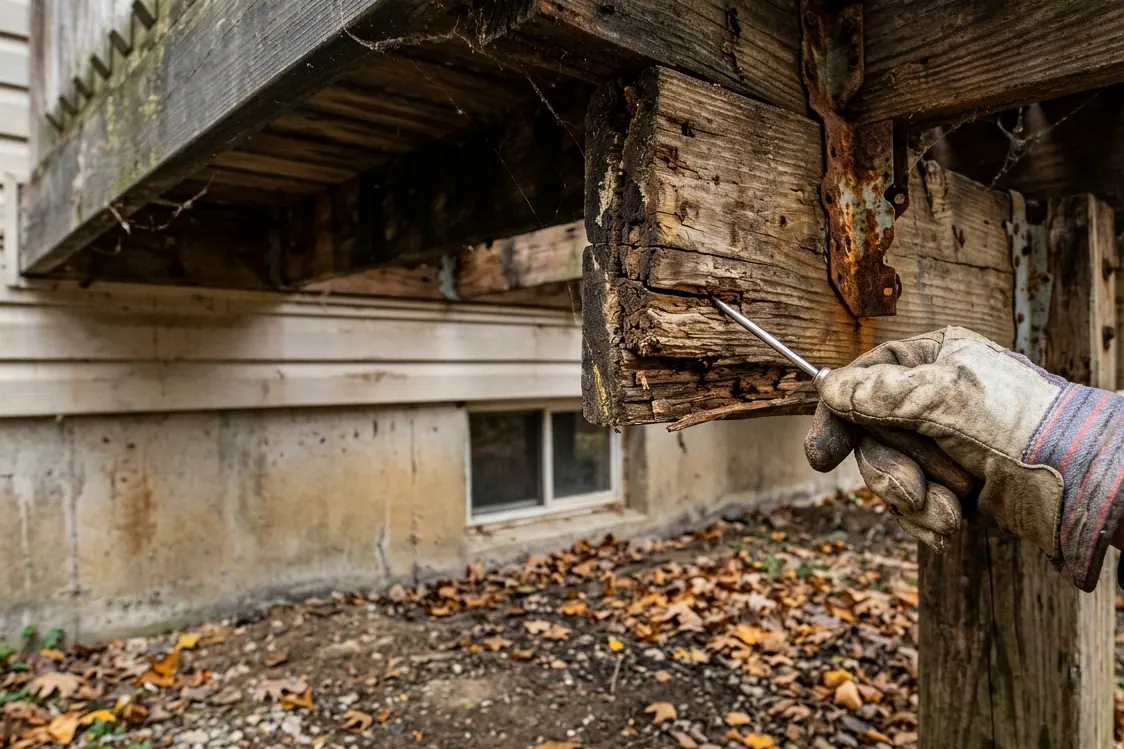
We start by probing joists, beams and rim boards with an awl or a screwdriver. Sound treated lumber resists the point, while rotted wood lets it sink in with little effort. Joist tops are the first place to look, because water sits there under every board and soaks into the fastener holes. We also check joist hangers and beam connections for rust, since older hangers often corrode when paired with modern treated lumber.
Spacing and size matter too. Many decks from the 1980s and 1990s were framed with joists at 24 inches on center, which is too wide for most composite boards and some thinner wood boards. If you want composite on a frame like that, joists may need to be added or the deck rebuilt. Sagging between beams, bounce underfoot, and cracked or notched joists all push the answer toward frame repair or replacement.
Footings and posts: the part you can't see from the yard
Minnesota code requires footings to bear below frost depth, which is 42 inches in the Twin Cities. Many older decks sit on shallow concrete pads or precast blocks set right on the soil. Those heave with every freeze-thaw cycle, and you'll see it as posts leaning, beams tipping or a gap opening at the house. We dig beside a suspect footing to check its depth and condition before making any recommendation. That small hole in the lawn is filled back in the same day.
Posts get their own look. Wood posts buried directly in soil or concrete tend to rot right at grade, where moisture and air meet. Undersized posts on tall decks may need replacing even when the wood is sound. One or two failed footings can often be fixed on their own with new footings and posts. If most of them are shallow, it usually costs less in the long run to rebuild than to chase each one.
The ledger board decides more than any other part
On an attached deck, the ledger is the board fastened to the house that carries one side of the floor. It's also where most serious deck failures start. Many decks built in the 1980s and 1990s used nailed ledgers with no flashing, so water ran behind the board for decades. That rots the ledger and often the rim joist of the house itself, which turns a deck project into a house repair.
We look for dark staining on the siding below the ledger, soft wood at the bolt or nail heads, and missing or rusted flashing. From the basement, we check the house rim joist behind the deck for water marks or soft spots. A sound ledger with proper bolts can often stay through a resurfacing job with new flashing added. A rotted or nailed ledger usually means at least a ledger repair, and sometimes a full replacement.
- Nails instead of through-bolts or structural screws at the house
- No metal or membrane flashing over the top edge
- Staining, soft spots or mold on the siding below
- Water marks on the house rim joist inside the basement
Typical cost ranges for each path
These are typical ranges from our service list, and the real number for your deck comes only after we see it. Deck repair typically runs $385 to $4,850 per repair visit and scope, depending on what's broken. Resurfacing with new boards on a sound frame typically runs $27 to $54 per square foot. Full replacement, including tear-off, typically runs $42 to $98 per square foot, depending on height, material, stairs and railing. Repairs that uncover hidden rot can grow, and we tell you before the scope changes.
As a simple example, a 16 by 20 foot deck is 320 square feet, so the per-square-foot ranges scale from there. Board material moves resurfacing and replacement costs the most, since composite and PVC cost more than treated pine. Height, stair runs, railing style and site access shift the number too. A narrow side yard on a city lot, or a tall walkout deck, adds labor that a ground-level deck in an open backyard does not.
When each answer is the right one
Repair makes sense when the problems are few, local and on a structure that otherwise passes inspection. Resurfacing fits a deck with sound, properly spaced joists, a bolted and flashed ledger, and footings at frost depth, but worn boards and a dated railing. Replacement is usually the honest answer when the ledger is nailed or rotted, the footings are shallow, and the joists show rot or bounce in more than a few spots.
Sometimes the answer is a mix: a new ledger and two new footings, then resurfacing on the remaining frame. We'll walk you through what we found, show you the soft spots, and explain which option we would choose on our own house. Most attached decks that get rebuilt need a permit, and we handle the drawings and the permit for you. You'll get the findings in plain language, with photos of anything we flagged underneath. Phone (612) 979-0602 to set up a visit.
Common questions
Can composite boards go on top of my old wood deck frame?
Sometimes. The frame needs sound joists, a bolted and flashed ledger, and footings below frost depth. Joist spacing is the other catch: most composite boards need joists at 16 inches on center or closer, and many older decks were framed wider. Extra joists can sometimes be added, but a tired frame usually points to replacement.
How long does a resurfaced deck last compared with a new one?
The new boards can last as long as they would on a new deck, but the deck as a whole only lasts as long as its frame. That's why we suggest resurfacing only when the joists, ledger and footings have many good years left. Adding joist tape on top of the existing frame helps slow rot under the new boards.
Is it worth repairing a deck we plan to replace in a few years?
If a stair, rail or post is unsafe, yes, fix it now, because a fall costs far more than any repair. Beyond safety items, we usually suggest spending as little as possible on a deck you plan to replace soon. We'll separate the must-fix items from the cosmetic ones so you can plan the bigger project on your own timeline.